
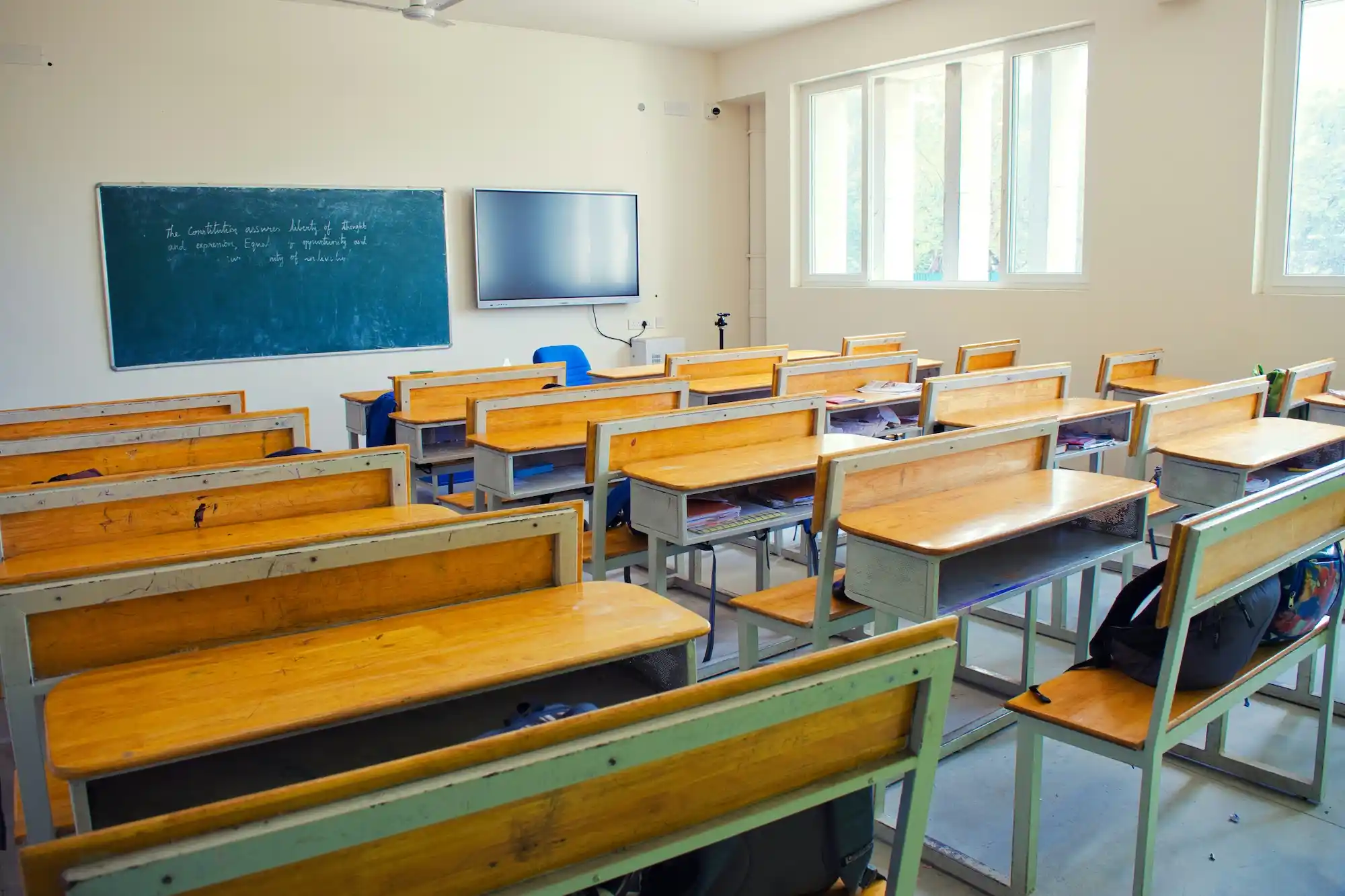
For decades, the defining image of Indian school education was a crowded classroom, a chalkboard dense with notes, and an unforgiving exam system that rewarded memory over imagination. That image is now being steadily dismantled. Across the country, a quieter but far more consequential revolution is underway—one that seeks to turn classrooms into creation labs and students into problem-solvers rather than passive recipients of information.
At the heart of this transformation lies the National Education Policy (NEP) 2020, which explicitly rejects rote memorisation and reimagines education as an inquiry-driven, experiential process. The shift is not merely rhetorical. It is visible in how children learn, how teachers teach, and how schools define success. The ambition is nothing short of civilisational: to prepare a generation capable of critical thinking, creativity, ethical reasoning, and innovation—skills essential for India’s aspirations in the 21st century.
The most tangible symbol of this change is the rapid spread of Atal Tinkering Labs (ATLs). These are not science rooms in the traditional sense; they are makerspaces where students tinker with robotics kits, sensors, 3D printers, and AI toolkits to solve real-world problems. As of late 2025, more than 10,000 ATLs are operational across 35 states and 722 districts, engaging over 1.1 crore students and generating more than 16 lakh innovation projects. A further 50,000 labs are being rolled out in government schools, signalling an unprecedented scale-up of hands-on learning.
What makes ATLs especially significant is their reach. By prioritising aspirational districts and rural areas, they challenge the long-standing assumption that innovation is the privilege of elite urban schools. Students are building low-cost agricultural tools, health devices, and environmental solutions rooted in local needs. For many first-generation learners, the lab is their first encounter with the idea that knowledge can be used to create, not just to pass an exam.
Yet NEP 2020’s vision extends beyond hardware and labs. Structural reforms such as the 5+3+3+4 school design embed creativity at every stage, from play-based learning in early childhood to compulsory vocational or innovation projects in secondary school. Board exams, long the single-point obsession of students and parents alike, are being reoriented to test application and understanding, with options to take them twice a year. Digital platforms like DIKSHA and PM e-Vidya have further expanded access to virtual labs, teacher training, and personalised learning tools, reaching tens of crores of learners.
Crucially, innovation is no longer treated as a one-off activity or an extracurricular indulgence. Through the Atal Innovation Mission (AIM), the education ecosystem is being stitched into a seamless pipeline—from school tinkering to university incubation and startup creation. Promising school innovators can graduate to Atal Incubation Centres, while national challenges provide funding and mentorship to scale solutions of societal importance. This continuity ensures that curiosity sparked in a classroom does not die out but matures into entrepreneurship and social impact.
Teachers, often the missing link in reform narratives, are being repositioned as catalysts of change. The School Innovation Ambassador Training Programme equips educators with skills in design thinking, intellectual property, and project mentoring, transforming them from lecturers into facilitators. School Innovation Councils institutionalise innovation within schools, creating platforms for ideation, field visits, and prototype showcases. In effect, the system acknowledges a simple truth: sustainable reform depends as much on empowered teachers as on inspired students.
Large-scale hackathons and marathons add another layer to this ecosystem. Events such as the School Innovation Marathon and the Viksit Bharat Buildathon turn innovation into a collective national exercise, engaging thousands of schools simultaneously. The record-setting Mega Tinkering Day of 2025, which entered both India and Asia Book of Records, underscored the power of scale—not just as spectacle, but as proof that innovation culture can be mainstreamed.
Sceptics might argue that these initiatives risk becoming headline-driven or unevenly implemented. That concern is valid. Infrastructure gaps, teacher workload, and the pressures of traditional assessments still pose challenges. But dismissing the transformation because it is incomplete would be a mistake. Education reform at this scale is inherently iterative. What matters is the direction of travel—and that direction is unmistakably away from rote and towards relevance.
India’s demographic dividend will only pay off if young people are equipped to think independently, adapt to technological disruption, and solve complex societal problems. By embedding innovation into the everyday life of schools, NEP 2020 and its allied initiatives are laying the groundwork for that future. This is not just about producing startups or patents; it is about restoring joy, purpose, and agency to learning itself.
If sustained with rigour and equity, today’s tinkering students could become tomorrow’s nation-builders. In turning classrooms into creation labs, India is not merely reforming education—it is redefining what it means to learn, and why it matters, in a rapidly changing world.

