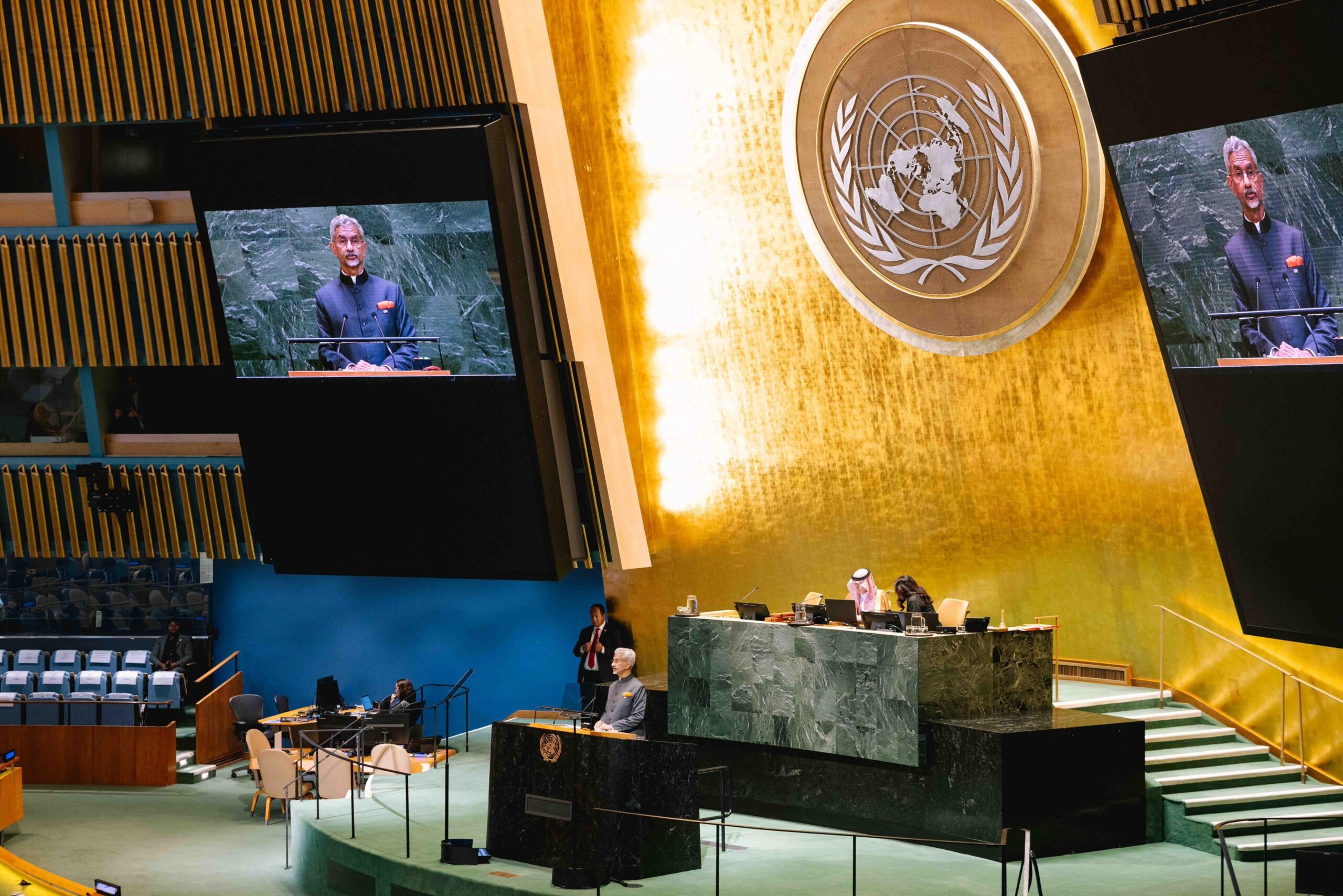
India’s presence at the 80th United Nations General Assembly (UNGA) in September 2025 was marked by powerful diplomacy, assertive rebuttals, strategic advocacy for global reforms, and strong projections of its leadership in humanitarian and technological spheres. Here is a holistic and detailed roundup of all major developments concerning India during this UNGA session.
Tackling Pakistan’s Misleading Narrative
Pakistan’s Prime Minister Shehbaz Sharif attempted to internationalize bilateral issues by making several false claims about recent military engagements with India, including inflated numbers of Indian jets allegedly downed and charges of “unprovoked aggression”. Sharif also referenced the Indus Water Treaty and implied third-party mediation, seeking to drum up support for Pakistan’s position. These remarks, lacking credible evidence, were quickly fact-checked and dismissed by global media and independent observers.
India, exercising its ‘Right of Reply’, delivered a firm, point-by-point rebuttal through Petal Gahlot, First Secretary at India’s Permanent Mission to the UN. Gahlot condemned Pakistan’s “absurd theatrics” and highlighted its longstanding record of sheltering terrorists—including Osama bin Laden—and ongoing support for groups responsible for major attacks, such as the Pahalgam massacre. She reiterated that Jammu & Kashmir is an integral part of India and asserted that there was no space for third-party intervention—effectively putting Indian diplomatic red lines on record.
Bhutan’s Strong Endorsement for India’s UNSC Bid
A standout moment came when Bhutan’s Prime Minister Tshering Tobgay used his keynote address to urge urgent reforms in the United Nations Security Council (UNSC).
Bhutan directly named both India and Japan as “deserving nations” for permanent membership, reflecting rising momentum for expansion of the UNSC’s permanent ranks. This move demonstrated growing Asian solidarity on multilateral reforms, with many other voices from the Global South echoing this demand.
Jaishankar’s Strategic Address: Terror, Reforms, and South-South Leadership
External Affairs Minister Dr. S. Jaishankar’s address was forceful and wide-ranging. He directly called out Pakistan as the “epicentre of global terrorism,” pointing out that virtually all major international terror attacks could be traced back to networks and havens in Pakistan. He sharply critiqued the international community’s complacency in counter-terror financing and underlined India’s zero-tolerance approach after the Pahalgam massacre.
Simultaneously, Dr. Jaishankar spotlighted India’s strategic priorities encapsulated by three themes: Atmanirbharta (self-reliance), Atmaraksha (self-protection), and Atmavishwas (confidence). He pointed to India’s booming start-up ecosystem, push for supply chain “de-risking,” and a dynamic foreign policy positioning India as both a civilizational and modern powerhouse.
India’s Humanitarian and Technological Leadership
During side events such as “India Day” at the UNGA, India’s global leadership in digital public infrastructure and inclusive technology was prominently featured. India’s commitment to sharing digital solutions and best practices with developing countries, along with plans to convene an international summit on responsible AI in 2026, signaled India’s readiness to anchor progressive technology governance.
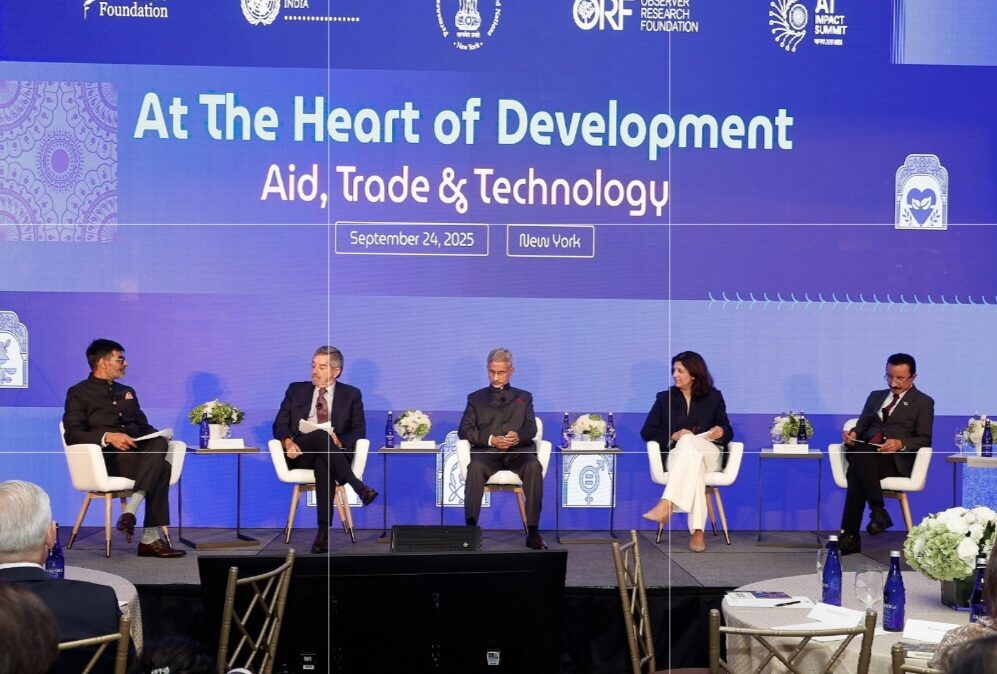
Dr. Jaishankar and other officials also highlighted India’s rapid and impactful humanitarian aid—delivering food, medicine, and fuel to dozens of countries, and emergency relief operations in Afghanistan and Myanmar following natural calamities. India reaffirmed its status as one of the largest contributors to UN peacekeeping operations.
Steering the Multilateral Reform Agenda
A constant refrain across Indian interventions was the urgent need for “reformed multilateralism.” India demanded an expanded and more inclusive United Nations Security Council and called out the “double standards” of Western nations on global crises. Stress was laid on ending deadlocks in global decision-making and placing developing economies at the center of international policymaking.
Dr. Jaishankar also made a case for stabilizing global trade by “de-risking” supply chains and addressing tariff volatility—reflecting India’s evolving economic diplomacy. These priorities, coupled with India’s outreach across Africa, Asia, and Latin America, ensured broad diplomatic traction for India’s views.
High-Level Meetings and Diplomatic Outreach
Rounding out its engagement, India held several important bilateral meetings on the UNGA sidelines, including with UN Secretary-General António Guterres. These interactions covered global turbulence, sustainable development challenges, technology governance, and regional security, cementing India’s proactive diplomatic role.
Key Outcomes @ UNGA 2025
India’s robust engagement at UNGA 2025 cemented its stature as a global problem-solver, a staunch defender of sovereignty and counter-terrorism, and a leader shaping the multilateral system for the realities of the 21st century.