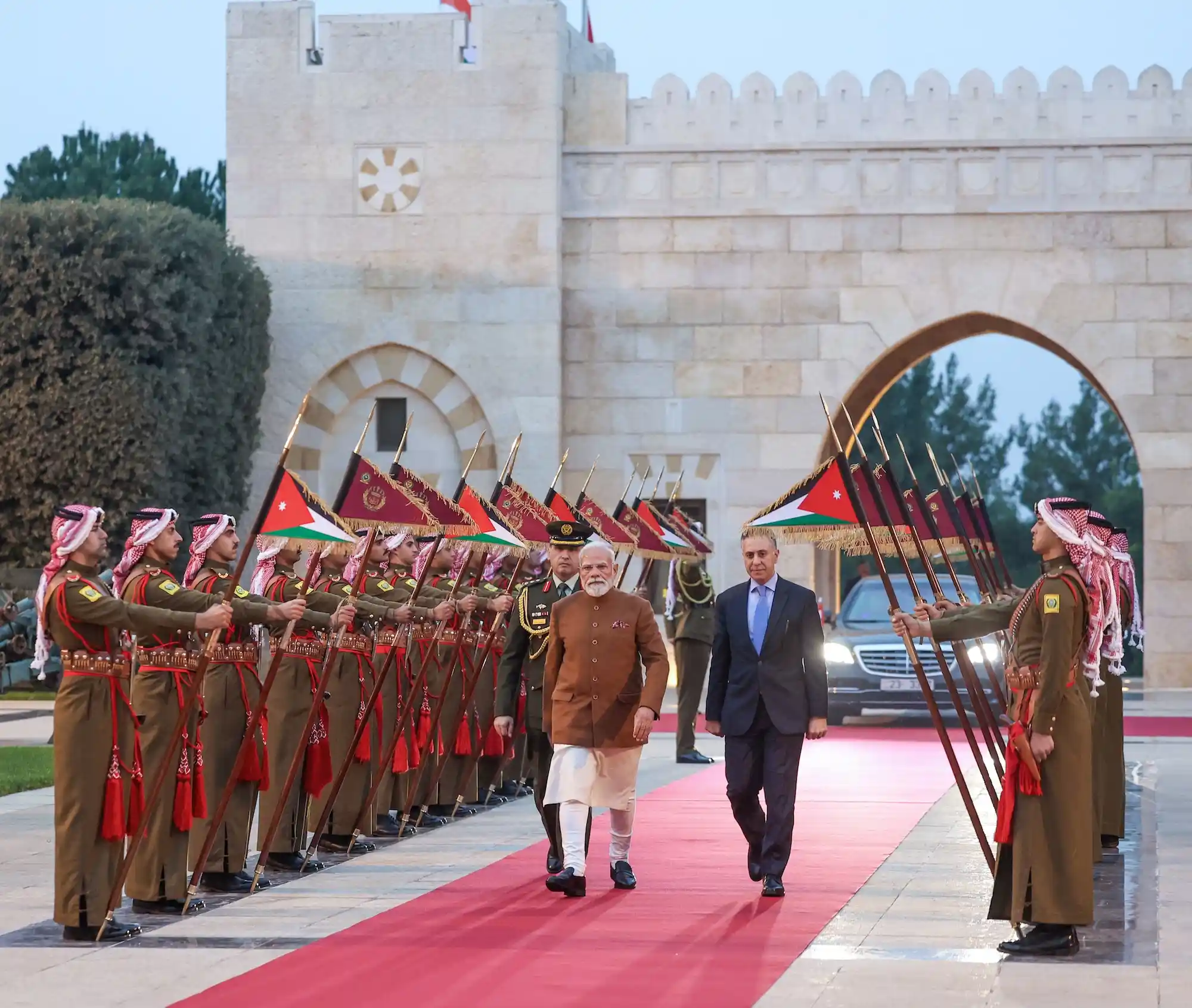
Indian Prime Minister Narendra Modi’s two-day visit to Jordan from December 15-16, 2025, marked the first bilateral trip by an Indian PM in 37 years and coincided with the 75th anniversary of diplomatic ties. The visit culminated in high-level talks with King Abdullah II, strengthening bilateral relations across multiple sectors. Five key agreements were signed, signaling a new phase of collaboration.
PM Modi and King Abdullah II held one-on-one and delegation-level meetings at Al Husseiniya Palace in Amman, reviewing ties and discussing regional issues like Gaza, counter-terrorism, and de-radicalisation. Jordan reaffirmed strong support for India’s anti-terrorism stance, rejecting it in all forms, while Modi praised the king’s leadership in moderation and global peace efforts. The leaders agreed to deepen partnerships in defence, security, trade, investment, agriculture, fertilisers, infrastructure, renewable energy, tourism, and heritage, with Modi proposing a bilateral trade target of $5 billion from the current $2.8 billion.
Signed Agreements: A Roadmap Forward
The visit produced five concrete outcomes, focusing on sustainable development and cultural exchange:
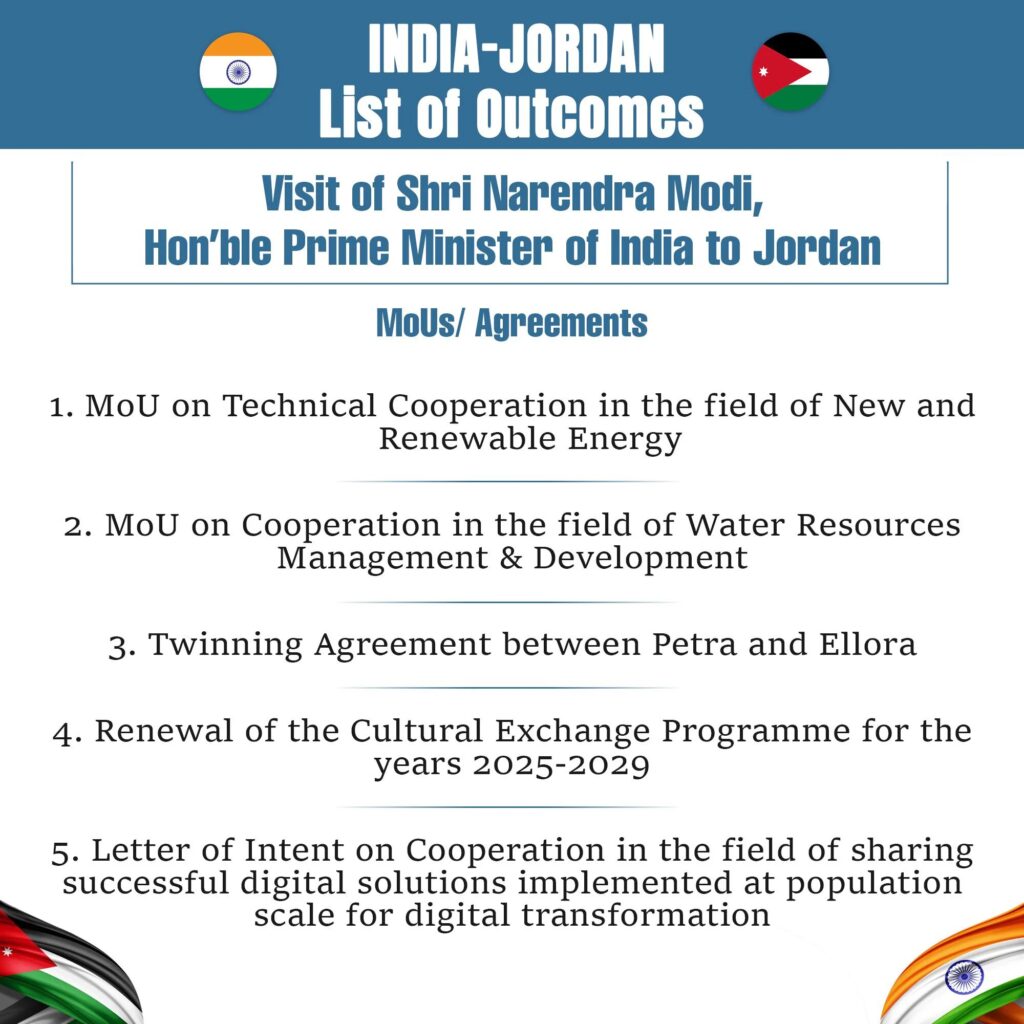
These pacts reflect PM Modi’s eight-point vision, encompassing trade, IT, healthcare, critical minerals, civil nuclear cooperation, and more.
India, Jordan’s third-largest trading partner, eyes expanded economic ties, including linking Jordan’s digital payments with India’s UPI and boosting fertiliser supplies vital for Indian agriculture. Defence and security cooperation gained emphasis amid shared counter-terrorism goals, while infrastructure and strategic minerals open new investment avenues. Modi’s visit to Petra underscored cultural bonds, reinforcing people-to-people connections.
The outcomes inject fresh momentum into a partnership historically strong in trade and energy, positioning Jordan as a key West Asian ally for India amid regional volatility. By addressing mutual priorities like energy security and digital innovation, the visit aligns with India’s global south outreach and Jordan’s modernisation drive. Expect accelerated implementation in 2026, potentially elevating bilateral trade and strategic dialogue.