
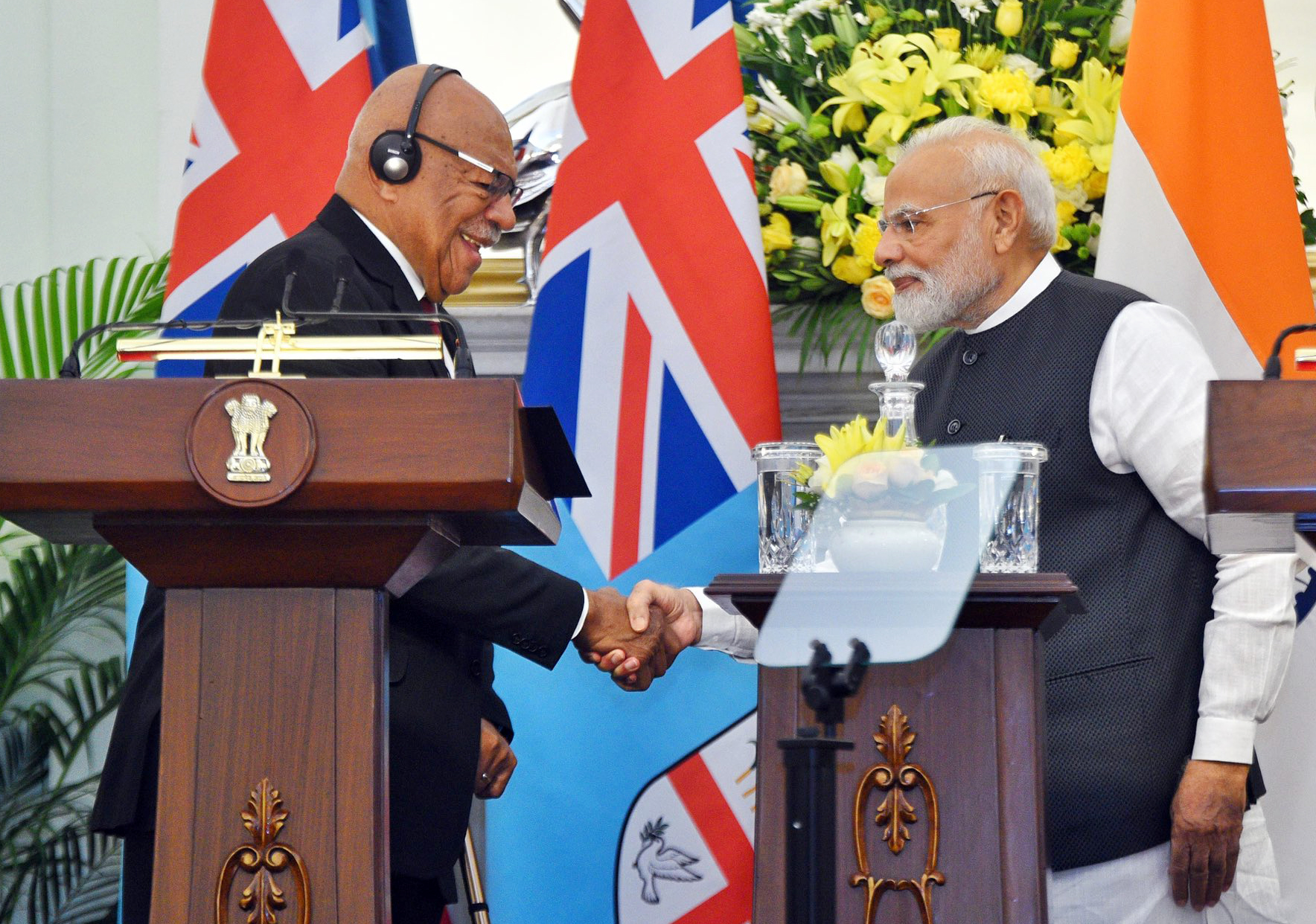
India and Fiji have emerged from Prime Minister Sitiveni Rabuka’s recent high-profile state visit to India with a re-energized partnership cutting across defence, healthcare, trade, mobility, and cultural ties. Marking Rabuka’s first official visit to India as Fiji’s leader, the meeting with Indian Prime Minister Narendra Modi delivered outcomes that reinforce India’s Act East vision and the strategic interests of both countries in the rapidly shifting Indo-Pacific landscape.
Strategic Defence and Maritime Security
The heart of this visit was a comprehensive blueprint for bolstering defence cooperation. The leaders agreed on a wide-ranging action plan focused especially on building Fiji’s maritime capabilities, crucial given China’s growing naval footprint in the Pacific. Notably, India committed to:
- Setting up a Defence Attaché post in its Suva mission, responsible for liaison across Pacific Island states.
- Training and supplying equipment to Fijian maritime forces, alongside the gifting of two sea ambulances to the Fijian military.
- Establishing a Cyber Security Training Cell in Fiji, aimed at building digital defence capacities.
- Enhanced cooperation in UN peacekeeping and military medicine, with a future port call by an Indian naval ship planned for 2025.
Both sides underscored the critical need for a free, open, and inclusive Indo-Pacific, reiterating joint opposition to “double standards” on terrorism and pledging collaborative disaster response, a nod to Fiji’s vulnerability to climate change events.
Transformative Development and Healthcare
Development cooperation stood out with India’s grant to build Fiji’s largest super-specialty hospital, a 100-bed facility in Suva. This exemplifies India’s commitment to improving Pacific healthcare infrastructure, alongside:
- A fresh agreement to expand Janaushadhi medicine outlets in Fiji, promoting affordable, quality generic drugs.
- Growing telemedicine links through India’s e-Sanjeevani platform, connecting Fijian patients to Indian specialists.
- India’s offer to sponsor advanced medical treatment for select Fijian nationals annually, and organizing charity prosthetics camps (Jaipur Foot).
- Introducing “Quick Impact Projects” such as the Tubalevu Village Ground Water scheme for clean water access.
Expanding Trade, Agriculture & Mobility
India and Fiji signed a raft of new memoranda of understanding (MoUs) to turbocharge economic ties:
- Collaboration between NABARD and Fiji Development Bank to foster rural credit and agribusiness.
- Access granted for Indian ghee in Fijian markets, and support for Fiji’s vital sugar sector.
- CII–Fiji–India Business Council agreements to enhance bilateral trade and investment.
- A Standardization Partnership with the Bureau of Indian Standards, supporting Fijian technical regulatory frameworks.
- MoU on digital skilling and capacity building (NIELIT–Pacific Polytechnic), laying a tech-driven foundation for youth employment.
Additionally, a landmark declaration on migration and mobility stands to ease the flow of professionals and students between the two countries, facilitating deeper integration and remittance flows.
Socio-Cultural Bonds and People-to-People Ties
The leaders celebrated historical ties, noting the contribution of over 60,000 people of Indian descent in Fiji’s social and economic fabric. New initiatives include:
- The deputation of a Hindi-cum-Sanskrit professor to Fiji’s university, supporting linguistic and cultural preservation.
- Continued support for religious and cultural diplomacy, including the participation of Fijian pundits at India’s International Geeta Mahotsav later in 2025—and a parallel event in Fiji.
- India’s offer to support Fijian sports, especially cricket, by sending expert coaches as part of its “people-to-people” diplomacy.
Broader Regional and Diplomatic Context
Rabuka’s visit was also marked by Fiji handing over the lease for India’s new diplomatic chancery in Suva, signaling trust and permanence in the bilateral relationship. These steps take place as India seeks to anchor its role in the Pacific and as Fiji, often the voice of Small Island Developing States (SIDS), balances relations amid intensifying big-power competition.
Looking Ahead: Shared Vision, Measurable Impact
For India, the outcomes solidify its ambition to be a net security provider and preferred development partner in the Indo-Pacific, while leveraging its “Global South” leadership for wider influence and collaborative regional frameworks. For Fiji, the tangible investments in infrastructure, healthcare, trade capacity, and social capital give it new tools to navigate post-pandemic recovery, climate shocks, and demographic change.
In economic terms, bilateral trade, which stood at $74.86 million in FY 2023–24, is expected to surpass $100 million by 2026, reflecting both the new institutional ties and niche product access agreements. Over 60% of Fiji’s population is of Indian origin, and India remains a top destination for Fijian students and medical travellers, further undergirding socio-economic synergies.
This visit marks a pivotal moment, the infusion of fresh political will into an old partnership, translating historic goodwill into actionable projects. The following two years will test implementation, but the structured roadmap and mutual stakeholder engagement point to outcomes that could resonate well beyond just India–Fiji relations, and set a template for India’s regional outreach.

