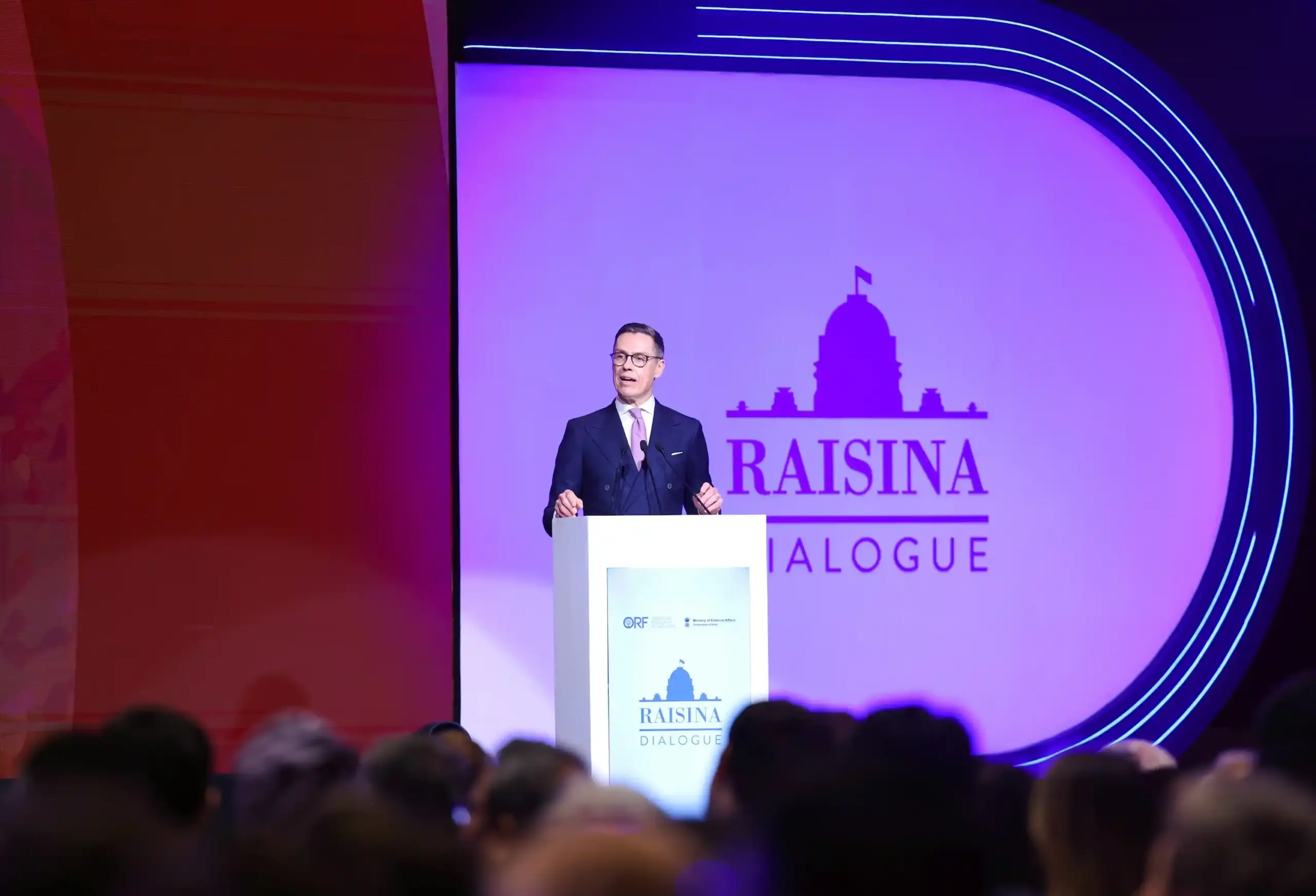
President Alexander Stubb of Finland kicked off a four-day state visit to India on March 4, 2026, marking his first trip in that capacity. Invited by Indian Prime Minister Narendra Modi, Stubb served as the chief guest and delivered the inaugural address at the 11th Raisina Dialogue in New Delhi on March 5.
Stubb arrived in Delhi amid high expectations for bilateral gains. He held talks with PM Modi on trade, innovation, technology, and global issues like multilateral cooperation. The Finnish leader also met President Droupadi Murmu, Vice President C.P. Radhakrishnan, and External Affairs Minister S. Jaishankar, with PM Modi hosting a ceremonial lunch.
Accompanied by ministers, officials, and business heads, Stubb extended his trip to Mumbai. There, he engaged Maharashtra’s Governor and Chief Minister, addressed business leaders at an India-Finland event, and spoke to University of Mumbai students. This followed Finnish PM Petteri Orpo’s recent AI Summit visit, signaling momentum in ties.
India-Finland relations, grounded in democracy, span EU-Nordic partnerships. Sectors like critical tech and investment topped agendas, reflecting shared priorities.
Raisina Dialogue Spotlight
The Raisina Dialogue, hosted by Observer Research Foundation, draws global thinkers on geopolitics. Under “Samskara: Assertion, Accommodation and Advancement,” the 2026 edition addressed order in flux, with PM Modi in attendance.
Stubb’s keynote praised the forum’s rise, thanking Jaishankar and ORF’s Samir Saran. He lauded PM Modi’s presence as inspirational amid crises.
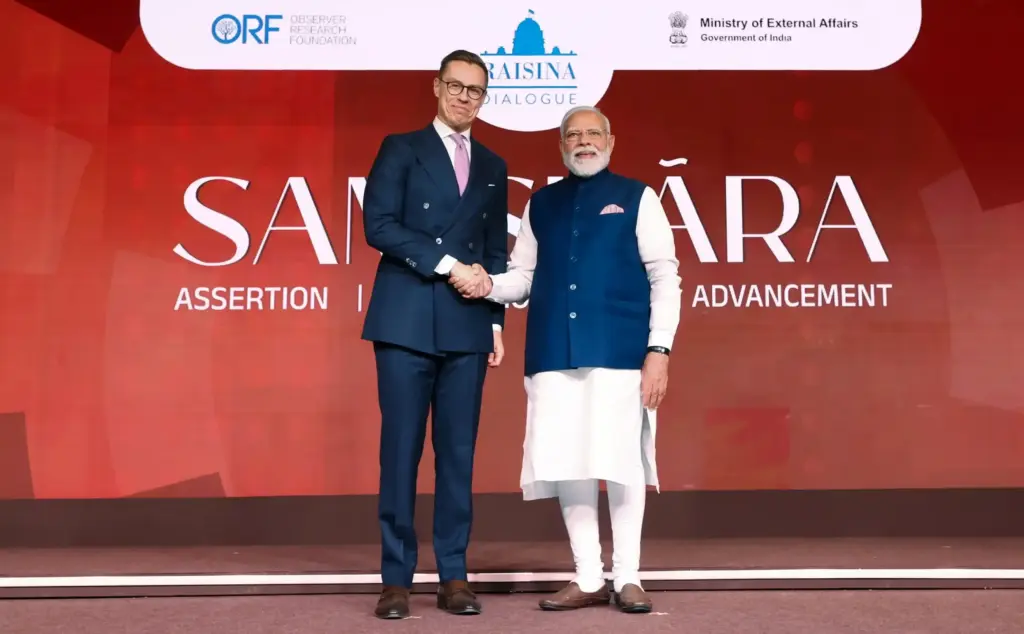
Stubb warned of local conflicts like Ukraine, Middle East, and Sudan turning global, urging respect for rules-based order to avert power vacuums. He rejected doomsday views on post-WWII institutions, echoing Mark Carney: change is complex, not fatal.
Human errors, he said, include over-rationalizing history, dramatizing now, and underestimating tomorrow. Drawing on Finnish sauna wisdom, he called for reflection.
Praising India’s pragmatic foreign policy, Stubb highlighted its strategic autonomy and multilateralism. He termed India-Finland ties a “Mother of All Deals,” modeling mutual respect beyond bipolarity.
Call for Global Reforms
Stubb advocated “dignified foreign policy”—equal dialogue rooted in UN Charter principles like sovereignty and non-use of force. Proposals included multilateral tweaks for today’s realities, backing India’s UNSC permanency.
He envisioned multipolarity where nations like India shape the future, not just giants. Europe sees India as a vital partner in growth and strategy.
Jaishankar, following, nodded to President Stubb and PM Modi, stressing the Global South’s rise via demographics and economy. He deemed Western dominance passé, urging sharp global awareness.
Broader Implications
Stubb’s visit underscores Europe’s pivot to India amid uncertainties. Trade-innovation focus aligns with India’s tech ambitions and Finland’s strengths in cleantech, AI.
Geopolitically, it counters raw power with partnerships. Stubb’s words position India as order architect, rejecting side-taking.
As ties deepen, this sets precedent for middle powers. Outcomes may yield deals in defense, green energy, boosting people links.