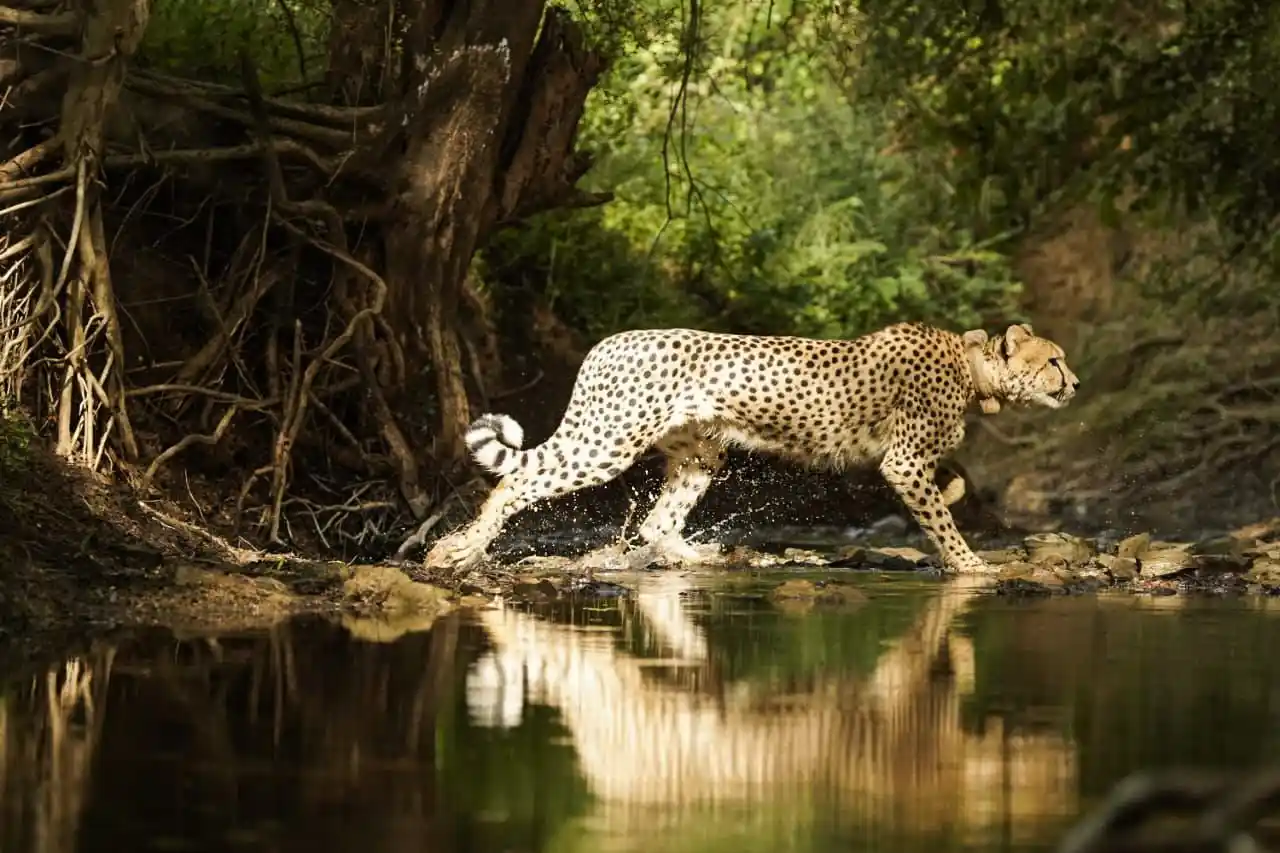
In September 2022, as eight cheetahs stepped cautiously onto the soil of Kuno National Park, India did something no country had attempted before: it reversed a national extinction using science, diplomacy, and political will. Seventy years after the cheetah was declared extinct in India, its return was not merely symbolic. It was a statement about how nations might respond to the accelerating global biodiversity crisis.
Sceptics were quick to dismiss Project Cheetah as a vanity project or a risky ecological gamble. Yet three years on, the evidence tells a more complex and hopeful story. As of December 2025, India is home to 30 cheetahs—12 adults, 9 sub-adults, and 9 cubs—most of them born on Indian soil. Mukhi, the first cub born in independent India, has herself given birth to five healthy cubs. Extinction, once considered final, has proven reversible—if the conditions are right.
The cheetah’s disappearance from India in 1952 was not a natural inevitability. It was the result of excessive hunting, loss of prey, shrinking grasslands, and indifference toward open ecosystems that lacked the charismatic appeal of dense forests. Grasslands were written off as “wastelands,” even as they quietly sustained biodiversity. Project Cheetah, at its core, is not just about one species. It is about correcting that historic neglect.
Critically, the project was built on the groundwork laid over decades. Kuno was not chosen on impulse. Twenty-four villages were voluntarily relocated, creating over 6,000 hectares of inviolate habitat. Prey bases were strengthened, human pressure reduced, and international best practices embedded into monitoring and release protocols. This was not romantic conservation—it was methodical, often uncomfortable, and politically demanding.
Early reproduction has been the project’s strongest validation. In wildlife biology, breeding is the ultimate vote of confidence a species gives its habitat. The fact that cheetahs reproduced within months of release signals not just survival, but ecological acceptance. It suggests that India’s grasslands—so long ignored in conservation policy—still retain the capacity to heal.
Yet Project Cheetah’s real innovation lies beyond ecology. It demonstrates that conservation can succeed only when communities are partners, not obstacles. Over 450 “Cheetah Mitras” across 80 villages now serve as local stewards. Hundreds of jobs—from trackers to safari guides—have been created in regions historically left behind by development. Eco-tourism revenues are shared with locals. Conservation, here, is not enforced from above; it is negotiated on the ground.
International cooperation has also been pivotal. Namibia, South Africa, and later Botswana entrusted India with one of their most iconic species. This was not a transaction but a transfer of responsibility—backed by training, scientific exchange, and long-term agreements. At a time when global politics is increasingly inward-looking, Project Cheetah stands out as a rare example of ecological multilateralism that works.
Of course, challenges remain. Mortality incidents, landscape connectivity, and long-term genetic diversity will test the project in the years ahead. A self-sustaining metapopulation of 60–70 cheetahs across 17,000 square kilometres by 2032 is an ambitious target, not a guaranteed outcome. But ambition is precisely what biodiversity recovery demands. Playing safe has never saved a species.
What makes Project Cheetah globally relevant is not its scale but its philosophy. It rejects the fatalism that dominates conservation discourse—the idea that once lost, nature cannot return. Instead, it offers a counter-narrative: extinction is a policy failure, and recovery is a policy choice.
When a cheetah sprints again across India’s grasslands, it carries more than speed. It carries a message: that with patience, science, and political courage, hope can outrun extinction. The world would do well to pay attention.