
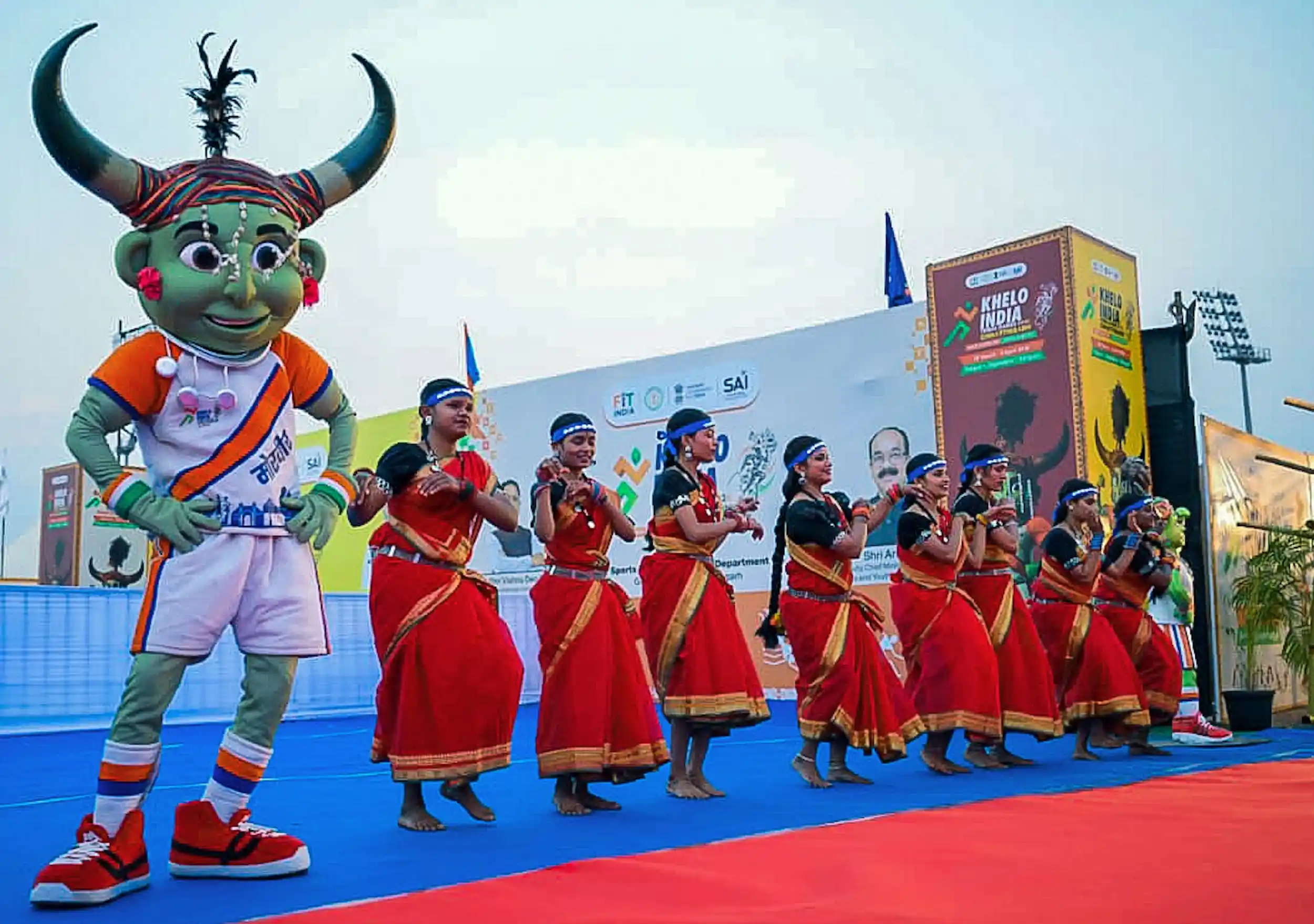
In a country as vast and diverse as India, talent has never been the problem—access has. For decades, the nation’s sporting imagination has largely revolved around urban centers, formal academies, and well-trodden pathways to success. Yet beyond these visible arenas lies an enormous, often overlooked reservoir of ability, particularly within tribal communities whose physical traditions, endurance, and skill have long thrived outside institutional recognition.
A quiet but significant shift is now underway. By bringing organized sport into regions historically excluded from mainstream sporting infrastructure, India is beginning to redraw the map of opportunity. The emergence of a national platform dedicated to athletes from tribal communities signals more than just another sporting event—it marks a rethinking of who gets to compete, who gets to be seen, and ultimately, who gets to dream.
Sport has always been more than competition. It is a vehicle for social mobility, a builder of confidence, and a unifier across cultural and geographic divides. When structured opportunities reach underserved areas, they do more than identify talent—they transform lives. For young athletes growing up in remote or economically challenged regions, participation alone can be a turning point. It introduces discipline, exposure, and the possibility of a future shaped by merit rather than circumstance.
The scale of recent efforts underscores the seriousness of this shift. Tens of thousands of athletes from across the country are now participating in organized competitions, competing for hundreds of medals across multiple disciplines. This is not a token gesture; it is a systemic attempt to integrate previously excluded communities into the national sporting ecosystem. The inclusion of both mainstream sports—such as athletics, wrestling, and swimming—and indigenous disciplines reflects a dual commitment: to compete globally while preserving cultural heritage.
That balance is crucial. Indigenous sports like kabaddi and mallakhamb are not merely recreational activities; they are embodiments of history, identity, and collective memory. For generations, they have served as informal training grounds for strength, agility, and resilience. By elevating these traditions onto national platforms, India is not only preserving them but also legitimizing them as part of its broader sporting identity. This recognition carries symbolic weight—it tells communities that their traditions matter, that their skills are valued, and that their stories belong in the national narrative.
Equally important is the infrastructure underpinning these efforts. Across the country, investments in sports facilities—ranging from athletic tracks to multipurpose halls—are gradually bridging the gap between aspiration and access. When facilities are built closer to where people live, participation ceases to be a privilege and becomes a possibility. For tribal regions, where such infrastructure has historically been sparse, this shift can have generational impact.
But infrastructure alone is not enough. What makes this moment promising is the creation of pathways. Talent identification systems, structured selection processes, and the presence of coaches and scouts ensure that promising athletes are not lost after a single event. Instead, they are funneled into training programs, support systems, and competitive circuits that can sustain their growth. This continuity is what transforms participation into achievement.
There is also a deeper, less tangible impact at play. In regions that have often been defined by socio-economic challenges or conflict, sport can become a powerful instrument of change. It offers an alternative narrative—one centered on resilience, achievement, and possibility. When young people see athletes from their own communities competing on national stages, it reshapes their sense of what is attainable. It replaces marginalization with visibility.
Of course, challenges remain. Ensuring long-term support, preventing dropout, and maintaining equitable access will require sustained commitment. There is also the risk that initial enthusiasm could fade without consistent follow-through. For such initiatives to succeed, they must evolve from events into ecosystems—continuous, inclusive, and deeply embedded in local communities.
Yet, for all these caveats, the direction is encouraging. By expanding the definition of where talent can emerge and who gets to be part of the sporting conversation, India is taking a meaningful step toward democratizing sport. The real victory here is not just in medals won, but in barriers broken.
If nurtured carefully, this approach could redefine the country’s sporting future—one where excellence is not concentrated but distributed, not inherited but discovered, and not limited by geography but expanded by opportunity.

