
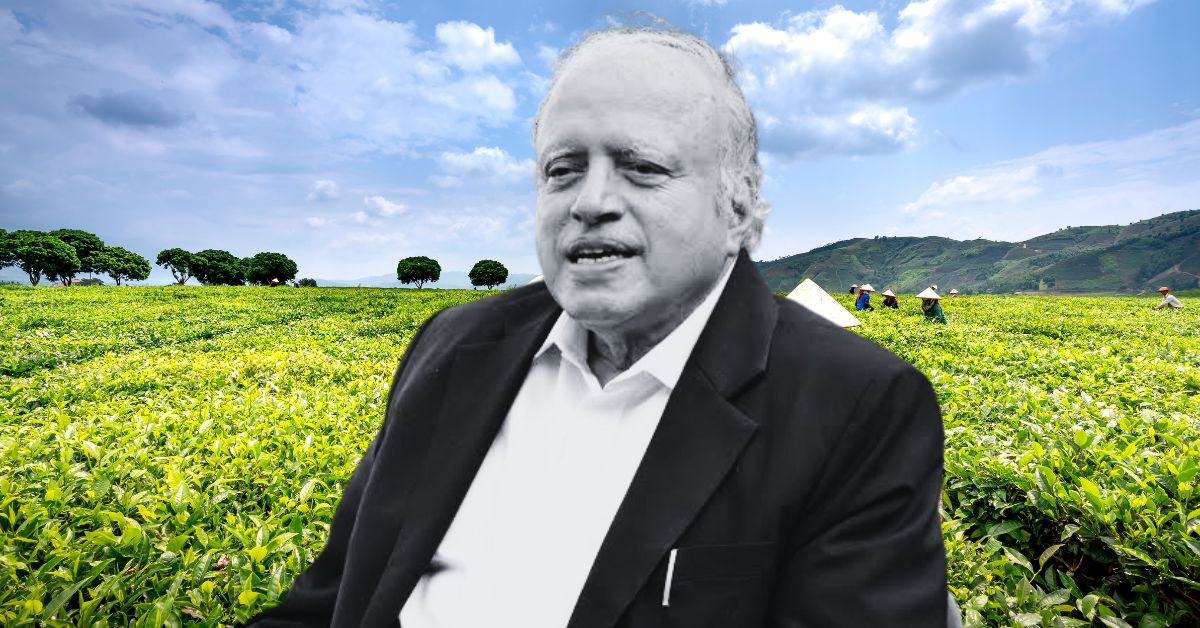
As the nation paused this August to celebrate the centenary of Professor M.S. Swaminathan’s birth, it is not just remembering a scientist—it is saluting a saviour. A man whose life’s work helped pull India back from the brink of famine and whose ideas continue to echo in the fields, villages, and policies shaping our future.
For many, Swaminathan’s name is a line in a textbook, tied loosely to the “Green Revolution.” But to reduce his contribution to a footnote is to misunderstand the scale of his legacy. He didn’t just change how India farms—he changed how it lives.
From Famine’s Shadow to Fields of Plenty
Born in 1925 in Kumbakonam, Tamil Nadu, Swaminathan came of age during one of India’s darkest hours—the Bengal Famine of 1943. The gut-wrenching images of starvation didn’t just disturb him; they defined him. It was this tragedy that turned a young man who could have been a doctor into a scientist with a singular mission: to make hunger history.
By the mid-1960s, that mission became critical. India was teetering on the edge of mass starvation, its granaries nearly empty, and its options limited to foreign grain aid. It was then that Swaminathan stepped forward—not with grandstanding, but with science, pragmatism, and empathy.
The Man Behind the Miracle
Partnering with Nobel Laureate Norman Borlaug, Swaminathan spearheaded the introduction of high-yielding wheat and rice varieties in Indian soil. But these were no silver bullets. Their success required relentless fieldwork, trust-building with wary farmers, and local adaptation.
In Punjab’s dusty fields and Tamil Nadu’s rice paddies, Swaminathan wasn’t a distant scientist. He was on the ground, shoulder to shoulder with farmers. Within four years, India’s wheat output nearly doubled—from 12 million to 23 million tonnes. By 1971, the country that once imported grain to survive declared itself self-sufficient. It was nothing short of an agricultural renaissance.
The Evergreen Visionary
Yet Swaminathan’s brilliance went beyond crop yields. He saw the risks—soil degradation, water scarcity, social inequity—and knew that India needed more than a one-time miracle.
And so he pivoted, championing what he called the “Evergreen Revolution.” This was not just about production, but sustainability—agriculture that respected biodiversity, empowered the rural poor, and gave women and smallholder farmers a seat at the table.
His Bio-Village model brought tech, knowledge, and dignity to remote communities. His Village Knowledge Centres introduced digital literacy long before “Digital India” was a slogan. For Swaminathan, progress was only meaningful if it was inclusive.
The Statesman Scientist
Swaminathan wasn’t content with the lab or the field. He took his convictions into the corridors of power. As a policymaker, he was instrumental in shaping the Minimum Support Price system, land reform frameworks, and the groundbreaking Protection of Plant Varieties and Farmers’ Rights Act of 2001.
His chairmanship of the National Commission on Farmers led to five pivotal reports—urgent, data-backed blueprints to address everything from crop pricing to the heart-wrenching epidemic of farmer suicides.
He also built institutions to outlast him. The M.S. Swaminathan Research Foundation (MSSRF), founded in 1988, remains a lighthouse for rural innovation. Globally, his voice shaped conversations on conservation, food security, and development through leadership roles in IUCN, WWF, ICAR, and as co-founder of ICRISAT.
A Lifetime of Honors—and a Legacy Beyond Medals
Swaminathan’s contributions earned him every major honour: the Padma Shri, Padma Bhushan, Padma Vibhushan, Ramon Magsaysay Award, the World Food Prize—and, posthumously in 2024, the Bharat Ratna.
But he measured success not in awards, but in impact. In children with full bellies. In women leading village councils. In farmers using tech to predict monsoons. In a nation that no longer fears famine.
Centenary Celebrations: A Nation Remembers
In 2025, India has come together to commemorate the man who once fed it. A commemorative coin and stamp now bear his image. August 7 has been declared “National Agricultural Science Day.” Global summits on food security, peace, and climate justice are convening in his name.
But the greatest tribute lies not in ceremony—it lies in action.
Why Swaminathan Still Matters
Today, as the world grapples with climate change, food insecurity, and growing inequality, Swaminathan’s principles are more urgent than ever. His vision—science in service of the people, policies rooted in justice, and innovation anchored in sustainability—is the blueprint we desperately need.
M.S. Swaminathan was not just the father of India’s Green Revolution. He was the quiet architect of a nation’s resilience, the original eco-agriculturist, the champion of the voiceless. He fed a country, yes. But more importantly, he nourished its spirit.
Let us not simply remember him—let us become the custodians of his dream.

