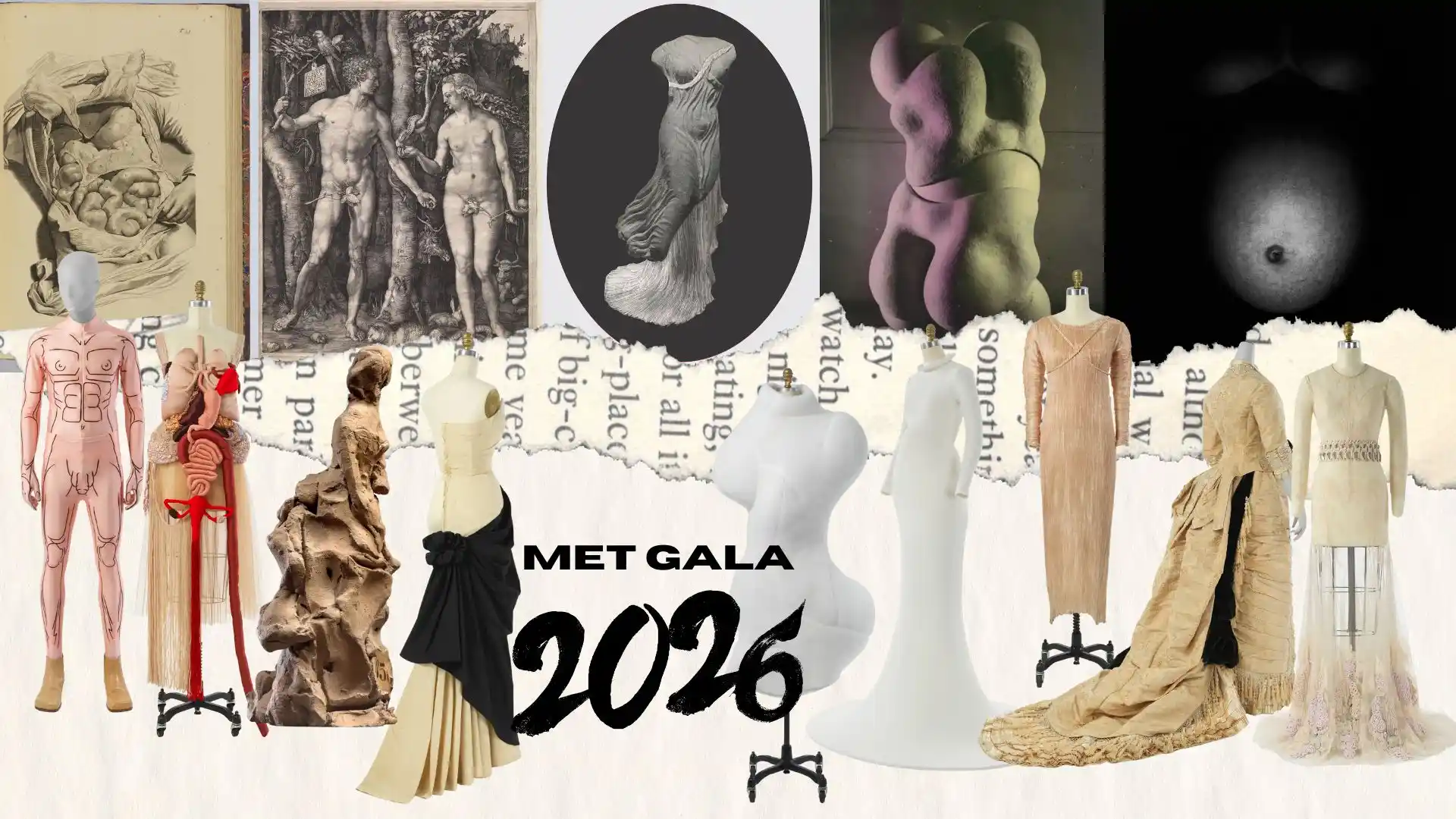
Somewhere between a museum staircase and a red carpet, fashion and flesh are preparing to meet. The Met Gala 2026 theme, Costume Art, isn’t just another dress prompt. It’s a quiet, ambitious conversation: how the body and the clothes we drape it in are not separate, but twins.
Imagine garments that don’t just cover, but shape us. Costumes that feel sculptural, conceptual, almost like built-in architecture. This isn’t fashion as attire, it’s fashion as identity.
The Met Gala Is Not Just a Party
If you’re seeing only celebrities in silk and sequins, you’re missing the point. The Met Gala is far more than a glitzy fundraiser: it’s a cultural event where fashion meets serious ideas. Held at New York’s Metropolitan Museum of Art every year, it opens a major Costume Institute exhibition, and the looks people wear are directly tied to that show.
For 2026, the Costume Institute isn’t merely putting on clothes. It’s laying bare the relationship between the body, the self, and what we build around ourselves. The Gala, this time, becomes the literal dress rehearsal for that dialogue.
Why “Costume Art”? Because Bodies Are Their Own Canvas
Curator Andrew Bolton describes this year’s theme as an exploration of the “indivisible connection between fashion and the body.” It’s not fashion as surface or ornament, it’s fashion as structure, anatomy, and narrative.
The exhibition intends to examine a variety of bodies: ageing bodies, pregnant bodies, and even anatomically stylised bodies. This isn’t a reductive costume; it’s a celebration of flesh and form. The Met wants to ask: What happens to identity when we don’t just wear clothes, but become them?
The Risk and the Reward of Dressing as Idea
If you’re a designer or celebrity, this is the kind of brief that gives your wardrobe permission to go wild. Think couture rendered as living sculpture: volumes that mimic muscle, seams that echo bones, blouses that feel like exoskeletons. But it goes deeper than drama; it’s a statement.
There’s real risk here. Walk too literal, and you end up in cosplay territory. Stray too safe, and you miss the chance to interrogate what costume really means. But that’s the beauty: this is a red carpet that demands reflection.
What It Means for Indian Fashion
India and fashion are already entwined in a way few realize. Embroidery, tailoring, hand weaving; our artisans build style in conversation with the body. This year, Indian sensibility might get to reclaim the narrative of costume not as decoration, but as declaration.
Our textile traditions can respond beautifully to “Costume Art”: a Banarasi sari could be reimagined as architectural drapery. A block-printed kurta may morph into a bodice that plays with silhouette and structure. The gala could be a moment for Indian craft to show how deeply identity weaves into fabric.
The Cultural Stakes Are High
This theme doesn’t just ask designers to be creative; it demands a reckoning. What do we consider “our” body? Who gets to imagine it? And who defines what “costume” means in the first place?
We are living in an age where digital selves, avatars, and augmented reality all challenge our physical identity. Costume Art invites us to explore whether fashion is still about texture and fabric, or whether it’s becoming a bridge between our real selves and virtual personas.
Not Just For the Famous: Why It Strengthens the Larger Fashion Conversation
For someone like me, someone who lives in design and thinks about what clothes say about us, this Met Gala feels different. It isn’t just about who’s wearing what. It’s about why they’re wearing it. And that has ripple effects.
When costume becomes art, retail starts paying attention. Young designers will prototype pieces that aren’t just photogenic but thoughtful. Fashion students will sketch bodies, not just garments. Shoppers, even outside New York, may start asking: Does this reflect who I am, or is it a surface I wear?
The Next Chapter: Reclaiming Our Visual Voices
I don’t believe this Gala will erase traditional fashion languages. Rather, I see it as an opportunity, a chance for personal and cultural identity to re-emerge through the language of couture.
I already imagine:
- A handwoven Kalamkari drape sculpted to echo muscle curves
- A minimalist kurta re-cut to highlight the pregnant silhouette
- Vintage tailoring reworked with bone-like boning, framing the body like architecture
- Textiles that change with light, as our identities change with time
These are cracks, small rebellions, but they matter. They signal that while global style may be concept-driven, identity will always speak through craft.
Why This Matters for Us
The Met Gala 2026 theme is not just for New York editors and Hollywood icons. It’s a prompt for every designer, maker, and wearer who cares about what their clothes mean.
If we pay attention, this could be a turning point:
A moment where fashion questions itself, and in doing so, gives space for heritage, body politics, and individual narrative to re-enter the conversation.
Costume Art, at its best, isn’t just spectacle.
It’s a mirror, reflecting not just the body, but the self.
And in that reflection, maybe we finally start dressing for who we truly are.