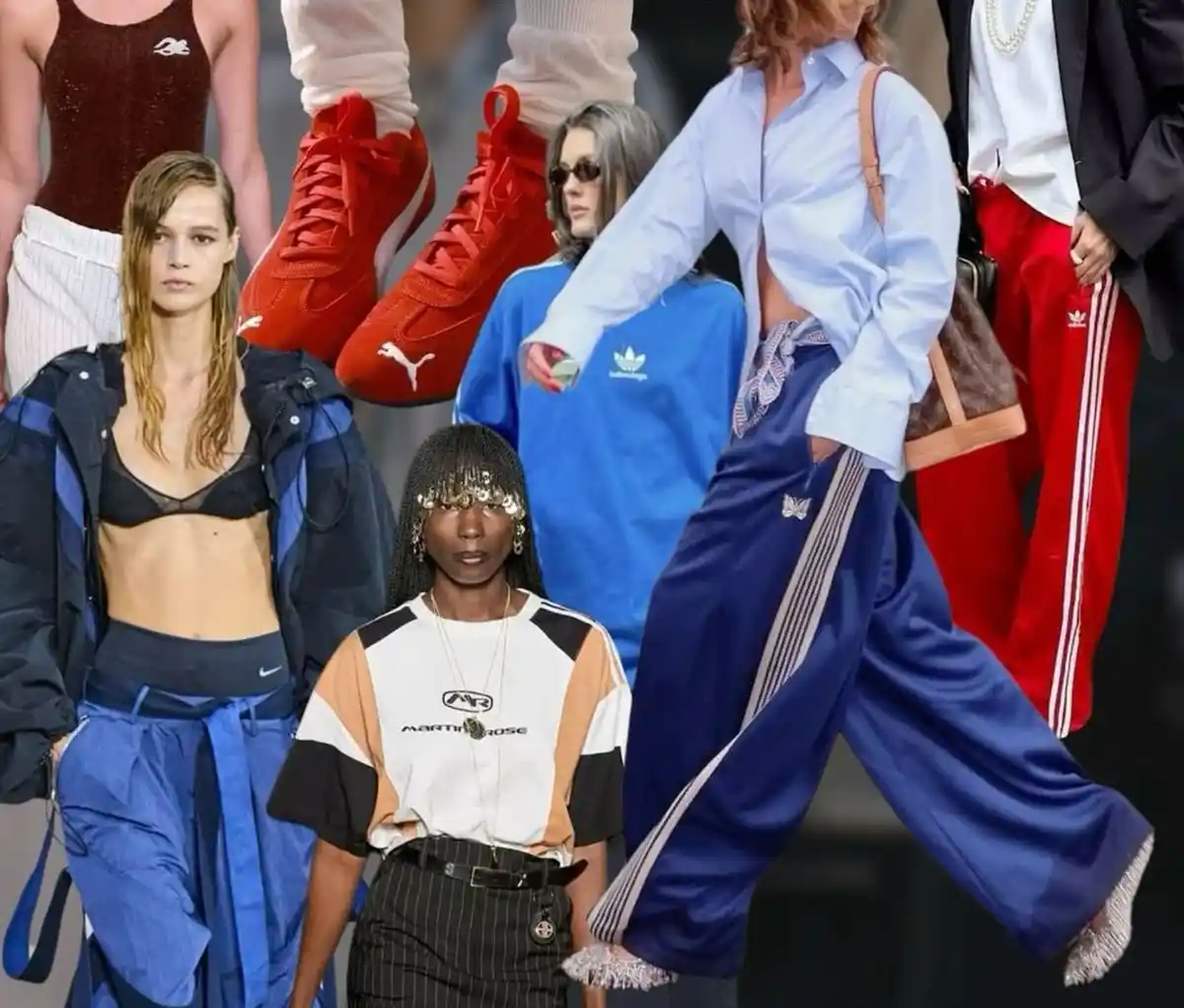
There’s a moment every morning, right before the day begins, when I decide who I need to be for the next twelve hours. Designer, commuter, colleague, problem-solver, maybe a reluctant evening socialiser if the day stretches too far. And almost by instinct, my hand goes to the same silhouettes: soft trousers, a structured knit, something stretchy, something breathable, something I don’t have to negotiate with.
Somewhere in the past five years, India built an entire economy around that instinct.
A country the size of a continent quietly agreed: we’re done suffering for clothes.
And just like that, athleisure; our version of it became the new national dress code.
Not gym leggings and hoodies.
Not sports bras in supermarkets.
But an entire functional aesthetic: soft mobility wear, weekday-to-weekend clothes, the kind of garments that sense who we are before we fully wake up.
The day got longer, and the clothes got softer
India has always been a country that moves. But now, it moves differently.
People spend two hours commuting, eight hours working, one hour pretending to unwind, three hours doing chores, and somewhere in between, they need pockets. Breathability. Stretch. Wrinkle resistance. A silhouette that doesn’t judge them.
Our clothes adapted before we even articulated the need.
I began to notice it on the metro: polished professionals wearing drawstring trousers disguised as formalwear. Twenty-somethings in ribbed sets styled like “proper outfits.” Business-casual men in polos cut from technical fabrics: soft, matte, never creased.
This wasn’t athleisure as trend.
This was athleisure as a survival strategy.
Designers felt the shift first
If you work in fashion, you feel societal changes before they show up on Pinterest.
In fittings, pant rises got more forgiving. Waistbands softened. Buttons disappeared. Knit trousers started selling in colours that used to be exclusive to chinos.
Knits overtook wovens in speed, revenue, and relevance; not because they were cheaper or trendier, but because they were emotionally correct. They respected people’s lifestyles. They aligned with how India was actually living, not how magazines imagined it.
Athleisure, for us, became a framework:
- stretch that doesn’t look sporty
- polish without stiffness
- breathability that can survive a 35-degree commute
- silhouettes that blur the idea of “formal” and “casual”
We weren’t designing clothes.
We were designing ease.
Each city interpreted comfort in its own accent
Walk through different cities and the comfort economy reveals itself like regional cuisine.
Bangalore wears tech-athleisure: muted colours, breathable fabrics, fleece jackets in freezing offices with 21-degree AC wars. The vibe is “I might bike to work, but also I might get on a call with California.”
Mumbai leans into humidity logic: relaxed shirts, unstructured trousers, ribbed tanks under cotton layers, sneakers that dry fast after a drizzle. Athleisure here is a climate negotiation.
Delhi took athleisure and added status to it. Luxe fabrics, logoed caps, soft sets for brunch, elevated sports silhouettes in gold or camel tones. The city likes comfort; but never anonymity.
Tier 2 cities developed the most interesting hybrid: performance wear disguised as occasion wear: stretch trousers for office pujas, wrinkle-free shirts for nonstop weddings, air-mesh polos worn with tailored bottoms.
Comfort didn’t become a trend.
Comfort became a language, and each city speaks it differently.
It changed how we work, shop, date, and exist
What fascinates me most is how this shift has rewritten the emotional grammar of dressing.
Work looks different when you’re wearing breathable knits instead of crisp, unforgiving office shirts. People think more clearly when they aren’t adjusting waistbands.
Shopping feels different because fabrics are no longer passive; they do things. Wick sweat. Release wrinkles. Stretch and spring back. Clothing became small pieces of engineering.
Dating has changed the most. People now show up in clothes that say:
“Look, I care, but I’m not auditioning. I’m comfortable with myself; literally.”
There’s an intimacy in that. A quiet confidence.
And at airports, athleisure has become a kind of unspoken caste system. The cleaner and softer the silhouette, the more “globally competent” you look. India is dressing for mobility; not glamour because mobility is our ambition now.
This isn’t Westernisation. This is liberation.
A mistake many make is assuming athleisure’s rise is an imported influence.
But India’s comfort economy isn’t about looking American or European.
It’s about a single, collective desire: freedom of movement.
We don’t want to look relaxed.
We want to feel un-restricted.
This is emotional, not aesthetic.
Designers know this. Retail teams know this. The consumer definitely knows this, even if they don’t articulate it.
The country is tired. Overworked. Overcommuted. Under-rested.
We can’t control most things but we can control waistbands.
The future is soft, intentional, and quietly functional
When I step into stores now, I see the future taking shape:
- trousers that behave like joggers but look like formals
- polos that stretch like gym tees but read as business-ready
- denim that doesn’t punish the body
- dresses cut for breathability, not stiffness
- oversized tees treated like everyday armour
What excites me most is that India finally understands design; not as decoration, but as problem-solving.
And maybe that’s the real story:
We’ve stopped dressing to impress others.
We’ve started dressing to survive the day with dignity.
Athleisure didn’t take over India.
India grew athleisure, organically, internally, emotionally; until it became one of the few things we all agree on.
The country is moving fast.
The clothes just decided to keep up.