
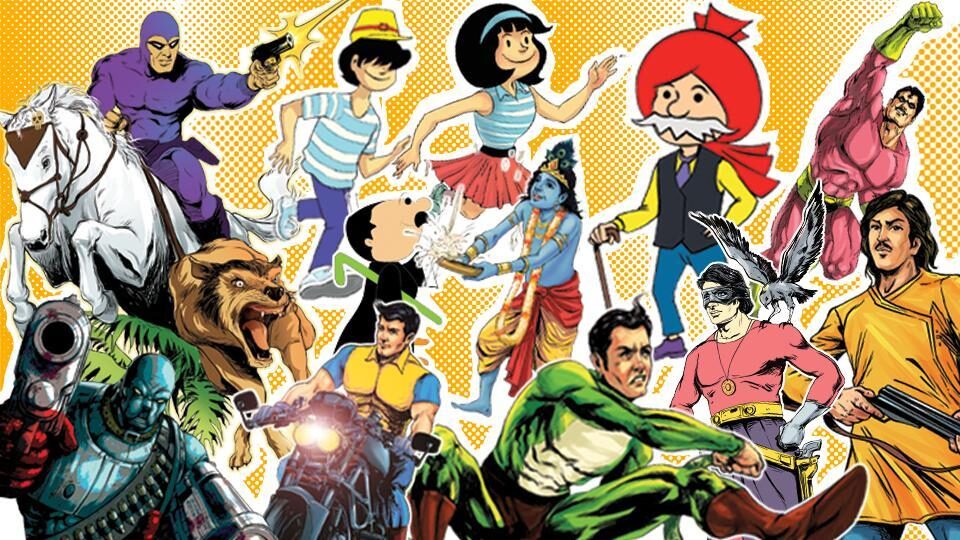
India’s comic book industry is undergoing a renaissance, with homegrown creators driving a new wave of storytelling that is reshaping the country’s cultural landscape. Once overshadowed by Western imports, indigenous comics are now at the forefront of a movement that blends mythology, social commentary, and modern narratives with striking originality.
From Myth and History to Superheroes
The comic journey in India began in the 1960s with Indrajal Comics, which brought Western icons like The Phantom to Indian readers. The real breakthrough came in 1967 with Anant Pai’s Amar Chitra Katha, a series that captured Indian mythology and history in an accessible, visual form. Over the decades, ACK sold more than 100 million copies in over 20 languages, cementing its place in Indian households.
By the 1970s and 80s, indigenous superheroes emerged through Raj Comics. Characters such as Nagraj—steeped in mythological themes—and Super Commando Dhruva became household names. This “golden age” of Indian comics thrived until the 1990s, when television, video games, and digital media eroded print readership.
Today, the industry is rebounding. With India’s smartphone boom and affordable internet, comics are reaching readers in Tier 2 and Tier 3 cities as well as metropolitan centers. Comic Con India has become a thriving cultural event, drawing fans and fueling commercial growth.
Globally, optimism mirrors this revival: Mordor Intelligence projects the comic book market to grow from USD 18.14 billion in 2025 to USD 23.61 billion in 2030, with India positioned as a notable contributor.
New Voices, New Stories
What sets the current wave apart is the strong presence of indigenous creators who are telling stories beyond children’s fare, appealing to adults and international audiences alike.
- Chacha Chaudhary: Created by Pran Kumar Sharma in 1969, the bespectacled man with a red turban became a cultural icon. With wit sharper than a computer, Chacha, along with Sabu and Channi Chachi, solved everyday problems while reflecting Indian middle-class values. His enduring appeal has spanned television, animation, and comics addressing issues like corruption and the environment.
- Nagraj: Introduced in 1986 by Raj Comics, Nagraj is one of India’s most enduring superheroes. His snake-inspired powers, drawn from folklore, distinguished him from Western caped crusaders. Over time, Nagraj’s stories matured, addressing moral complexities and darker themes, keeping pace with evolving audience tastes.
- The Sadhu: A creation of Gotham Chopra and Jeevan J. Kang, this series followed a British soldier’s transformation into a mystic in colonial India. With supernatural and spiritual undertones, it appealed to both Indian and global audiences.
- The Harappa Files: In 2011, Sarnath Banerjee delivered a wry commentary on post-liberalized India, using illustrated vignettes to capture urban anxieties, contradictions, and cultural shifts.
- Legends of Halahala: Appupen’s wordless graphic novel employed haunting, surreal artwork to explore chaos, spirituality, and transformation, pushing the boundaries of visual storytelling.
- Corridor: Banerjee’s 2004 debut captured the fragmented realities of Delhi’s Connaught Place, blending text, photography, and illustration to depict urban alienation and aspiration.
- Kari: A bold exploration of gender, politics, and alienation, Kari represented a turning point in Indian comics by tackling socio-political realities with mythological undertones and progressive themes.
Looking Ahead
India’s indigenous comics are thriving through digital subscriptions, multilingual releases, and growing fandom communities. They reflect a society negotiating its past and present, while carving out new spaces in global pop culture.
From the enduring charm of Chacha Chaudhary to the experimental brilliance of Legends of Halahala, these works highlight a creative industry in full bloom. As India redefines its comic narratives, its storytellers are not just entertaining—they are crafting a vital part of the nation’s cultural identity.

