
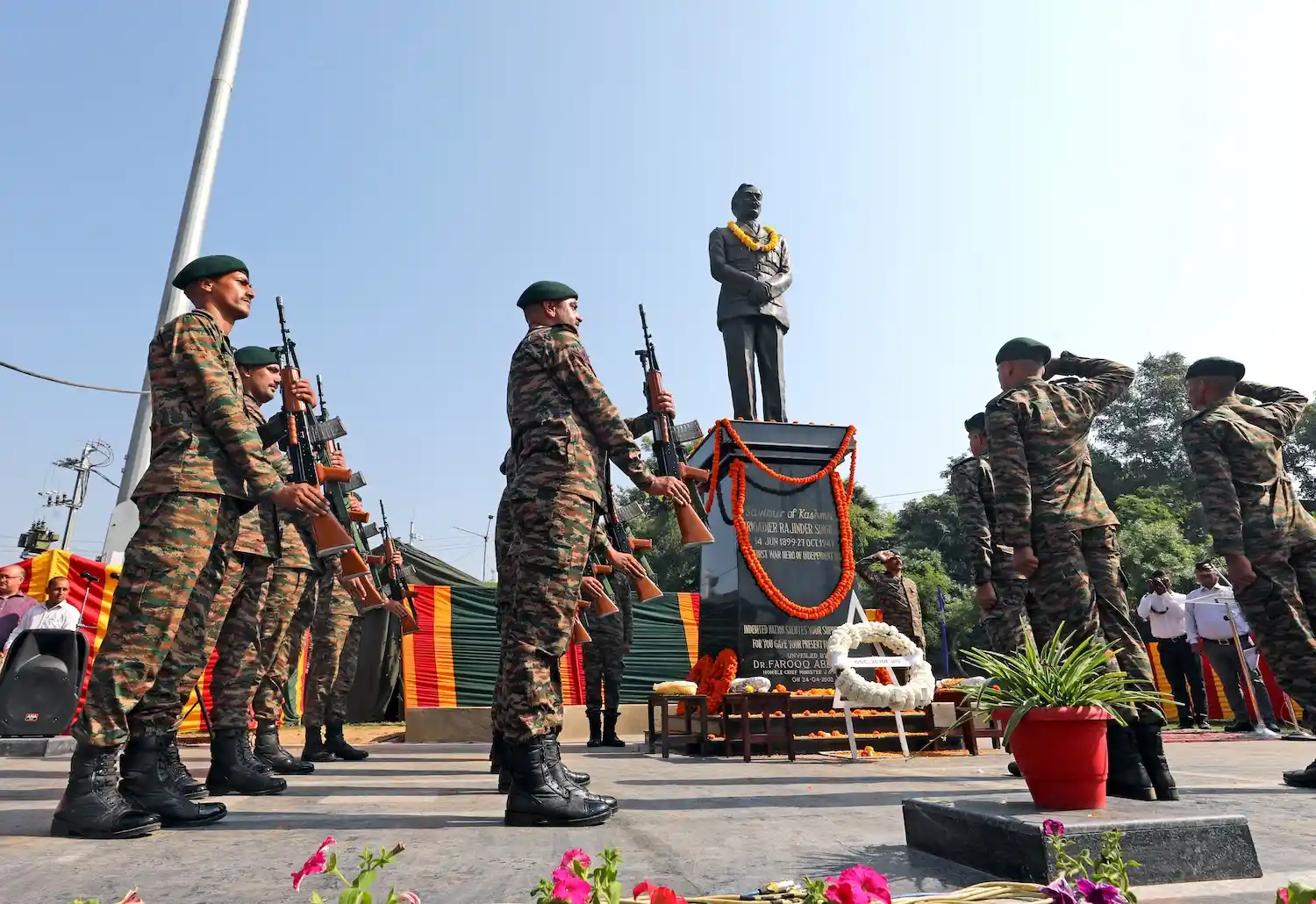
Every year on October 26, Jammu and Kashmir celebrates a moment that reshaped its destiny — the day Maharaja Hari Singh signed the Instrument of Accession in 1947, uniting the region with the Union of India. Nearly eight decades later, this day is not just a commemoration of a legal document, but a celebration of shared values, unity in diversity, and the promise of renewed progress under the tricolour.
In 1947, as India emerged from colonial rule, it faced the daunting task of bringing together hundreds of princely states into a single, democratic nation. For Jammu and Kashmir, perched at the crossroads of civilizations and cultures, the choice was both historic and decisive. Despite immense political pressure and invasion attempts orchestrated from across the border, Maharaja Hari Singh’s decision to accede to India defined the region’s constitutional and cultural fabric. It was a decision rooted in a deep understanding of India’s secular ethos — a reassurance that diversity would be celebrated, not suppressed.
Over the decades, Jammu and Kashmir’s integration into India has embodied the ideals of resilience and reform. The milestone changes initiated in recent years have further strengthened that bond. The abrogation of Article 370 in 2019 marked not merely a constitutional shift, but the dawn of a more equitable era for the people of the region — one that promised uniform rights, better governance, and developmental parity with the rest of the country.
Today, Jammu and Kashmir stands at the threshold of unprecedented transformation. Roads and railways are connecting far-flung mountain villages; digital highways are enabling young entrepreneurs to reach global markets. The Srinagar-Jammu Expressway, the Chenab Bridge — now the world’s highest railway bridge — and emerging tourism circuits in Pir Panjal and Chenab Valley showcase a renewed spirit of inclusion and ambition.
Celebrating Accession Day also means acknowledging the indomitable spirit of the people of Jammu and Kashmir — their art, culture, and contributions to India’s collective identity. From the mesmerizing strokes of Kashmiri papier-mâché artisans to the soulful strains of Sufi music echoing through the valleys, the region continues to enrich India’s cultural narrative.
Young innovators are now carrying forward that tradition in new forms. Start-ups in Srinagar are designing AI-driven agri-tech solutions; students from Baramulla to Kathua are excelling in national institutions; athletes are representing India at international events. Tourism, too, is witnessing an astonishing resurgence, with record-breaking visitor numbers breathing new life into local economies.
The Future Beckons
As the national flag flutters proudly over every school and institution in the Union Territory, the symbolism of Accession Day feels more alive than ever. It is no longer confined to history books or political debate — it resonates through education drives, women’s empowerment initiatives, and the collective optimism that pervades daily life across the region.
In Labradors running across saffron fields near Pampore, in apple exporters from Shopian embracing global e-commerce, and in Ladakhi children reading lessons under cold desert skies — the idea of India thrives in countless lived experiences. The message is clear: peace, progress, and participation define the new Jammu and Kashmir.
Accession Day is, at its heart, a reaffirmation — that the idea of India, diverse and democratic, grows stronger through inclusion. As we celebrate this day, we honor not just a historical event but a living covenant of trust and aspiration. Jammu and Kashmir’s story today is no longer just about integration — it’s about imagination, innovation, and the irresistible pull of hope.

