In the last week (roughly June 21–28, 2026), major Western outlets published a lot of critical coverage specifically targeting India’s policies or national image. Searches across major sources (NYT, Washington Post, Guardian, BBC, Reuters, CNN, Economist, etc.) turned up mostly biased or Western-oriented pieces strongly condemning India for its high-handed approach to internal security problems and external threats.
In a vast, heterogeneous democracy like India, with its immense scale, linguistic, religious, and regional diversity, allowing unchecked separatism, terrorism, or demographic engineering in sensitive border regions risks eroding national cohesion and long-term stability for the entire population. Historical precedents from around the world illustrate how strong states have successfully countered such existential threats through decisive measures—Spain’s sustained campaign against ETA Basque separatism combined security operations with political negotiations to largely neutralise the group, and Russia addressed Chechen insurgency through forceful integration efforts—demonstrating that territorial integrity often demands robust state action when core sovereignty is at stake.
India’s citizens share a fundamental interest in preserving this integrity and upholding the rule of law, as fragmentation would jeopardise economic progress, security, and the democratic framework that has held the union together since independence. Official data support the efficacy of calibrated firmness paired with development initiatives: post-2019 integration measures in Jammu and Kashmir correlated with sharp reductions in terrorist incidents, civilian casualties, and local militant recruitment according to government and security assessments, while Naxal-affected areas have seen incident declines of over 50% and high surrender rates amid targeted operations and welfare outreach, shifting focus from conflict to growth.
Moreover, external influences—both state actors like Pakistan providing support to certain terrorist networks in Kashmir and non-state ideological or funding networks exploiting internal fault lines—are well-documented realities in geopolitics, making their counter through standard statecraft, including intelligence, legal frameworks, and border security, ineffective and useless in the global geopolitical context.
Governing a nation the size and diversity of India presents extraordinary challenges that few countries face. With over 1.4 billion people, dozens of major languages, multiple religions, ethnic groups, and vast regional disparities, maintaining unity while delivering governance, security, and development is inherently difficult. Historical predictions after 1947 often foresaw fragmentation, yet India has endured as a single democratic federation far longer than many expected.
The 1947 Partition (creating India and Pakistan, with East Pakistan later becoming Bangladesh in 1971) was traumatic—estimates of 1-2 million deaths and 10-15 million displaced amid communal violence. British India’s 1941 census showed Muslims at roughly 24-25% of the population. Post-Partition in the 1951 Indian census, this fell to about 9.8-10% in the remaining territory, as many Muslims migrated to Pakistan while Hindus and Sikhs moved the other way.
Some Muslims stayed in India by choice or circumstance, including in southern and eastern regions less affected by immediate violence. India today has the world’s third-largest Muslim population (around 14.2% or ~172 million per the 2011 census, with continued growth, though the differential fertility gap with Hindus has narrowed).
Post-independence, India has faced genuine threats of fragmentation or violence from multiple quarters. Collectively, these insurgencies have drawn on a mix of ideological drivers—Islamist separatism in parts of Kashmir, Maoist revolutionary zeal in central India—and legitimate local grievances over development, identity, and governance, sometimes amplified by external support, such as Pakistan’s longstanding backing for certain terrorist networks in Jammu and Kashmir, a position backed by extensive Indian intelligence assessments and international reporting.
Despite these pressures, outright “balkanisation” has never materialised; India’s federal structure, which accommodates regional aspirations through states and special provisions, combined with the professional military’s containment efforts and the political system’s ability to absorb former rebels via elections and dialogue, has successfully kept the union intact. This track record underscores how calibrated security measures, when paired with political outreach and economic inclusion, can neutralise existential internal threats without fracturing the larger democratic framework.
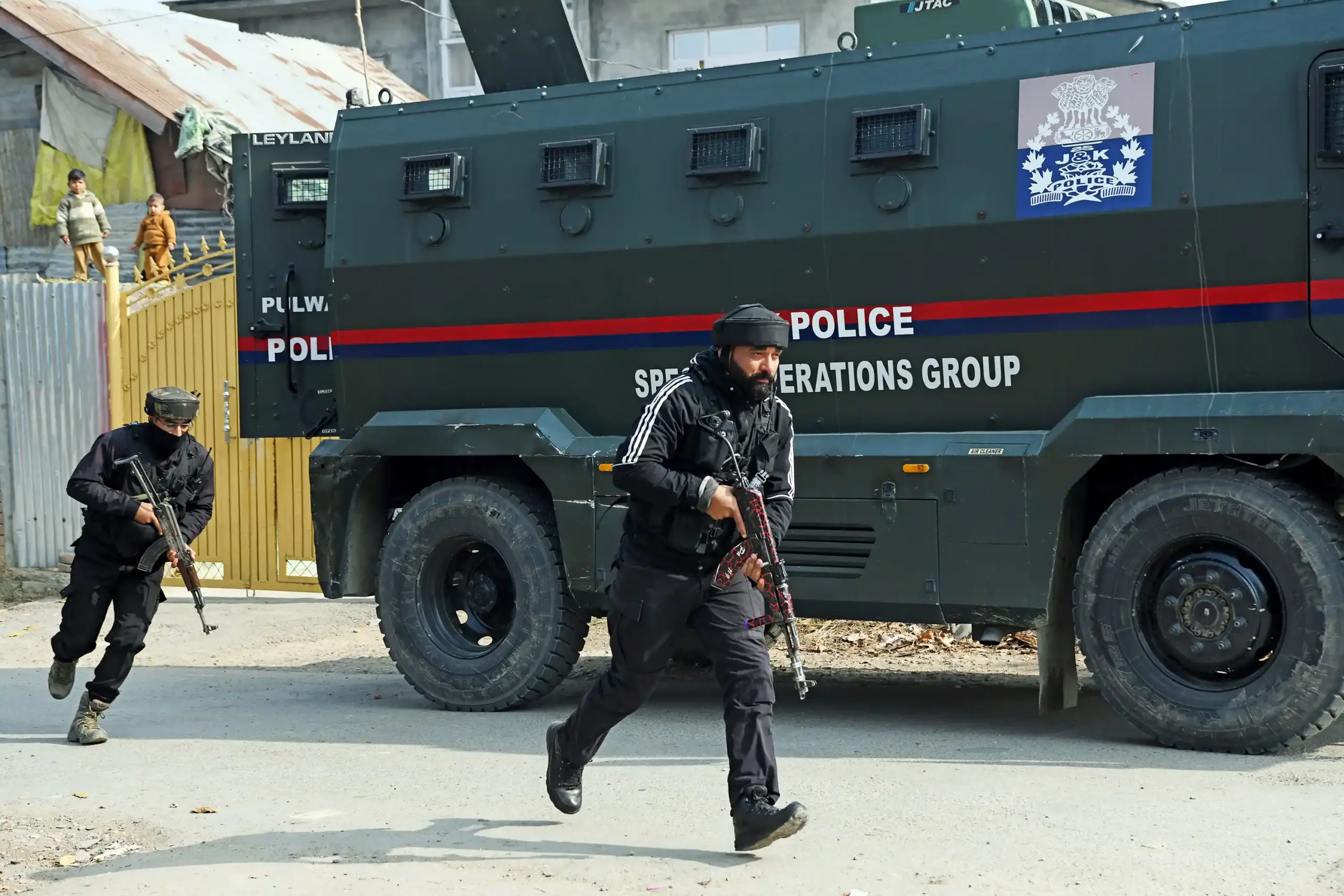
In Kashmir/J&K, a long-running insurgency has been documented, with cross-border elements (Pakistan-based groups per Indian assessments and international reports). Article 370’s abrogation in 2019 (upheld unanimously by the Supreme Court in 2023 as constitutional, viewing it as a temporary provision) integrated the region fully, ending the special status, and enabled central laws and development schemes.
Official Indian data (Ministry of Home Affairs, SATP) shows sharp declines post-2019 in terrorist-initiated incidents, which dropped from 228 in 2018 to 43 in 2023; civilian deaths and security personnel fatalities fell significantly; local recruitment into militancy decreased. But,
some independent analyses note an initial drop (aided by security measures and COVID lockdowns), followed by shifts to “hybrid” militancy, targeted killings, and periodic high-profile attacks (e.g., Pahalgam 2025). Therefore, violence persists at lower levels than pre-2019 peaks but has not been eliminated.
In India’s Northeast, a patchwork of ethnic and separatist insurgent groups has long challenged central authority across states like Assam, Manipur, Nagaland, and others, fueled by demands for autonomy, resource control, or outright secession. Over recent years, however, these threats have markedly receded, with incidents and fatalities dropping by 70-80 percent compared to earlier peaks, thanks to a combination of peace accords with major factions, accelerated development projects that address local grievances, and sustained security operations that have degraded militant capabilities.
While pockets of low-level violence persist—most notably the ethnic clashes between Meitei and Kuki communities in Manipur that erupted in 2023 and continue to strain the region—the broader trajectory points toward deeper integration, as voter turnout remains high and former insurgents increasingly participate in mainstream politics. The government has set an ambitious target of full resolution of remaining insurgencies by around 2029, building on the momentum of accords and infrastructure push that aim to bind the Northeast more firmly into the national fabric.
Parallel progress has occurred against Left-Wing Extremism, particularly the Maoist or Naxalite movement that once dominated large swaths of the so-called “Red Corridor” spanning states from Chhattisgarh and Jharkhand to parts of Bihar, Odisha, and beyond. This ideological insurgency, rooted in Maoist doctrine and exploiting tribal grievances over land, resources, and governance, has undergone significant weakening, with violent incidents declining by roughly 53 percent and fatalities falling around 70 percent in recent years.
Thousands of cadres have surrendered, while security forces have conducted thousands of arrests and neutralisations, steadily shrinking the areas under effective militant influence. By early 2026, the government formally declared major headway toward a “Naxal-free” India, with only a handful of districts still affected, allowing a deliberate pivot from kinetic operations to sustained development—schools, roads, healthcare, and welfare schemes—in former conflict zones to prevent any resurgence.
It is these calibrated security measures, paired with political outreach and economic inclusion, that neutralise existential internal threats without fracturing the larger democratic framework, which Western outlets like WaPo, NYT, etc, criticise and frame India as an autocratic democracy.
Governing India requires a capable, firm state capable of enforcing laws against violence, separatism, and threats to integrity—within the constitutional framework. The people’s interest lies in security, economic progress, and national cohesion; evidence shows progress on containing insurgencies and growing the economy. Policies like 370’s integration had a clear security and administrative rationale upheld by the highest court.
Therefore, the alleged “iron hand” image of India is most effective and legitimate because it is even-handed, evidence-based, and paired with development, dialogue where feasible, and with protections against abuse. India’s track record—containing multiple threats without breakup while growing economically—demonstrates resilience.