
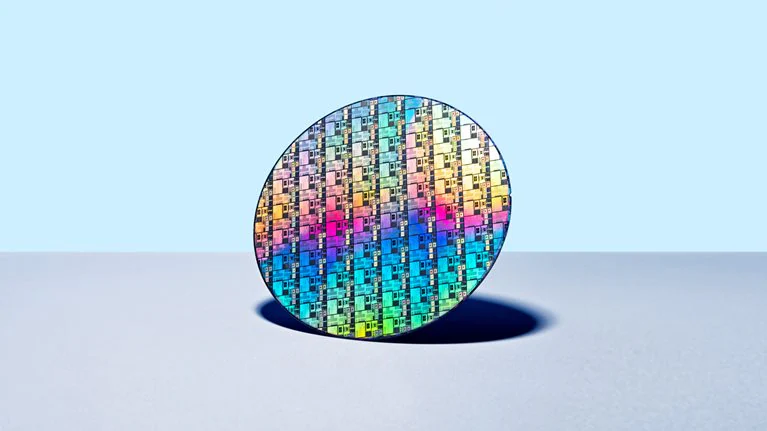
India’s semiconductor sector is undergoing a historic transformation. Backed by large-scale government initiatives, deep-pocketed investments, and strategic global partnerships, the country is rapidly positioning itself as a competitive hub in the global chip supply chain. This journey is not only about industrial growth but also about building economic resilience and technological independence in a world where semiconductors power everything from smartphones to satellites.
Strategic Importance and Market Trajectory
The semiconductor industry is central to modern economies, driving innovation in communications, healthcare, transportation, defense, and space technologies. For India, semiconductors have become a matter of economic security and strategic autonomy.
- Market Value Growth:
India’s semiconductor market stood at $38 billion in 2023, expanded to an estimated $45–50 billion by 2024–2025, and is projected to hit $100–110 billion by 2030. This growth pace mirrors the global semiconductor market’s rise toward $1 trillion by 2030. - Geopolitical Context:
The global chip industry is dominated by a few nations—Taiwan, South Korea, Japan, China, and the US. Recent global supply chain disruptions have highlighted the risks of this concentration, prompting India to invest heavily in supply chain diversification.
Government’s Role: The India Semiconductor Mission (ISM)
At the heart of India’s progress is the India Semiconductor Mission (ISM), an umbrella initiative under the Ministry of Electronics and Information Technology (MeitY). It houses multiple schemes targeting different parts of the semiconductor value chain—from fabrication to design.
Key Schemes and Their Impact
| Scheme | Purpose & Incentives | Recent Outcomes |
|---|---|---|
| Semiconductor Fabs Scheme | Fiscal support up to 50% for high-tech wafer fabrication (<28nm and advanced nodes) | 10 approved projects; major investments in Gujarat and Assam |
| Display Fabs Scheme | Financial aid up to 50% for AM-OLED and LCD display manufacturing | Reduced import reliance, boosting local display manufacturing |
| Compound Semiconductors and ATMP/OSAT Scheme | Up to 50% support for compound semiconductor, sensor manufacturing, and assembly/testing units | New assembly, marking, and packaging plants established |
| Design Linked Incentive (DLI) Scheme | ₹1,000 crore outlay; incentives up to ₹15 crore per chip design startup/MSME | 22 chip design projects funded, fostering IP innovation |
| Production Linked Incentive (PLI) Scheme | Cross-sector boost to electronics manufacturing | Expanded domestic electronics market base, aiding semiconductor demand |
Recent Milestones
The momentum in India’s semiconductor space accelerated in 2025:
- New Approvals:
In August 2025, four new semiconductor units were sanctioned in Odisha, Punjab, and Andhra Pradesh, increasing the total approved projects to 10.- Total Investments: ₹1.6 lakh crore (~$18.23 billion).
- Historic Firsts:
India’s first indigenous chip is slated for production by end-2025, marking a breakthrough in self-reliance. - Industry Giants Enter the Scene:
- Tata Electronics: $11 billion fab in Gujarat and an OSAT plant in Assam.
- Micron: High-capacity assembly and testing facilities.
- HCL–Foxconn, CG Power, Kaynes: Expanding manufacturing and packaging capabilities.
- International Partnerships:
Collaborations with Applied Materials, Lam Research, IBM, Purdue University, Micron, and others are transferring technology, skills, and market access. - Global Recognition:
The 2025 SEMICON India Exhibition is expected to attract 300+ exhibitors from 18 countries, cementing India’s reputation as an emerging global semiconductor destination.
Building the Talent Pipeline
A robust semiconductor industry needs a skilled workforce—from engineers to technicians. The ISM is tackling this challenge head-on.
- Training Targets:
Aim to train 85,000 engineers in semiconductor specialization by 2032. - Progress So Far:
Nearly 60,000 individuals trained in design, fabrication, and testing skills. - Academic Collaboration:
Universities now have access to Electronic Design Automation (EDA) tools and industry-standard lab setups, fostering hands-on learning and innovation. - Addressing the Gap:
By investing in skill development, India is pre-emptively addressing the projected global shortfall of 1 million semiconductor professionals.
Sectoral Impact
India’s semiconductor strategy extends beyond manufacturing:
- Research & Development (R&D):
The DLI scheme is spurring the creation of proprietary chip designs and intellectual property. - Assembly, Testing, Marking, and Packaging (ATMP/OSAT):
New plants are improving domestic value addition, reducing dependence on imported finished chips. - Design Ecosystem Growth:
Startups and MSMEs are entering the chip design space, aided by funding and infrastructure support. - Downstream Industry Impact:
Sectors such as mobile devices, IT hardware, automotive electronics, and AI applications are benefiting from a more reliable domestic semiconductor supply.
Strategic Advantages for India
India’s rise in the semiconductor domain brings multiple advantages:
- Economic Gains:
A homegrown semiconductor sector will create hundreds of thousands of jobs, stimulate high-tech exports, and reduce the trade deficit from chip imports. - Supply Chain Security:
By diversifying sources and building domestic capacity, India strengthens its resilience to geopolitical shocks. - Technological Sovereignty:
Indigenous chip production enables India to control critical technologies, vital for defense and strategic sectors. - Global “Trusted Supplier” Status:
With strong IP protection laws and democratic governance, India is positioning itself as a reliable partner in sensitive tech supply chains.
Challenges Ahead
Despite the progress, India faces significant hurdles:
- Capital Intensity:
Semiconductor fabs require billions in upfront investment and long gestation periods before profitability. - Technology Gaps:
Competing with established giants in advanced nodes (<5nm) will require substantial technology transfers and R&D breakthroughs. - Infrastructure Readiness:
Fabs need uninterrupted power, abundant clean water, and world-class logistics—areas where India must still improve. - Global Competition:
Countries like the US, EU members, and Japan are also pouring billions into reshoring chip manufacturing, intensifying the race.
Forward Outlook
India’s semiconductor journey is still in its early chapters, but the trajectory is unmistakably upward.
- Short Term (2025–2027):
Focus on operationalizing the first batch of fabs, building OSAT/ATMP capacity, and producing India’s first commercial chips. - Medium Term (2027–2030):
Move toward higher-end nodes, expand display manufacturing, and grow the design ecosystem to feed global supply chains. - Long Term (Post-2030):
Establish India as a top-five global semiconductor manufacturing hub, with full-stack capabilities from R&D to mass production.
India’s semiconductor journey is a well-orchestrated blend of policy vision, industry participation, and global collaboration. The government’s proactive stance—through the ISM, PLI, DLI, and other schemes—has catalyzed private sector confidence, unlocking billions in investments.
This transformation is more than an industrial story—it’s a strategic imperative. By 2030, if execution matches ambition, India will not only meet its domestic chip needs but also emerge as a trusted global semiconductor supplier, contributing to a more diversified, secure, and innovation-driven global tech ecosystem.

