
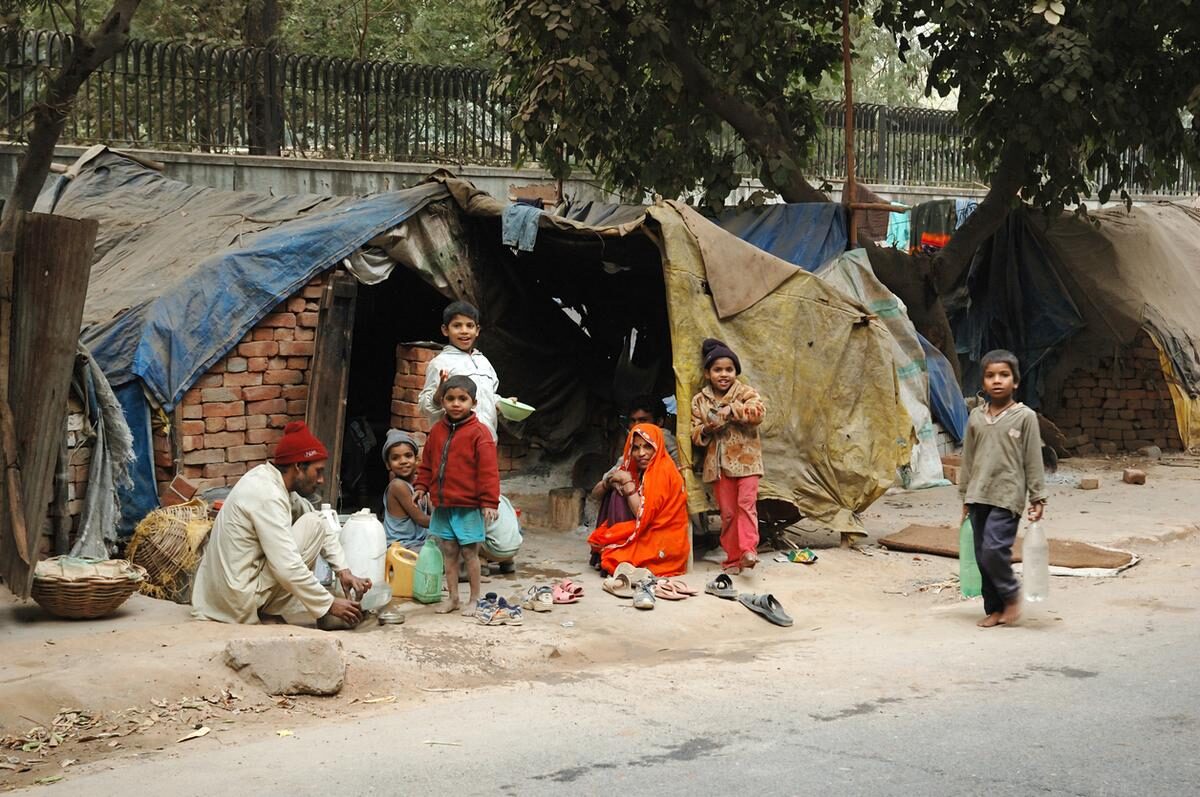
Over the past decade, India has emerged as a global exemplar in large-scale poverty reduction. Anchored in sustained economic growth, robust welfare systems, and the strategic use of technology, the country has lifted hundreds of millions out of deprivation. This transformation has been neither accidental nor incremental—it has been the product of deliberate policy choices, efficient delivery mechanisms, and inclusive economic momentum.
Rapid Reduction in Extreme Poverty
Between 2011–12 and 2022–23, India’s extreme poverty rate fell from 27.1% to just 5.3%, meaning more than 269 million people escaped extreme deprivation. This is one of the fastest large-country poverty reductions in modern history. Projections indicate that by 2025, the national extreme poverty rate could drop to 4–4.5%, nearing complete eradication.
The rural transformation has been especially striking—poverty fell from 18.4% to 2.8%—reflecting both agricultural reforms and rural welfare schemes. Urban poverty declined from 10.7% to 1.1%, showcasing urban employment growth and better-targeted social protection.
Four states—Uttar Pradesh, Bihar, Madhya Pradesh, and Rajasthan—accounted for nearly two-thirds of the national poverty decline. Uttar Pradesh alone lifted close to 60 million people out of poverty, underscoring the significance of targeted interventions in historically poorer regions.
Multidimensional Poverty: Beyond Income
While monetary poverty is a key measure, deprivation often extends to health, education, and living standards. India’s Multidimensional Poverty Index (MPI) captures this broader reality.
In 2005–06, 53.8% of Indians were multidimensionally poor. By 2019–21, the figure had dropped to 16.4%, and by 2022–23 it further declined to 11.28%. In just nine years, 248 million people escaped multidimensional poverty. This reflects gains in child nutrition, school attendance, maternal healthcare, sanitation, and housing.
The MPI gains have been especially strong in rural areas, with sharp reductions in deprivation in sanitation, clean cooking fuel, and electricity access—areas where flagship schemes like Swachh Bharat Mission, Ujjwala Yojana, and Saubhagya have played a central role.
Reduced Inequality
India’s Gini Index, a measure of income inequality, declined from 28.8 in 2011–12 to 25.5 in 2022–23, indicating a more equitable distribution of economic gains. This is notable given that global trends have often seen inequality rise alongside growth.
The Role of Government Schemes
India’s success in poverty alleviation rests on a blend of direct welfare transfers, universal coverage programs, and technology-driven delivery systems.
- Financial Inclusion: The Pradhan Mantri Jan Dhan Yojana opened over 550 million bank accounts, integrating the poor into the formal financial system. Paired with the Aadhaar digital ID, these accounts enabled Direct Benefit Transfers (DBT) that have saved the government ₹3.48 lakh crore by reducing leakages and ensuring subsidies reach the intended beneficiaries.
- Food Security: The Pradhan Mantri Garib Kalyan Anna Yojana (PMGKAY) provided free food grains to over 800 million people, a measure extended until December 2028.
- Healthcare Protection: Ayushman Bharat – Pradhan Mantri Jan Arogya Yojana (PMJAY) offers ₹5 lakh annual health insurance to vulnerable households, with over 410 million health cards issued.
- Housing & Utilities: PM Awas Yojana delivered affordable housing; Ujjwala Yojana gave free LPG connections to women in low-income households; and Jal Jeevan Mission ensured clean tap water in rural homes.
- Employment Support: MGNREGA guaranteed rural employment for up to 100 days a year, stabilizing incomes in times of distress. Skill development and entrepreneurship initiatives such as Stand-Up India and PM Vishwakarma Yojana supported artisans and marginalized entrepreneurs.
Regional Impact and Social Equity
Historically poorer states have seen the fastest poverty reductions, narrowing inter-state disparities. This is crucial for balanced national development and social cohesion. Gains in maternal care through programs like Poshan Abhiyan and Anemia Mukt Bharat have complemented economic improvements by addressing intergenerational poverty traps.
Economic Growth as the Engine
India’s sustained GDP growth—averaging over 7% annually for the past 15 years—has been a foundational driver of poverty reduction. This growth has created jobs, raised wages, and expanded the tax base to fund welfare schemes. The combination of market-led opportunity and state-led safety nets has created a unique dual engine for poverty alleviation.
Urbanization has also played a role, with expanding cities offering employment, infrastructure, and access to services. Remittances from migrant workers have boosted rural incomes, while agricultural productivity improvements have increased rural resilience.
Alignment with Global Goals
India is on track to meet the Sustainable Development Goal (SDG) of halving multidimensional poverty well before the 2030 target. The UNDP and World Bank have recognized India’s model for its scalability and cost-effectiveness. In global terms, India’s poverty reduction over the past decade represents one of the largest absolute declines in poverty ever recorded.
The Road Ahead
Maintaining momentum will require:
- Investment in Education & Skills – Preparing the workforce for a more technology-driven economy.
- Sustainable Livelihood Programs – Reducing dependence on subsidies by enabling self-reliance.
- Resilience Building – Climate-adaptive agriculture, social insurance, and disaster preparedness.
- Inclusive Growth Policies – Ensuring marginalized communities fully benefit from economic opportunities.
India’s poverty alleviation journey is a story of scale, speed, and sustained impact. From slashing extreme poverty rates to drastically improving multidimensional well-being, the country has achieved what was once considered improbable. This success reflects not only robust economic growth but also visionary policy design and the effective use of digital and administrative innovations.
With continued vigilance, investment in human capital, and a focus on sustainability, India can not only eliminate extreme poverty but also secure lasting prosperity for its citizens—offering a model for the world on how to combine growth with equity at a massive scale.

