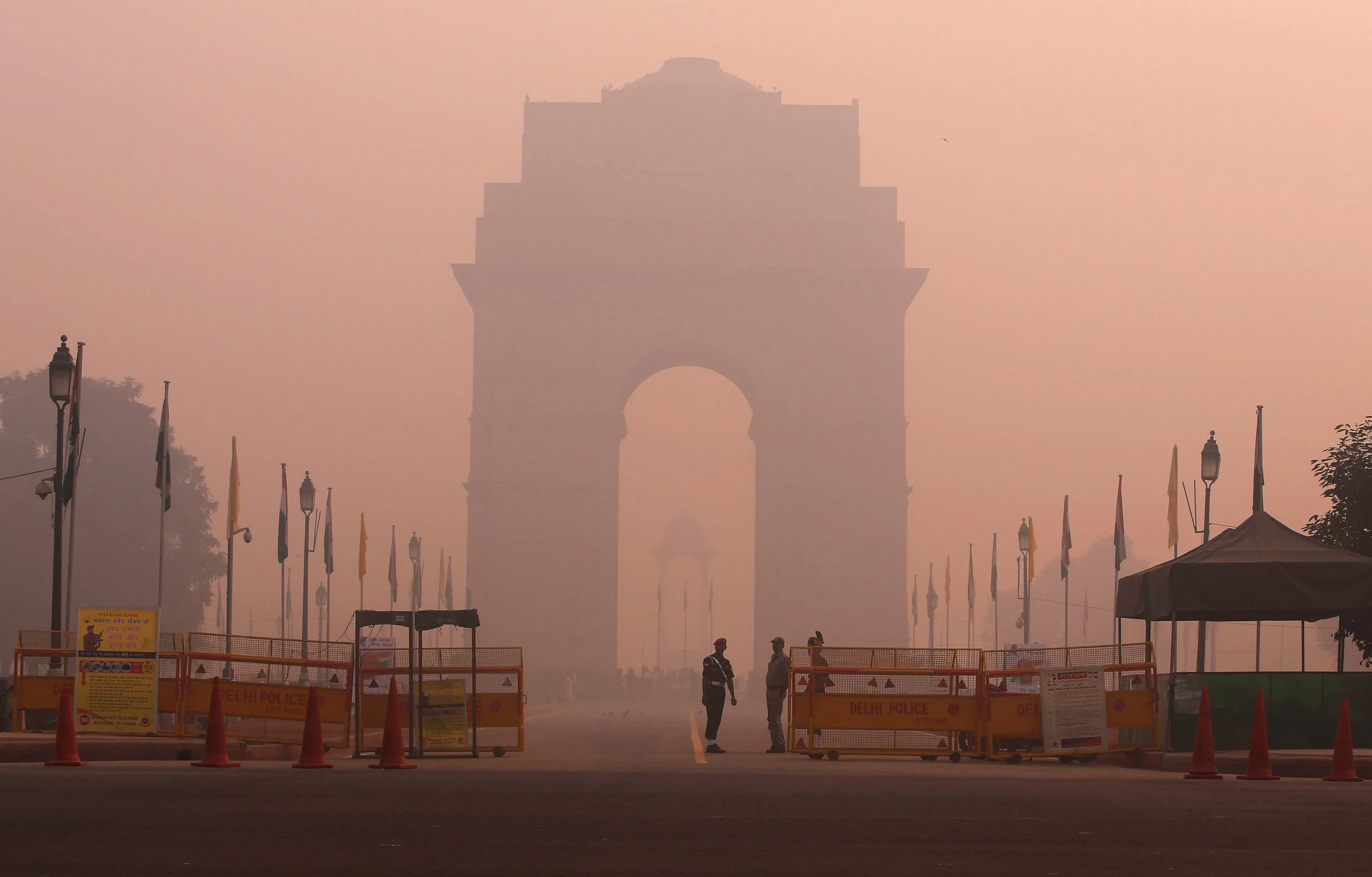
Across India’s growing industrial towns, the hum of factories mixes with the haze of smoke. The nation’s ambition to become a $5 trillion economy has given rise to expanding highways, steel mills, power plants, and cement factories. These symbols of progress reflect a confident India that wants to take its place among the world’s leading economies. Yet, behind this impressive industrial story lies an uncomfortable truth: the country’s economic growth has brought with it severe environmental and social costs. The air and water are becoming more polluted, and communities living near industrial centers are paying the price for national development.
India’s Economic Survey (2024–2025) celebrates the country’s industrial momentum, driven by higher infrastructure spending and the success of key sectors such as steel, cement, and micro-enterprises. But the same survey indirectly reveals a troubling divide between rapid growth and environmental sustainability. The industries that fuel India’s prosperity are also among the biggest polluters. The government’s regulatory framework, though extensive on paper, remains fragmented and under-enforced. Unless India redefines what progress means, it risks building an economy that thrives at the expense of public health and ecological balance.
To truly become a global manufacturing leader, India must shift from promoting growth at any cost to embedding green governance at every stage of industrial planning. Without this shift, rising GDP numbers will continue to hide the more profound crisis of environmental degradation, disease, and inequality.
The cement sector illustrates this dilemma clearly. India is the world’s second-largest producer, with an installed capacity of more than 600 million tonnes. Its production supports highways, housing, and infrastructure essential for economic expansion. However, cement production is one of the most carbon-intensive industrial processes, responsible for nearly 8% of global CO₂ emissions. In states such as Chhattisgarh and Andhra Pradesh, people living near cement clusters often complain of contaminated groundwater, reduced crop yields, and increased respiratory illnesses. Though some plants have started using waste-heat recovery systems and alternative fuels, these efforts remain limited and uncoordinated. Weak laws and lenient enforcement mean that even well-intentioned initiatives rarely achieve lasting impact. The cement that builds India’s future is, ironically, eroding the health of its citizens and land.
The story is similar in the steel industry. Steel forms the backbone of India’s construction and manufacturing sectors, making the country the world’s second-largest producer. Yet, the industry still relies heavily on coal, one of the dirtiest sources of energy. Industrial towns in Jharkhand and Odisha show the darker side of this success: poor air quality, unsafe working conditions, and displacement of vulnerable communities. Studies show that more than 75% of India’s industrial clusters already exceed safe air quality limits. For residents, progress has meant polluted air, contaminated rivers, and health problems that never make it into the national growth narrative.
India is not without environmental policies. Laws such as the Environment Protection Act (1986) and the National Action Plan on Climate Change provide a regulatory framework. However, the problem lies in weak coordination and poor implementation. Many state pollution boards lack adequate staff and funding, and industries often receive quick environmental clearances in the name of “ease of doing business.” Programs like the Production Linked Incentive (PLI) scheme encourage industrial output but make little mention of sustainability standards. This separation of economic and environmental goals is a significant policy gap that could trap India in a high-pollution growth model.
The goal is not to slow down industrialization but to rethink it through the lens of sustainability. Green governance should become the guiding principle of all industrial policy. This means three key actions. First, stricter laws must be enforced transparently, supported by technologies such as satellite data, sensors, and AI-based pollution-tracking systems. These tools can make monitoring independent and reduce political interference. Second, cleaner industries must be rewarded. Companies that use renewable energy or adopt low-carbon methods should receive tax benefits and priority in government contracts. Those that continue to pollute heavily should face higher compliance costs and penalties. Third, India must invest far more in green research and innovation. Current R&D spending, about 0.7% of GDP, is too low to drive profound technological change. Increasing funds for sustainable technologies will help industries grow while minimizing environmental degradation.
Equally important is a human-centered approach to environmental governance. Policies must focus not only on emissions and efficiency but also on people’s everyday experiences of clean air, safe water, and healthy communities. Green governance, therefore, is not only an environmental necessity but also a social and economic responsibility. Cleaner industries reduce healthcare costs, protect local livelihoods, and build long-term resilience against climate shocks.
The Way Forward
India’s path toward sustainable industrial growth must involve cooperation between the government, industries, and citizens. The government should integrate environmental criteria into all industrial and infrastructure projects. Companies must adopt global sustainability standards such as ISO 14001 and publish their environmental performance data. Expanding green financing, through mechanisms like green bonds and carbon credits, can help smaller firms adopt clean technologies. At the same time, local communities must be included in environmental decision-making and monitoring. Establishing “green industrial corridors,” where pollution-control technologies are shared across sectors, can serve as a model for other regions.
Why It Matters
Green governance matters because it directly affects India’s future health and prosperity. According to studies, pollution-related damage already costs India nearly 8–9% of its GDP each year in lost productivity and medical expenses. If environmental damage continues unchecked, it will lead to more floods, droughts, and heatwaves, disrupting industries and livelihoods alike. Sustainable growth is not a barrier to progress; it is the only form of progress that can last. Clean technologies and renewable energy can create millions of new jobs and make Indian manufacturing globally competitive without destroying its natural foundation.
India stands at a decisive moment. The question is not whether to grow, but how to grow. The real test of progress lies in building an economy that future generations can inherit with pride. Through better governance, innovation, and shared responsibility, India can turn its industrial strength into a force for sustainable development, proving that economic ambition and environmental protection can move forward together.