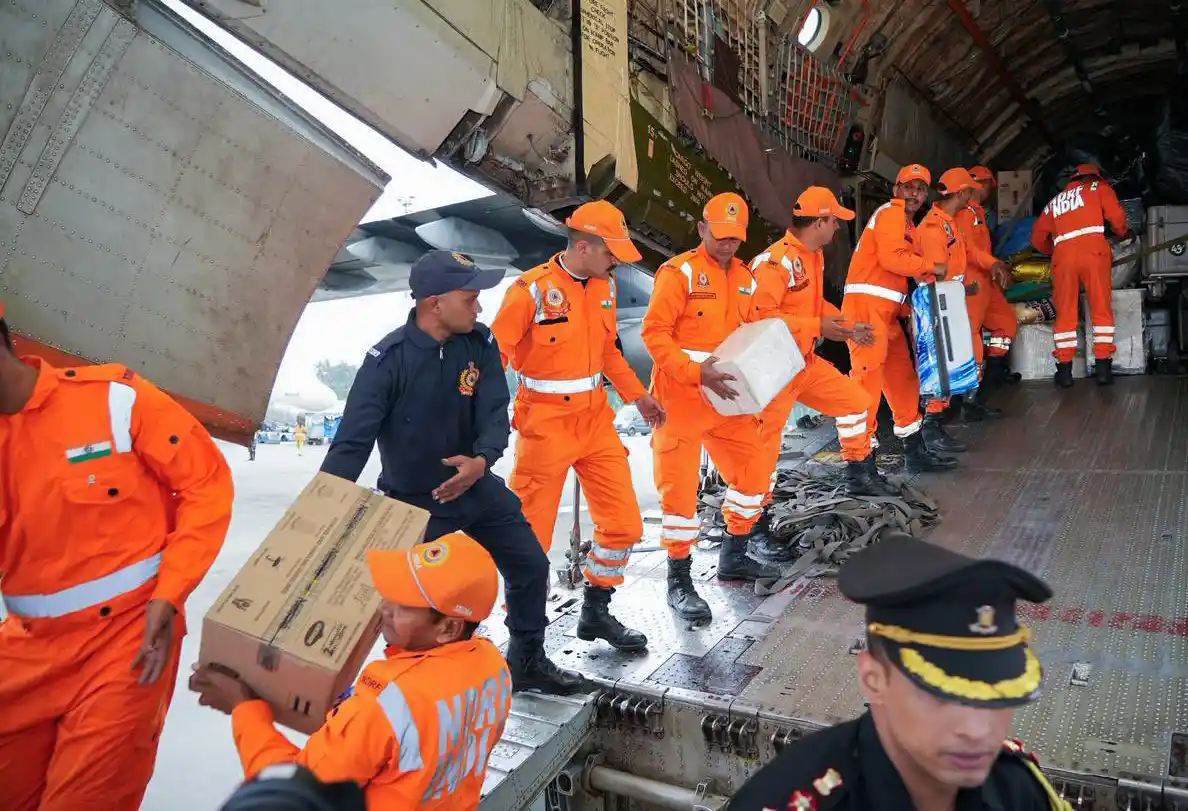
The devastation wrought by Cyclone Ditwah on Sri Lanka in late November 2025 was sudden and brutal. Floodwaters surged, landslides buried homes, and countless lives were upended in moments. In times like these, help often reveals the values not only of those who suffer but also of those neighbors who rush to assist. India’s response, dubbed Operation Sagar Bandhu, stands as a powerful testament to a quietly assertive kind of diplomacy: putting humanity first while fortifying geopolitical bonds in the Indian Ocean.
When disaster strikes in a region as geopolitically complex and environmentally vulnerable as South Asia, the immediate question is less about politics and more about humanity. India’s swift mobilization of humanitarian aid and disaster relief (HADR) signals more than mere neighborly goodwill. It exemplifies a strategic blend of moral responsibility and regional leadership that India has carefully cultivated under its “Neighbourhood First” policy. The operation saw India despatch emergency supplies, including essential food, medical aid, and rescue teams, to the flood-ravaged heart of Sri Lanka with remarkable speed. By deploying assets such as naval vessels INS Vikrant and INS Udayagiri, India ensured that aid delivery was not just symbolic but effective and immediate.
Operation Sagar Bandhu draws from a deep well of Indian diplomatic practice that interweaves the imperatives of soft power and realpolitik. It is an extension of India’s SAGAR (Security and Growth for All in the Region) vision, which underscores the belief that India must remain both a benevolent provider and a security anchor in the Indian Ocean region. This was not merely a humanitarian effort; it was a statement of intent. By acting decisively while Sri Lanka grappled with the cyclone’s aftermath, India consolidated its stature as a first-responder in regional crises—a role that goes far beyond the transactional to shape lasting perceptions and relationships.
This operation raises the stakes in India’s neighborhood diplomacy for several reasons. Unlike previous aid missions that sometimes appeared reactive or piecemeal, Operation Sagar Bandhu felt coordinated, comprehensive, and emblematic of a new maturity. The range of supplies—dry rations, medical kits, fresh food, and emergency rescue gear—reflected a holistic understanding of the disaster’s impact. More importantly, the involvement of personnel from the National Disaster Response Force (NDRF) and specialized Urban Search and Rescue Teams symbolized a hand extended not as a distant benefactor but as an invested partner, willing to share risk and labor alongside Sri Lanka’s own agencies.
India’s overt, no-nonsense humanitarian aid sends a clear message: influence in this neighborhood will be shaped not just by investments and power plays, but by empathy, solidarity, and real-time support when it matters most. While diplomacy textbooks often reduce such actions to “soft power,” here, power and softness are mutually reinforcing.
The cultural and historical ties binding India to Sri Lanka only deepen the resonance of such interventions. Shared heritage, people-to-people connections, and intertwined security concerns ensure that India’s gestures of aid do not go unnoticed or unappreciated. Operation Sagar Bandhu also serves to remind international audiences that regional crises require cooperative solutions, not fragmented or zero-sum responses. India’s actions suggested a maturity that resists the temptation of hard-power brinkmanship, choosing instead to lead through practical compassion.
That said, humanitarian diplomacy alone cannot resolve the underlying tensions in South Asia’s geopolitical chessboard. Critics might argue that swift aid missions risk being perceived as paternalistic or conditional, particularly when they coincide with strategic competition. But the tangible benefits for Sri Lankan communities grappling with immediate survival needs cannot be downplayed. Furthermore, such operations open windows for dialogue and partnership that, if sustained, may contribute to a more stable and secure neighborhood.
Operation Sagar Bandhu also offers a blueprint for how India might extend its reach in the Indian Ocean region and beyond. In a world increasingly shaped by climate change-induced disasters and humanitarian crises, the ability to deliver rapid, large-scale aid will matter as much as diplomatic declarations and military deployments. India’s continued investment in its armed forces’ HADR capabilities, coupled with diplomatic finesse, suggests a future where New Delhi can exercise influence softly but effectively.
In this light, the operation transcends mere disaster relief; it is a conversation in action, spoken in the language of generosity and resolve. For India, it is a moment to show that its vision for the Indian Ocean is not one of dominance but of shared destiny—a sentiment captured poetically in the name itself: Sagar Bandhu. For Sri Lanka and the broader region, it offers a reminder that even in catastrophe, neighbors can be anchors, allies, and friends. This is the profound promise of neighborhood diplomacy, wrapped in the helping hand that India extended when it mattered most.