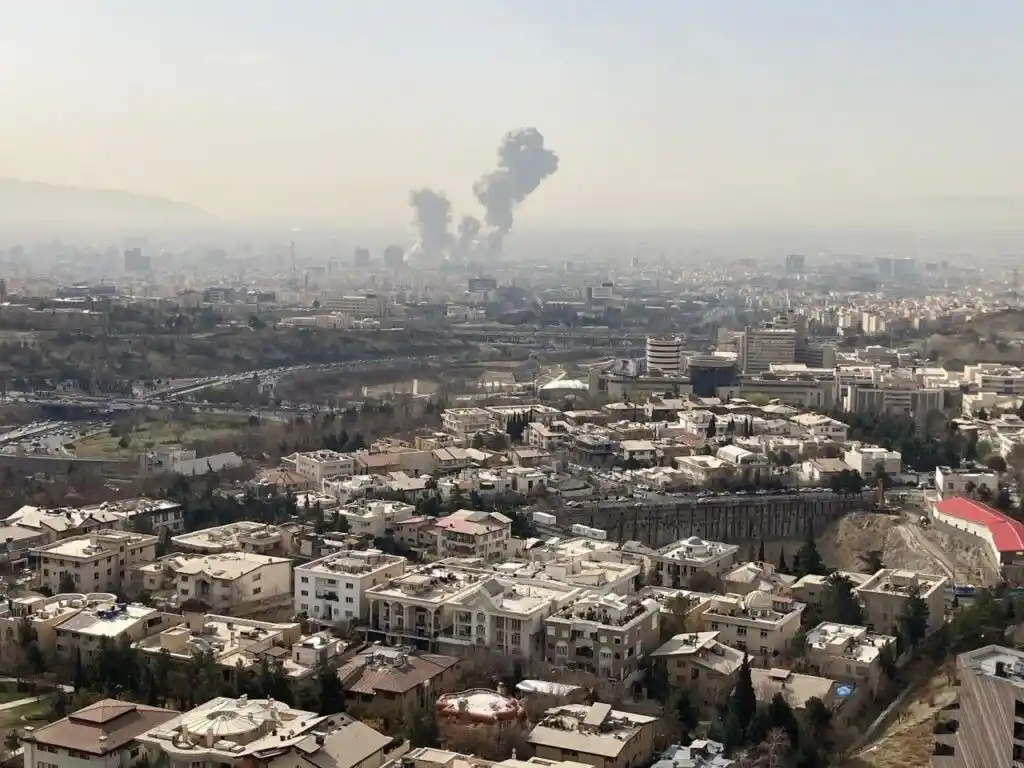
Geopolitical crises rarely erupt without warning. They accumulate quietly, layer upon layer of grievance, mistrust, and unresolved tension, until force replaces argument as the dominant language of statecraft. The confrontation between Washington and Tehran in early 2026 did not create hostility between the United States and Iran. It crystallised and detonated it.
For decades, the rivalry had simmered in shadow domains. Sanctions regimes tightened and loosened. Proxy conflicts played out across Yemen, Syria, and Iraq. Covert sabotage targeted nuclear facilities and maritime shipping. Episodes of nuclear brinkmanship periodically brought the region to the brink. Yet even at its most volatile, this rivalry remained managed. It operated within an understood architecture of deterrence.
What changed in 2026 was scale and symbolism. Coordinated U.S. and Israeli strikes penetrated deep into Iranian territory. When Iranian state media confirmed the death of the Supreme Leader, Ali Khamenei, the conflict crossed an irreversible threshold. This was no longer calibrated signalling or peripheral pressure. It was decapitation at the apex of a sovereign system.
Iran’s retaliation was swift, yet calculated. Missiles and drones targeted Israeli and American assets in a deliberate display of restored deterrence. Tehran framed the strikes as aggression against sovereignty and used mourning to consolidate domestic resolve. Yet beneath the rhetoric lay arithmetic. Iran must impose costs sufficient to deter further incursions, but it cannot afford a full-scale war. Its economy remains constrained by sanctions, fiscal strain, and structural weakness. The regime must appear resolute without becoming self-destructive. That balance between defiance and survival now defines Tehran’s posture.
The Shadow of Regime Change
The regime change question lingers because it is structurally unavoidable. When the supreme authority of a governing system is removed by external force, no diplomatic phrasing can erase the implication. Washington may frame its actions as necessary to prevent nuclear escalation and contain regional instability. Those arguments are not trivial. Yet the optics transcend narrow military objectives.
Historical comparisons emerge, including pressure campaigns in Venezuela. But Iran is not easily reducible to precedent. Its institutional depth, the entrenchment of the Revolutionary Guards, clerical networks, and its web of regional alliances ensure that removing one leader does not dismantle the ideological scaffolding beneath him. In fact, such actions can harden it. Martyrdom narratives may consolidate factions rather than fracture them.
Fragmented Geopolitical Responses
The international response has been fragmented rather than unified. Western allies have expressed concern about escalation while acknowledging the risks posed by nuclear proliferation. China and Russia have condemned unilateral force and invoked sovereignty as a principle under siege. The European Union has leaned toward de-escalation, urging dialogue amid fears of energy and trade disruption.
No coherent bloc has appeared because interests diverge. Energy dependence on the Gulf, exposure to shipping routes, alliance obligations, and domestic political calculations weigh more heavily than abstract solidarity. The result is a cautious and divided global reaction, reflective of a multipolar world where crises no longer produce automatic alignments.
Perilous Edges: Pakistan and Afghanistan
Pakistan and Afghanistan occupy particularly sensitive edges of this confrontation.
Islamabad has publicly rejected allowing its territory or airspace to be used for operations against Iran. Such involvement would invite retaliation, inflame domestic sectarian tensions, and destabilise Pakistan’s already fragile economic and political balance. There is no credible evidence of American staging from Pakistani bases, and geography, public sentiment, and strategic risk all render that pathway implausible.
Afghanistan presents a subtler but potentially more volatile variable. Sharing a porous border with Iran and governed by authorities seeking recognition and economic relief, Kabul exists in strategic ambiguity. Refugee flows, water disputes, and the presence of militant groups create a fragile landscape. Even rumours of covert activity near the Iranian frontier could trigger suspicion and retaliation. Weak states bordering pressured powers often become unwilling arenas of spillover.
The added layer of recent tension between Pakistan and Afghanistan compounds this fragility. Mutual vulnerabilities increase the risk that regional instability could widen beyond its initial axis.
India’s Intricate Calculus
India’s position is especially complex. It maintains deep strategic ties with the United States and Israel while preserving critical energy and connectivity interests with Iran. The Chabahar port project, central to India’s access to Afghanistan and Central Asia via the International North South Transport Corridor, exemplifies this dual engagement.
The economic arithmetic is stark. India imports more than 85 percent of its crude oil, with roughly 60 percent sourced from the Gulf. A sustained 20-dollar-per-barrel price increase could inflate India’s annual import bill by 25 to 30 billion dollars. The knock-on effects would include pressure on the current account deficit, rupee depreciation, and heightened inflation. Even a 10 percent rise in crude prices can significantly affect transport and manufacturing costs.
Strategic autonomy in this context is not rhetorical positioning. It is an economic necessity. Any destabilisation of Iran complicates India’s connectivity ambitions. Any spillover into Afghanistan further constrains them. Navigating this crisis requires calibrated diplomacy, energy diversification, and careful signalling to multiple partners.
Shipping Lanes and Market Shock
If the conflict sustains high-tempo operations for fifteen days, the first shock will be economic rather than ideological.
Approximately 20 percent of global petroleum liquids consumption, around 20 million barrels per day, passes through the Strait of Hormuz. Between 25 and 30 percent of globally traded LNG follows the same narrow corridor, only about 33 kilometres wide at its tightest point. Even without formal closure, heightened risk perception can disrupt flows.
In past tensions, Brent crude prices rose 10 to 15 percent within days. A sustained fifteen-day escalation could plausibly push prices up 15 to 30 percent. A 20-dollar increase sustained over a quarter can shave between 0.2 and 0.4 percentage points off global growth.
Insurance premiums typically surge first. In previous crises, war risk cover climbed to 0.5 to 1 percent of a vessel’s hull value per voyage. For a tanker valued at 100 million dollars, that equates to several hundred thousand dollars in additional cost per transit. Freight rates follow quickly. Recent maritime disruptions have shown how re-routing can extend transit times by weeks and spike container rates by up to 100 percent.
The United States benefits from producing 12 to 13 million barrels per day domestically, cushioning supply shocks. Yet gasoline prices remain globally benchmarked, and a 20 dollar crude increase can add 50 to 60 cents per gallon. Europe and Japan, more import-dependent, would face sharper inflationary pressure. China, importing 11 to 12 million barrels per day with roughly 40 percent Gulf sourced, would draw on substantial reserves while absorbing higher costs. Emerging markets, including India, would likely see currency depreciation of 3 to 8 percent during sustained oil shocks.
Human and Societal Toll
Beyond macroeconomics lies the human cost.
Early reports have already documented hundreds of casualties, including the tragic killing of at least 148 schoolgirls in a single strike. Iran entered this confrontation already strained by economic hardship and political unrest. Fifteen days of sustained high-intensity exchange could result in thousands of deaths and tens of thousands injured.
Displacement may swell into the millions internally, with hundreds of thousands seeking refuge across borders. Healthcare systems under fiscal strain would struggle to cope. If energy infrastructure suffers major damage, exports could approach zero during peak conflict. In a previous episode, oil shipments reportedly fell by more than 90 percent, costing roughly 120 million dollars per day. A comparable disruption lasting fifteen days would mean well over 1.5 billion dollars in lost revenue.
For ordinary Iranians, the effects would be immediate and tangible. Shortages, delayed wages, and collapsing public services erode the social contract quickly. War translates into empty shelves and crowded hospitals long before it registers in GDP figures.
A Stress Test for the Global Order
The confrontation of 2026 is therefore more than a military exchange. It is a stress test of deterrence doctrines, energy security architectures, and the resilience of fragile states along the periphery.
Fifteen days of sustained escalation in the Gulf can move oil markets, tilt currencies, unsettle central banks, and displace families. When a narrow strait carries one-fifth of global oil and nearly one-third of LNG trade, it becomes not merely geography but a structural vulnerability in the global system.
History will record the missiles and the statements. It will also judge whether the principal actors recognized the limits of force. In a region where survival becomes doctrine and sovereignty becomes a rallying cry, restraint is not weakness. It is the only mechanism by which a localised confrontation avoids reshaping West and South Asia for a generation.