The present situation in Pakistan-Occupied Kashmir (POK) reflects a deepening crisis marked by widespread protests, violent crackdowns, and a severe failure of the Pakistani state to safeguard the population and uphold basic rights. The region is witnessing one of its most intense unrest episodes in recent years, ignited initially by local grievances over governance and socio-economic neglect but quickly escalating into an outright rebellion against military and governmental authorities.
Escalating Violence and Civilian Casualties
Since late September 2025, thousands of people across POK have taken to the streets, led largely by the Jammu Kashmir Joint Awami Action Committee (JAAC). Protesters initially demanded the fulfillment of 38 key demands addressing long-standing issues like the abolition of 12 reserved assembly seats from Kashmiri refugees living in Pakistan, subsidized flour and electricity tariffs, and overdue developmental projects. However, the agitation rapidly transformed into a broader anti-state movement, directly targeting the Pakistani military’s heavy-handedness and the government’s failure to deliver on promises.
Indian Kashmir is in peace, while bullets are now being fired by the Pakistani Army in POK. What we witnessed for years in Kashmir, is now unfolding there innocent lives being lost. May peace prevail…! pic.twitter.com/q0EW3UsH9W
— Salman Nizami (@SalmanNizami_) October 2, 2025
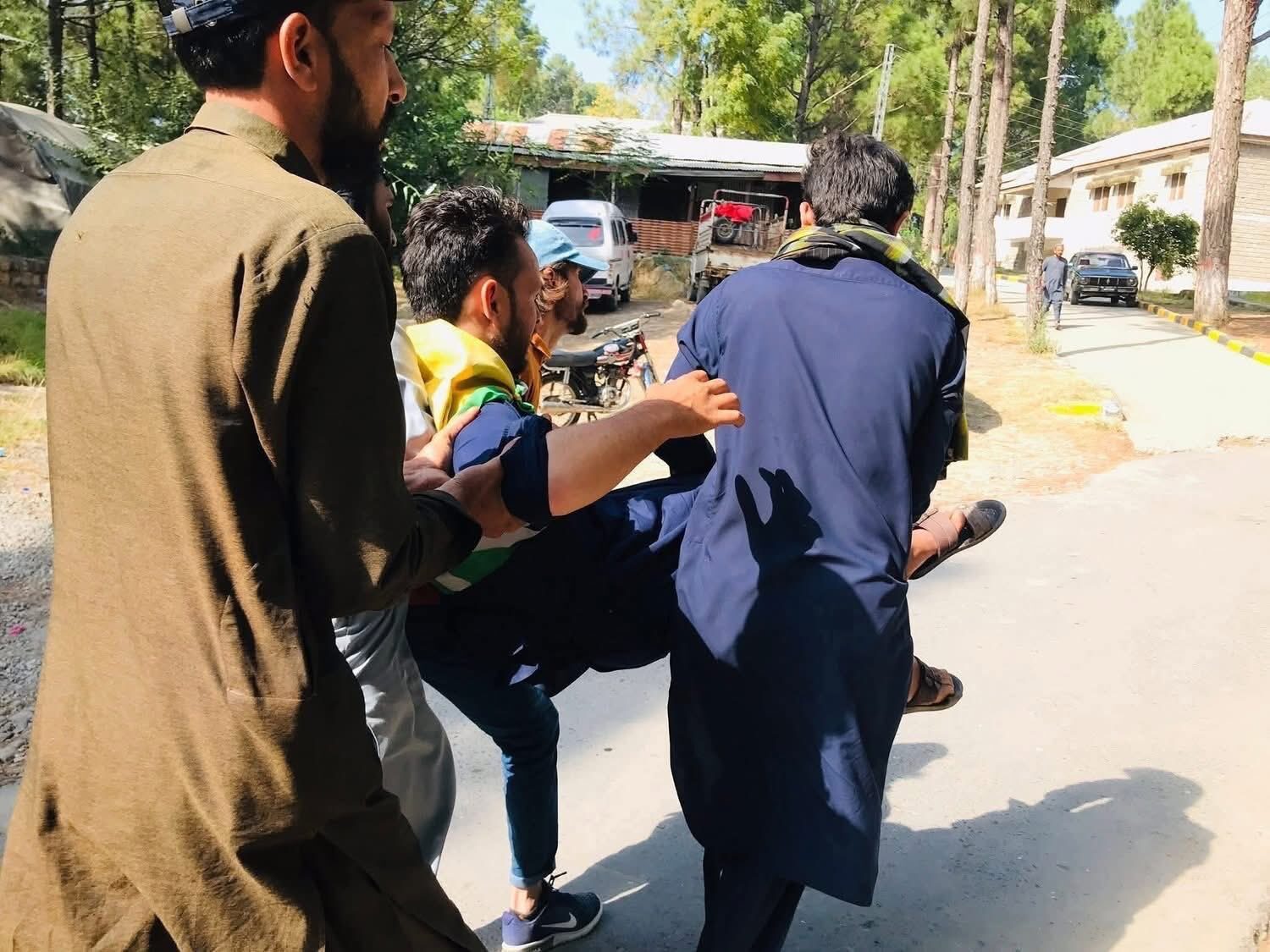
The Pakistani state has responded with brutal repression. Security forces, including the army and paramilitary Rangers, have resorted to live ammunition and tear gas against largely peaceful protesters. At least 12 civilians have been killed with five casualties reported each in Muzaffarabad and Dheerkot, and two in Dadyal, alongside hundreds injured, many critically wounded by gunfire. The crackdown also led to the deaths of three police personnel, demonstrating the violence’s breadth and intensity.
Failure of Governance and Human Rights
The protests underscore Pakistan’s systemic neglect and failure to govern POK effectively. Despite the region’s resource contributions — particularly hydroelectric power from the Mangla Dam — residents face high electricity costs, economic deprivation, and lack of basic services, fueling resentment. The promises of political representation have been undermined by controversial reserved seats for Kashmiri refugees living outside the region, diluting local governance and fostering alienation.
#BREAKING: Pakistani Police have forcibly entered the Islamabad Press Club to attack Journalists and PoK civilian protestors. Pakistani security forces have been infamous for attacking, kidnapping and killing journalists and activists. Pal deep state facing embarrassment in PoK. pic.twitter.com/JQedgB4eUv
— Aditya Raj Kaul (@AdityaRajKaul) October 2, 2025
Furthermore, communications blackouts and lockdowns imposed by authorities to control the unrest exacerbate civilian suffering and isolate POK from national and global scrutiny. The shutdown of mobile, internet, and landline services prevents peaceful organization and blocks reports of abuses from reaching the world.
The Pakistani state’s failure is not limited to economic mismanagement but extends to grave human rights violations. Independent reports and activist testimonies reveal the use of excessive force, arbitrary detentions, enforced disappearances, and suppression of free expression in POK. The state’s intelligence agencies have been implicated in these abuses, demonstrating a pattern of repression that targets dissent and violates basic freedoms.
After surrendering in the #RepublicOfBalochistan, now the occupational forces of Pakistan's Islamabad police personnel laid down weapons and surrendered to local people of the #PoK. #PoK now must formally be declared under the rule of #Bharat.!!! pic.twitter.com/iQytLSIt9W
— Mir Yar Baloch (@miryar_baloch) September 30, 2025
Political Breakdown and Militarization
Despite multiple rounds of talks initiated by the Jammu Kashmir Joint Awami Action Committee with Pakistan’s government and the POK administration, no resolution has been reached. The dialogue collapsed over the refusal of the AAC to compromise on abolishing elite privileges and reserved assembly seats. In response, Pakistan deployed thousands of additional troops from Punjab and Islamabad to quell the unrest, signaling a preference for militarized repression over political accommodation.
The massive use of force and shelling in civilian areas reflects a state choosing coercion and violence as tools of maintaining control, rather than addressing root causes. This militarization has only intensified public anger, weakening the government’s legitimacy and provoking more resistance, including calls for outright independence from Pakistan.
The crisis in POK exposes a profound failure of the Pakistani state to protect the people or govern with justice and accountability. The security forces’ lethal crackdown on largely peaceful protests marks a tragic abandonment of state responsibility. Decades of corruption, neglect, and denial of fundamental rights have fueled a reckoning among POK’s citizens, whose demands for dignity and political representation have been met with bullets and repression. Pakistan’s approach threatens to deepen instability rather than restore order, risking even greater humanitarian and political fallout in this already contentious region.
This ongoing tragedy calls for international attention and urgent pressure on Pakistan to halt human rights violations, lift communication blockades, engage genuinely with civic demands, and ensure the safety and rights of POK’s people. Without these changes, the cycle of violence and repression in Pakistan-Occupied Kashmir will only perpetuate, with dire consequences for regional peace and justice.