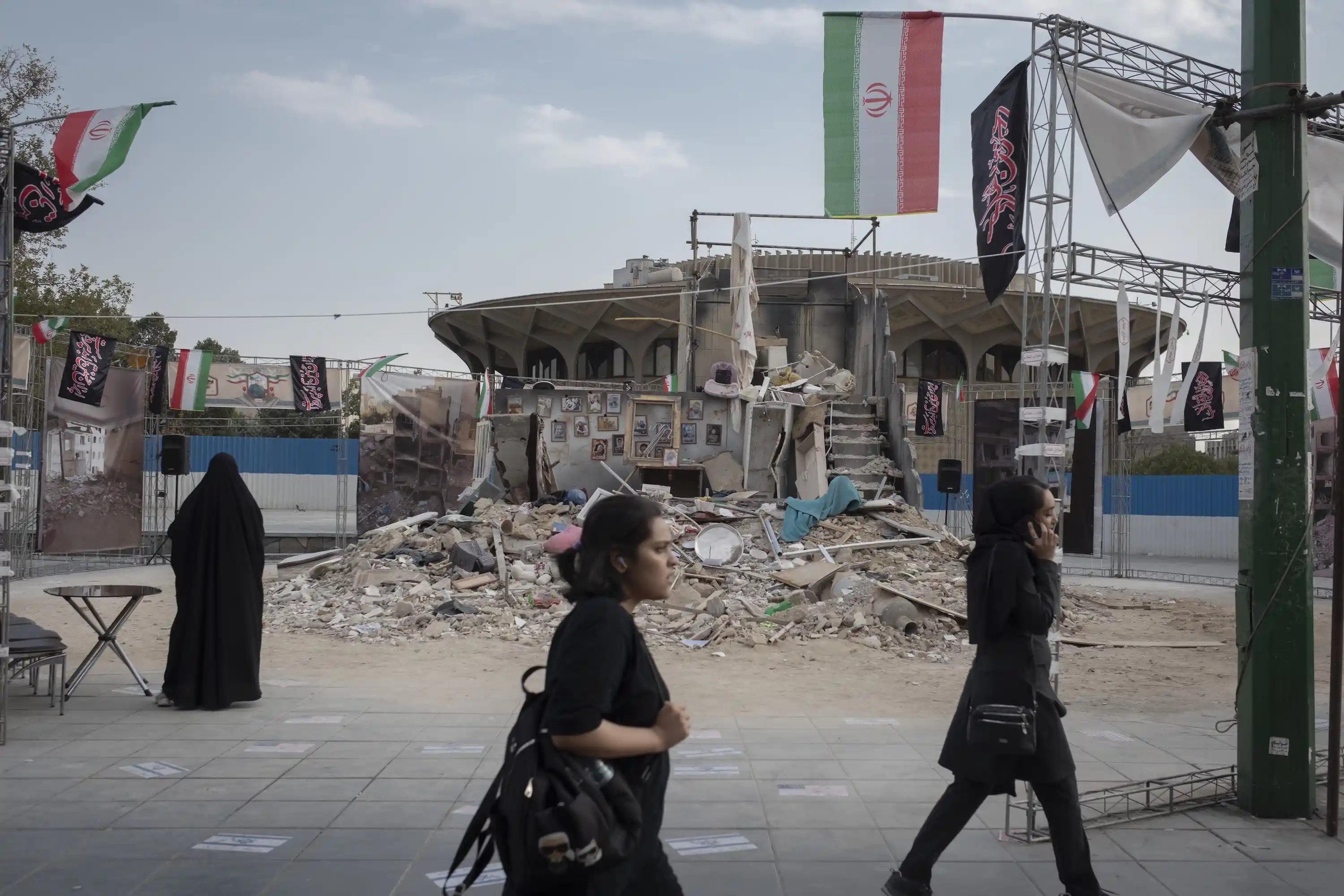
In West Asia, wars rarely end when the missiles stop. Military victories seldom erase civilisations or grievances, and conflicts often leave behind consequences that reshape global politics long after the battlefield quietens. The ongoing Iran war is unlikely to be an exception. While the world watches missile strikes, drone attacks and air raids, the deeper story unfolding beneath the surface is a complex power play involving major global powers, NATO allies and regional actors.
At one level, the conflict is a military confrontation between Iran and the United States–Israel axis. At another level, it is also about influence, energy security and the evolving balance of power in an increasingly multipolar world.
But the Iran war is not merely a military confrontation. It has become a stage on which the world’s major powers and their alliances are recalibrating their roles in West Asia.
The United States and NATO Under Strain
For decades, the United States has been the principal external power shaping the security architecture of the Middle East. From the Gulf War of 1991 to the campaigns in Afghanistan and Iraq, Washington was able to assemble large international coalitions in support of its strategic objectives. NATO allies and European partners often provided political backing and military participation.
The present crisis, however, reflects a more complex international environment.
Although the United States retains overwhelming military capability in the region, its ability to mobilise broad coalition support appears more constrained. Washington has urged allies and partners to assist in securing maritime routes through the Strait of Hormuz. Yet enthusiasm among NATO members and European allies has been cautious.
Several European governments remain wary of direct military involvement in another Middle Eastern conflict. Their reluctance reflects domestic political fatigue with overseas interventions, economic anxieties linked to volatile energy markets, and the continuing strategic focus on the war in Ukraine.
In effect, NATO today finds itself balancing two theatres of strategic concern. On one side lies the challenge posed by Russia in Europe; on the other lies instability in the Middle East that threatens global energy flows.
This dual pressure complicates alliance cohesion. While European allies broadly support efforts to maintain freedom of navigation and regional stability, many prefer diplomatic engagement and limited security participation rather than large-scale military involvement.
The war therefore reveals an important shift in global politics: even long-standing alliances now operate in a framework where national interests increasingly determine the extent of engagement.
China: Expanding Influence
China approaches West Asia through a very different lens. Unlike the United States and NATO, Beijing’s engagement with the region has been driven primarily by economic considerations—energy security, trade and infrastructure connectivity.
China imports a substantial share of its crude oil from the Middle East. Stability in the region is therefore critical for sustaining Chinese economic growth. Chinese firms have invested heavily in ports, logistics hubs and industrial zones across the Gulf as part of the Belt and Road Initiative.
At the diplomatic level, Beijing has cultivated relations with a wide range of actors—including Iran, Saudi Arabia and the United Arab Emirates. This multi-directional diplomacy allows China to maintain access to energy resources while presenting itself as a partner willing to engage with all sides.
When Washington called for international cooperation to secure shipping routes in the Strait of Hormuz, China refrained from joining any military arrangement. Instead, Beijing emphasised restraint and dialogue while quietly working to ensure that its energy supplies remained uninterrupted.
This reflects a broader Chinese strategy: expand economic influence while avoiding direct security entanglement.
Yet this war also exposes the limits of this approach. As China’s dependence on Middle Eastern energy deepens, disruptions in the region increasingly affect its economic interests. Over time, Beijing may find it difficult to remain merely an economic actor without assuming a greater diplomatic or security role.
Russia: Strategic Opportunism
Russia’s approach to West Asia is shaped by pragmatism and strategic opportunism.
Since its military intervention in Syria in 2015, Moscow has re-established itself as a consequential player in the region. Unlike during the Cold War, Russia today maintains working relationships with a diverse range of actors, including Iran, Israel and several Gulf states.
The Iran war has created certain advantages for Moscow. One immediate consequence of the crisis has been the rise in global oil prices triggered by fears of disruption in the Strait of Hormuz. For a major energy exporter like Russia, higher oil prices translate into economic gains.
At the same time, Russia continues to maintain communication channels with both Tehran and Washington. Even during periods of intense geopolitical rivalry, great powers often keep diplomatic lines open to prevent escalation and manage crises.
Russia’s strategy therefore combines diplomatic flexibility with calculated opportunism.
Regional Powers
While global powers manoeuvre for influence, it is the countries of West Asia that will ultimately bear the immediate consequences of the Iran war. For the states of the Gulf and the wider region, the conflict is not an abstract geopolitical contest but a direct threat to their security, economic stability and long-term development plans.
The Gulf monarchies, particularly Saudi Arabia, the United Arab Emirates and Qatar, have spent the past decade attempting to reposition their economies beyond oil dependence. Saudi Arabia’s Vision 2030 and the UAE’s ambitious diversification strategies rely heavily on sustained foreign investment, tourism growth and large-scale infrastructure development. These economic transformations require a stable regional environment. Prolonged conflict in the Gulf, especially around critical maritime routes such as the Strait of Hormuz, risks undermining investor confidence, disrupting trade flows and raising the cost of shipping and insurance across the region.
At the same time, the strategic rivalry between Saudi Arabia and Iran remains one of the defining fault lines of Middle Eastern politics. For decades, Riyadh has viewed Tehran’s regional ambitions and missile capabilities as a direct challenge to its security and influence. This concern has occasionally surfaced in stark language. Saudi leaders have historically urged Washington to take decisive action against Iran, famously calling for the United States to “cut off the head of the snake”.
Yet the position of the Gulf states remains inherently complex. While a weakening of Iran may align with their strategic interests, the war itself carries immediate risks for them. This explains the cautious diplomacy visible across the region. The United Arab Emirates has adopted a measured posture, emphasising restraint and regional stability while carefully managing its relationships with both Washington and Tehran. Qatar and Oman have continued to play quiet diplomatic roles, maintaining communication channels with multiple actors and encouraging de-escalation.
Taken together, these responses underline a shared reality: while global powers may treat this war as part of a wider geopolitical contest, it is the countries of West Asia that will bear the brunt of its consequences—economically, politically and militarily. Their cautious diplomacy reflects not hesitation but a pragmatic attempt to shield their societies and economies from the wider fallout of the conflict.
India’s Strategic Balance
For India, the Iran war presents both risks and strategic opportunities.
India maintains strong relationships across West Asia—with Israel, the Gulf states and Iran. This diversified engagement reflects India’s broader foreign policy philosophy of strategic autonomy.
Energy security remains India’s most immediate concern. A significant portion of India’s oil and liquefied petroleum gas imports originates from the Gulf, and disruptions in shipping routes directly affect the country’s economy.
During the current crisis, India’s diplomacy has demonstrated quiet effectiveness. Even as tensions escalated in the Strait of Hormuz, New Delhi worked through multiple diplomatic channels with regional governments as well as major powers to facilitate the safe passage of some Indian ships and energy cargoes, including LPG shipments vital for domestic consumption.
The episode highlights both the vulnerability of global energy supply chains and the importance of sustained diplomatic engagement.
At the same time, India has already begun taking steps to reduce long-term risks. New Delhi has expanded its strategy of energy diversification, including increasing long-term purchases of LPG and LNG from the United States. Such arrangements are intended to reduce dependence on any single region and provide greater resilience against geopolitical shocks.
The War After the War
Wars in West Asia rarely remain confined to their immediate geography. They ripple outward, reshaping global markets, alliances and strategic calculations.
The Iran war is already doing exactly that.
When the guns finally fall silent, the geopolitical game will continue. And the world will be dealing not only with the aftermath of a war—but with the new balance of power it has helped bring into view.
For India, the challenge will be to navigate these shifting power equations while protecting its economic and energy interests. In an increasingly multipolar world, the ability to maintain balanced relationships across competing blocs may prove to be one of India’s most valuable strategic assets.