India stands at a critical juncture in its geopolitical journey. As the world’s largest democracy and fifth-largest economy, India is no longer a peripheral player in Indo-Pacific affairs but increasingly the fulcrum upon which regional stability and prosperity depend. This transformation represents far more than a shift in diplomatic positioning—it reflects a fundamental realignment of global power dynamics where New Delhi’s agency and strategic vision have become indispensable to shaping the future of the world’s most economically vibrant and strategically contested region.
The Indo-Pacific has emerged as the epicenter of twenty-first-century geopolitics, encompassing 75% of global trade and 50% of daily oil supplies that transit through its waters. For India, this region transcends geographic convenience; it represents the strategic arena where India’s core national interests—from economic growth and energy security to maritime sovereignty and regional leadership—converge. India’s rise in the Indo-Pacific is driven by three interconnected imperatives: the need to counterbalance China’s assertive regional posture, the opportunity to position itself as a preferred alternative for democratic and like-minded nations, and the economic necessity of integrating into supply chains and trade networks beyond its traditional South Asian neighborhood.
The Quadrilateral Security Dialogue, comprising India, the United States, Japan, and Australia, exemplifies India’s transformed role. What began as a loose diplomatic coordination mechanism has evolved into a multifaceted platform addressing infrastructure, digital connectivity, maritime security, and emerging technologies. India’s participation in the Quad, however, represents a nuanced strategic choice rather than a formal military alliance. This distinction is crucial. India maintains strategic autonomy by refusing explicit military commitments while still benefiting from deepened security cooperation, technology transfer, and coordinated initiatives that enhance its regional capabilities without compromising its independent foreign policy trajectory. The scheduled Quad Leaders’ Summit in November 2025, intended to be hosted by India, has been postponed amid recent geopolitical strains and recalibrations of strategic priorities among member nations, underscoring the complexity of sustaining multilateral consensus in an era of shifting great-power dynamics.
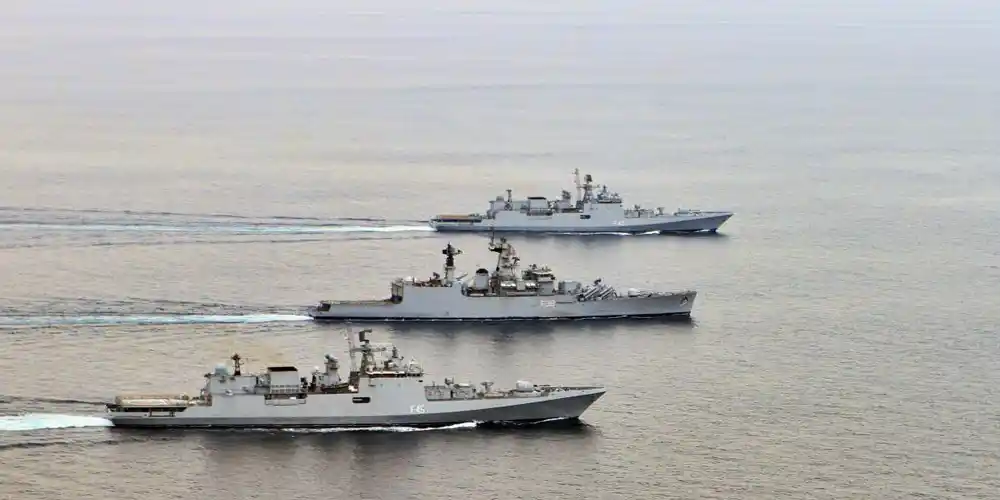
Maritime strategy forms the backbone of India’s Indo-Pacific vision. The Security and Growth for All in the Region (SAGAR) framework articulates India’s commitment to freedom of navigation, capacity building for partner nations, and a rules-based international order grounded in the United Nations Convention on the Law of the Sea. This approach contrasts sharply with China’s assertive posturing in the South China Sea and the Indian Ocean, positioning India as a stabilizing force rather than a revisionist power. India’s new MAHASAGAR doctrine extends this vision across the broader Indo-Pacific, emphasizing maritime security and sustainable blue economy development. Through initiatives like the Quad-at-Sea Ship Observer Mission and participation in multilateral exercises such as Malabar, India is demonstrating enhanced interoperability and commitment to protecting critical sea lanes.
Beyond bilateral frameworks, India has significantly strengthened its multilateral defense partnerships. Most significantly, in December 2025, India and the Netherlands signed a Letter of Intent on Defence Cooperation, institutionalizing collaboration in co-development, co-production, and maritime security initiatives. Both nations reaffirmed their commitment to a free, open, and rules-based Indo-Pacific, with particular emphasis on maritime security and leveraging India’s substantial diaspora community in the Netherlands as a bridge for deeper people-to-people engagement. These bilateral deepening initiatives demonstrate how India is cultivating partnerships beyond the traditional Quad framework, diversifying its strategic partnerships, and creating redundancies in its alliance architecture.
India’s most transformative recent contribution to Indo-Pacific architecture emerged in December 2025 when Army Chief General Upendra Dwivedi unveiled the IKIGAI Framework at the third Indo-Pacific Land Forces Summit hosted by Japan. This comprehensive framework represents a watershed moment in India’s strategic thinking, establishing a structured approach to multilateral military cooperation across the Indo-Pacific. The IKIGAI Framework—encompassing Interoperability and Information Sharing, Knowledge and Professional Military Education, International Humanitarian Assistance and Disaster Relief, Generative Technological Partnerships, Assurance for Security Partnerships, and Integrated Logistics and Sustainment—provides a tangible mechanism for translating broad strategic principles into operational reality. General Dwivedi emphasized that the framework rests on three pillars of convergence: Shared Diagnosis, Shared Principles, and Shared Actions, ensuring that multilateral engagement translates into measurable outcomes that enhance regional peace, stability, and prosperity while respecting sovereignty and international law. The gathering brought together senior military leaders from Japan, Australia, the United States, the Philippines, and Malaysia, demonstrating India’s capacity to convene and lead military cooperation even as traditional multilateral mechanisms face headwinds.
Beyond security, India’s economic engagement throughout the Indo-Pacific is reshaping trade and investment patterns. The country has established Free Trade Agreements with twenty Indo-Pacific nations, making itself a viable alternative to China-centric supply chains. This “China+1” strategy leverages India’s competitive advantages: a large, skilled workforce, democratic governance frameworks that appeal to Western partners, and geographic positioning that renders it strategically crucial for energy security and maritime connectivity. India’s participation in the Indo-Pacific Economic Framework (IPEF) and the India-Middle East-Europe Economic Corridor (IMEC) demonstrates its commitment to creating inclusive connectivity networks that offer alternatives to Beijing’s Belt and Road Initiative. India’s 21.8 million-strong diaspora across the region further amplifies its soft power, creating networks of trust and shared interests.
India’s assumption of the Indian Ocean Rim Association (IORA) chairship in November 2025 represents a watershed moment for demonstrating continental leadership. As IORA chair, India will lead an organization comprising 23 member states, connecting Asia, Africa, and Australia, and addressing challenges affecting more than a trillion dollars in annual economic value. India’s strategic agenda—boosting institutional funding through public-private partnerships, integrating advanced data governance systems, and developing maritime education programs—aims to transform IORA from a largely ineffectual forum into a vibrant platform for regional cooperation. These three pillars of India’s IORA agenda address concrete institutional deficiencies: financial constraints have limited IORA’s capacity, with an annual budget heavily dependent on member contributions; technological gaps have impeded evidence-based policy analysis; and skills shortages in the maritime sector have limited implementation capacity. By tackling these systematically, India provides IORA with operational tools to counterbalance China’s informal influence in smaller Indian Ocean states while building the consensual legitimacy necessary for sustained regional leadership.
Yet India’s rise in the Indo-Pacific occurs amid a complex geopolitical landscape that requires constant calibration. China remains India’s largest trading partner outside of crude oil suppliers, and economic interdependence cannot be ignored. Recent strains in India-United States relations, stemming from disagreements over trade policies, tariff regimes, and broader strategic priorities, have created friction precisely when coordinated Indo-Pacific engagement appears most critical. India must navigate the challenge of maintaining robust partnerships with the United States, Japan, and Australia without becoming enmeshed in an anti-China coalition that threatens these economic ties or compromises its historical commitment to non-alignment. The postponement of the November 2025 Quad Leaders’ Summit suggests that managing these tensions requires patient diplomacy and a willingness to recalibrate timelines rather than forcing premature consensus.
The geopolitical uncertainty introduced by shifting great power dynamics—particularly as the United States potentially assumes a more inward-looking posture—amplifies India’s responsibility. India’s role as a credible Indo-Pacific power becomes increasingly valuable precisely because New Delhi can offer alternatives to zero-sum great power competition. Through inclusive development partnerships, transparent institutional frameworks, an emphasis on consensual decision-making, and military cooperation mechanisms such as the IKIGAI Framework that do not demand ideological alignment, India provides a model of regional leadership grounded in shared prosperity rather than hegemonic dominance.
India’s centrality in the Indo-Pacific is not an inevitable outcome but a strategic prize that must be continuously earned through sustained investment in maritime capabilities, diplomatic engagement, and economic integration. As India prepares to shape IORA’s trajectory, deepen defense partnerships with European nations, implement the IKIGAI Framework for military cooperation, and navigate the recalibration of the Quad framework, the region watches closely. A New Delhi that successfully balances strategic autonomy with effective partnerships, security cooperation with economic engagement, and ambition with restraint will define the character of Indo-Pacific governance for decades to come. In this emerging order, India’s centrality reflects not merely New Delhi’s rise, but the region’s yearning for a great power that leads through consensus rather than coercion—a mission that recent institutional and military frameworks underscore as both urgent and achievable.