In the northeastern corner of India, where the Brahmaputra slows and spreads before it begins its long descent to the delta, there is a museum that few outside the region have heard of. The Hump WWII Museum in Pasighat is a modest structure, its windows looking out toward foothills that rise, almost abruptly, into the ragged theatre of the eastern Himalaya. Inside, the light falls softly on twisted metal, pilot logs, and photographs of men who once flew into mountains that swallowed aircraft whole.
The world remembers the drama of the Second World War mostly through Europe’s battlefields and the blinding flash over Hiroshima. What happened here, in India’s Northeast — a place the war maps labelled the “China–Burma–India Theatre” — rarely enters public imagination. Yet this land was the hinge on which the Allied effort in Asia turned, and the arena where the story of the Flying Tigers was written into a wider history of courage, improvisation, and forgotten partnerships.
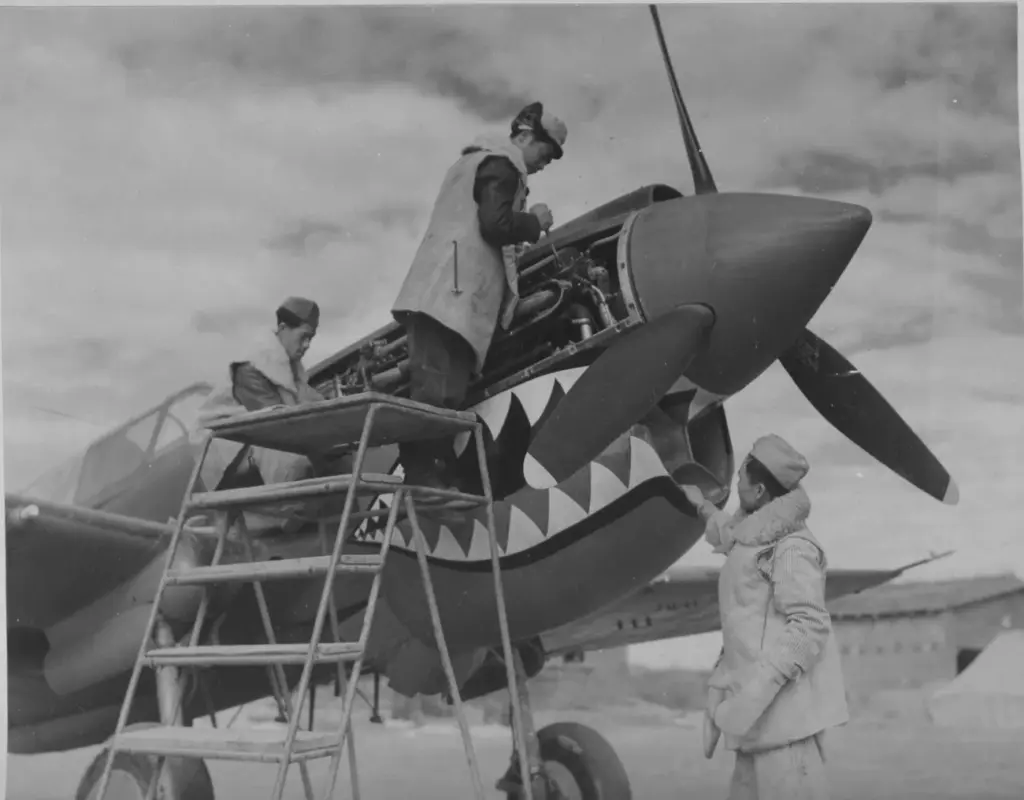
The Tigers, as Americans remember them, were a band of fighter pilots whose shark-toothed P-40s snarled across the skies. But the deeper symbolism lay in the name: in Chinese belief, the tiger is immortal, a guardian of the land, an animal that walks between worlds. It is an image that, in hindsight, fits the mythology of the war as China remembers it — a fight for survival that needed heroes with an aura of eternity.
The irony is that this immortality was made possible by a geography that kills.
The Great Air Bridge
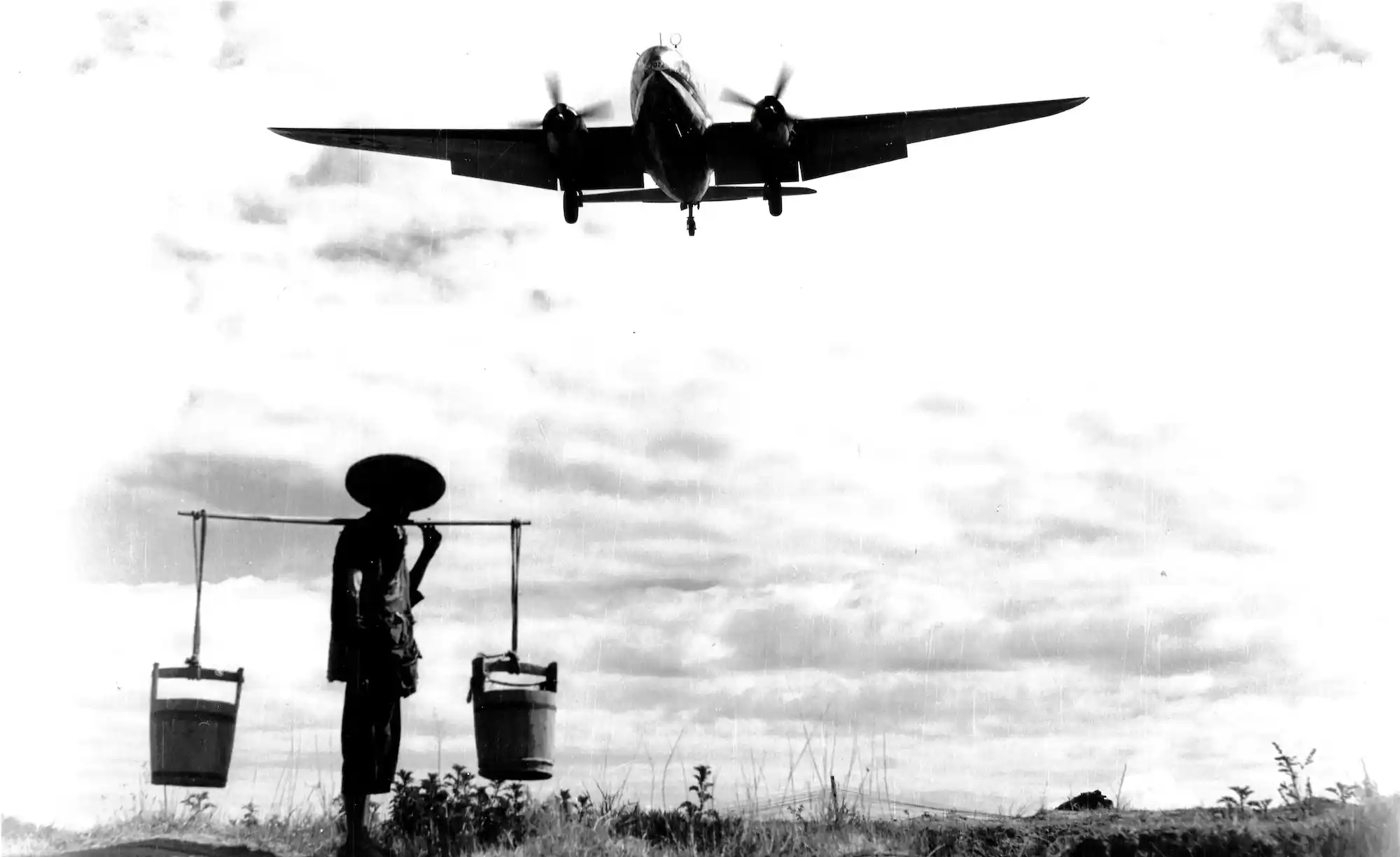
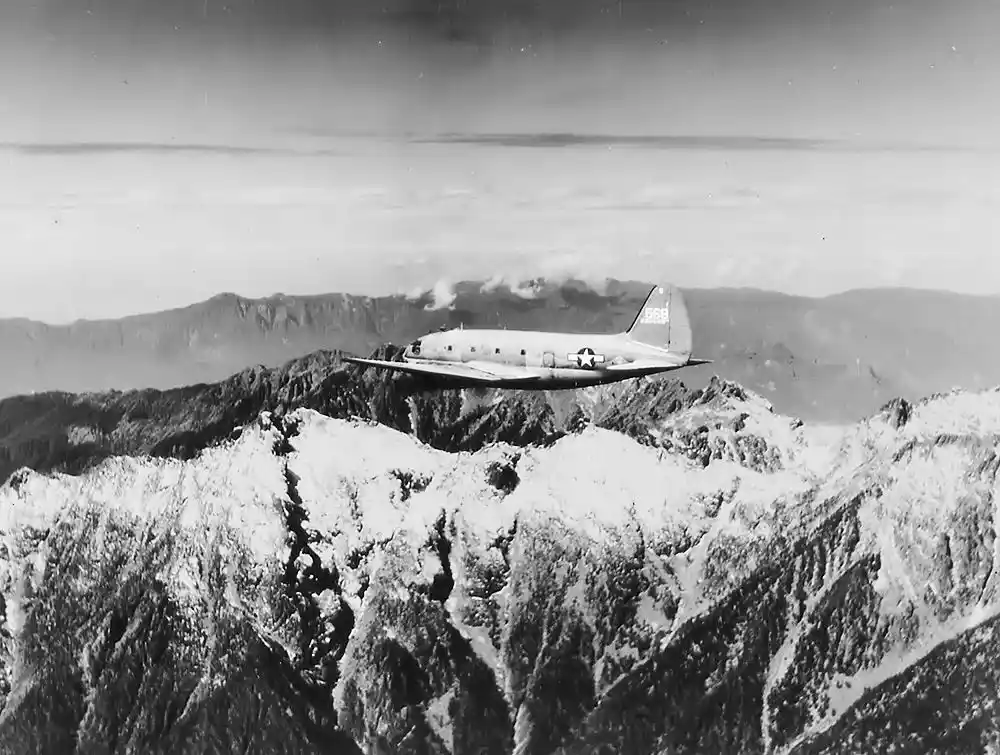
In 1942, when the Japanese army severed the Burma Road — China’s last overland supply line — the Allies were left with a desperate choice. They could abandon Chiang Kai-shek’s forces altogether, or attempt something that aviation experts of the time considered almost impossible: fly supplies over the world’s tallest mountains in unpressurized transports that barely managed a climb rate of 300 feet per minute.
This aerial route, stretching from the airfields of Assam to Kunming in China, soon acquired a name that spoke both to dread and respect. Pilots called it “the Hump.” They flew C-47s and C-46s into turbulence that ripped wings from fuselages, through storms that built ice on propellers in minutes, and across mountains that rose like stone walls in the clouds. Many aircraft vanished without radio calls, their wreckage still scattered across high ridges and deep forests.
To keep this air bridge alive, the Allies turned India’s remote northeast into one vast, improvised staging ground. Chabua, Dinjan, Sookerating, Mohanbari, Jorhat, Tezpur — the names sound like railway stops on an old itinerary, but in the war they became lifelines. Airstrips hacked out of rice fields and tea estates buzzed with activity: American pilots, British logistics officers, Indian labourers and mechanics working ankle-deep in mud. Villagers carried food to the bases. Local carpenters repaired wooden crates.
This was not a romantic frontier. It was a grinding machine.
India’s Quiet Place in this History
When one stands on those airfields today — some still active, others reclaimed by grass — it becomes clear how deeply India was knitted into this story. Thousands of Indian soldiers fought and died in the battles of Imphal and Kohima, turning back the Japanese advance that threatened to crush the entire Allied position in the region. The reopening of the land route to China became possible only because Indian regiments held the line.
The Hump itself existed because India existed — politically, geographically, logistically.
And yet, when the war ended, the great power rewards bypassed India. China entered the UN Security Council as a permanent member; India, though still a colony, was large enough, battle-tested enough, and strategically crucial enough that many believed it deserved the same seat. History chose otherwise.
The absence echoes even now, in the way this chapter of the war lies half-remembered.
A Return to Assam
The story acquired a new coda recently, when members of the U.S. Air Force’s 25th Fighter Squadron — the modern successors of a unit that once flew over the Hump — returned to Assam to retrace their heritage. Their official account describes a drive through a landscape where tuk-tuks and motorcycles thread their way past elephants and wandering cattle, with the rhythms of modern transport and older, slower lives unfolding on the same road..
At the Pasighat museum, the young pilots and maintainers found themselves standing before artifacts from the very men whose squadron patch they still wear. The patch’s origins are a small but telling detail. It was designed in 1942 by an American officer, Capt. Robert “Skunk” McClung — and then sewn locally by local embroiderers, a stitch of history that captures, in miniature, the deep Indian imprint on an American legend.
The U.S. Air Force report notes the “privilege” of seeing their past deeds recognized in Assam and the “close history” they feel with India’s forces even today.
That language — understated, almost formal — belies something more intimate: a recognition that the Hump was not merely an American or Chinese story, but a shared inheritance across cultures and continents.
The Sky as a Graveyard and a Bridge
To fly the Hump was to flirt daily with catastrophe. Pilots tell of downdrafts that dropped their transports hundreds of feet in seconds, of monsoon storms that hid mountains until the altimeter spun wildly, of engines that froze mid-flight. One veteran described the experience as “dragging ourselves over the mountains,” a phrase that later inspired the “Assam Draggins” nickname for the 25th Pursuit Squadron — a name still worn proudly more than 80 years later.
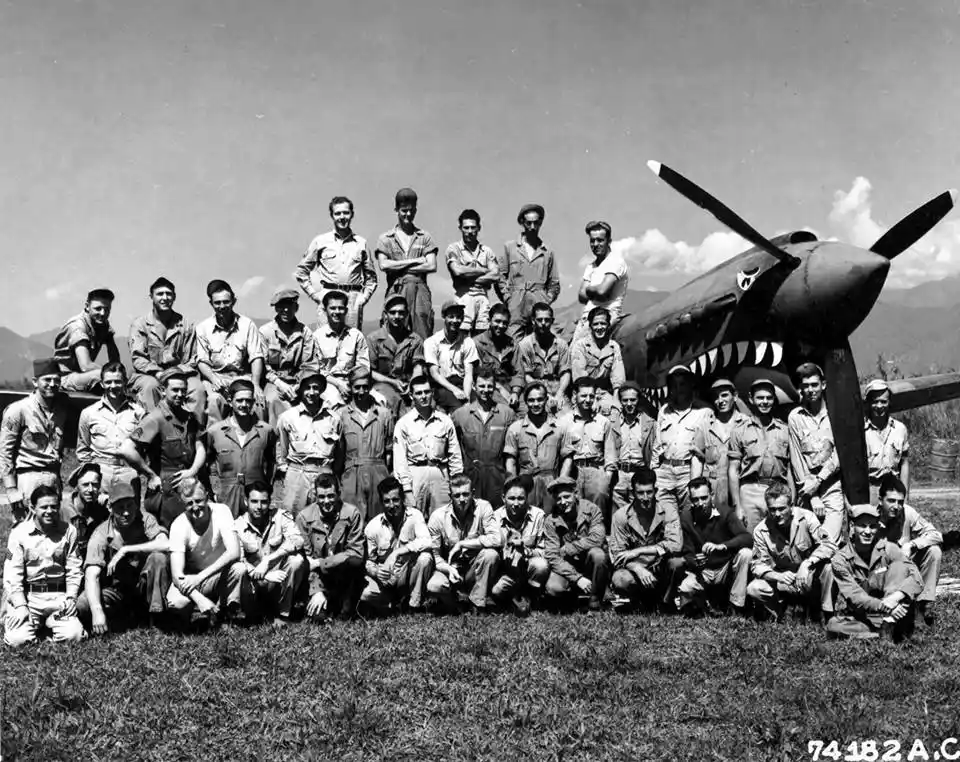
The sky was unforgiving, but it also created bonds across borders long before “strategic partnership” became diplomatic shorthand. American fliers depended on Indian ground crews and air traffic operators. Indian soldiers depended on American supplies. Chinese forces depended on every pound of cargo that survived the crossing.
The Himalaya keeps the secrets of those fallen pilots, standing tall and silent, carrying a deep, unbroken hush that feels almost like Paul Robeson’s river-song of endurance and memory.
Why this matters now
In a world that is once again sharpening its lines — the U.S.–China rivalry deepening, the Indo-Pacific becoming a geopolitical battleground — it is worth remembering that these relationships once unfolded in a spirit very different from confrontation. The Hump was an act of interdependence born of necessity, not ideology.
This history is not sentimental. It is instructive. It suggests that cooperation, even when strained and unequal, can alter the trajectory of nations.
Today, as military planners speak of new choke points, contested skies, and fractured supply chains, the old airfields of Assam remind us of something simpler: that survival in difficult times often depends on the willingness to share risk — and the clarity to see beyond the crisis of the moment.
The pilots who returned to Pasighat put it best. Standing in a humble museum in India’s northeast, they felt “honoured and humbled” to walk among the “forgotten footsteps” of those who flew before them.
Forgotten footsteps: the phrase carries more weight than it intends. It is not only the footsteps of American aviators that lie lightly on the land. It is those of Indian soldiers, labourers, village women carrying baskets of supplies, ground crews in floodlit nights — all the unmarked contributors to a history that unfolded on borrowed airstrips and in borrowed time.
An immortality of a different kind
The Chinese believed the tiger was immortal. In naming the Flying Tigers, they sought to capture a spirit that could survive beyond war.
Perhaps immortality is a collective achievement — a memory kept alive not through heroism alone, but through the shared, unglamorous labour of people who knew they would never be remembered globally, but did the work anyway.
And perhaps the truest immortality lies not in symbols painted on fighter planes, but in the quiet persistence of places like Assam, where history returns, once in a while, in the footsteps of pilots retracing a journey that was never theirs alone.