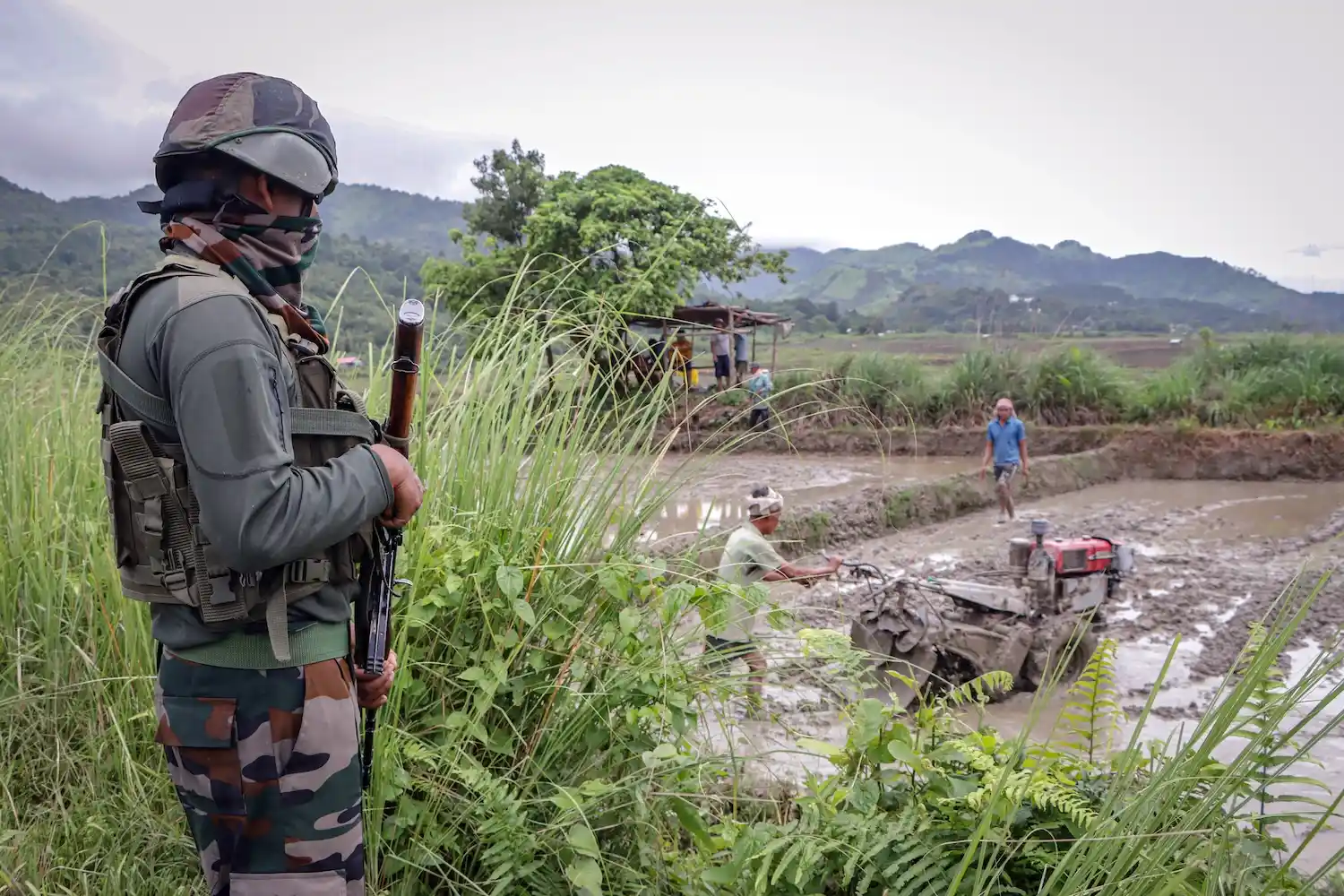
Security along India’s northeastern frontier continues to require sustained attention as the region faces evolving challenges from insurgent activity and cross-border dynamics. The strategic importance of maintaining stability across states like Arunachal Pradesh, Nagaland, and Manipur has become increasingly evident in recent months. On October 20, a targeted counter-insurgency operation by the Assam Rifles in Nagaland prevented a potential attack and led to the recovery of arms, ammunition, and uniforms belonging to local police and the Assam Rifles. This operation exemplified the sophisticated tactics now employed by militant groups, who attempt to use security force uniforms for deception and infiltration purposes. Such developments underscore the need for adaptive security strategies and enhanced coordination across the Indo-Myanmar border region, where traditional and transnational threats continue to intersect.
The Evolving Security Environment in the Northeast
India’s Northeast remains shaped by a complex interplay of ethnic diversity, infrastructural constraints, and transnational pressures. The Indo-Myanmar border, spanning Arunachal Pradesh, Nagaland, and Manipur, has long required careful security management. Recent years have witnessed an uptick in militant activity, driven by political instability in Myanmar, porous frontier zones, and the persistent movement of arms across state lines.
The discovery of uniforms from security forces during operations suggests that insurgent groups are employing increasingly sophisticated deceptive tactics to bypass defensive measures. This represents an escalation in operational complexity that security agencies must counter through improved intelligence gathering, faster response mechanisms, and enhanced coordination between states and agencies. The patterns revealed through recent operations demonstrate how authorities are working to intercept threats before they materialize into larger, coordinated incidents.
Arunachal Pradesh: Escalating Vulnerabilities and Response
Arunachal Pradesh faces distinct challenges due to its long, rugged international boundary with Myanmar and its geographic isolation. Dense forests and limited connectivity create conditions that militant groups exploit for infiltration, regrouping, and arms movement. Recent months have seen increased reports of armed cadres attempting to traverse vulnerable districts like Tirap, Changlang, and Longding.
The weapons recovered during recent operations, some traced to Arunachal Pradesh, reveal the interconnected nature of insurgent logistics across the region. This pattern suggests organized efforts to distribute arms and coordinate activities across state boundaries. In response, security forces have intensified patrols and surveillance operations, with a focus not only on intercepting militants but also on dismantling the supply chains and communication networks that sustain insurgent activity. The strategic importance of Arunachal Pradesh demands continuous monitoring and rapid-response capabilities to prevent escalation and protect vulnerable frontier communities.
Manipur: Managing Intersecting Security Challenges
Manipur’s security environment is complicated by the convergence of internal ethnic tensions and cross-border militant dynamics. Since mid-2023, the state has experienced prolonged civil unrest that has strained local security infrastructure and created vulnerabilities exploitable by insurgent groups. The state’s geographic proximity to active militant corridors in Myanmar makes it a critical node in the broader Northeast security equation.
The interconnected nature of security threats across Arunachal Pradesh, Nagaland, and Manipur means that developments in one state rapidly influence conditions in others. Militant groups often shift focus or relocate when pressure intensifies in a particular area, creating a fluid threat landscape. Enhanced patrolling along Manipur’s Chandel and Tengnoupal districts, coordinated with similar efforts in neighboring states, forms part of a unified border-management strategy. However, stabilization in Manipur also depends fundamentally on civic reconciliation and trust-building—areas where security operations must complement, rather than replace, peace initiatives.
Security Operations and Community Partnerships
Following recent operations, joint security deployments have been reinforced across key frontier districts in Arunachal Pradesh and Manipur. The discovery of security force uniforms has prompted additional focus on identifying and plugging vulnerabilities in camp security and personnel identification protocols. Coordinated patrols, intelligence-sharing mechanisms, and logistics have been strengthened to prevent potential spillovers from insurgent movements between states.
A defining feature of current security efforts is the deepening of community cooperation. Local councils, village authorities, and traditional bodies play essential roles in relaying information, maintaining stability, and ensuring that armed groups cannot exploit local conditions or community grievances. In Manipur, peace outreach initiatives have opened communication channels between security agencies and residents, blending tactical enforcement with trust-building efforts. This dual approach—combining vigilance with dialogue—reflects an understanding that lasting security cannot rely on force alone.
AFSPA and Calibrated Operational Response
The Armed Forces (Special Powers) Act remains in force across several districts in Nagaland, Arunachal Pradesh, and Manipur, providing the legal framework for swift operational response in high-risk environments. However, the application of AFSPA has evolved to become increasingly calibrated alongside peace and development initiatives rather than serving as the sole security instrument.
The goal is to maintain a rapid response capability while ensuring that local governance and dialogue mechanisms progress simultaneously. Recent experience demonstrates that purely security-centric approaches do not produce lasting peace; sustainable stability requires security measures to be paired with administrative responsiveness, inclusion, and community engagement. Periodic reviews of AFSPA implementation reflect this commitment to balance operational needs with civil liberties and developmental aspirations.
Civil-Military Coordination and Regional Stability
Integrated cooperation between civil and military institutions has become central to security management across the Northeast. Regular coordination meetings and joint reviews strengthen both operational efficiency and the administrative synergy necessary for managing sensitive border zones. State-level monitoring mechanisms now evaluate both security and developmental parameters, allowing emerging tensions to be addressed before escalation occurs.
In Arunachal Pradesh’s Tirap and Changlang regions, coordinated programs between district authorities and field units have contributed to a measurable reduction in major security incidents. Similarly, in Manipur, joint civil-military outreach programs emphasize livelihood development, education, and youth engagement as counterinsurgency measures. This collaborative approach ensures that security enforcement is balanced with trust-building and longer-term peace initiatives, creating a more sustainable pathway to regional stability.
India’s Integrated Strategy: Security and Development
India’s approach to managing Northeast security integrates hard counterinsurgency actions with development-focused strategies. The dual objective is to neutralize security threats while empowering local communities through improved governance, connectivity, and economic inclusion. Recent investments in border infrastructure, digital connectivity, and trade facilitation aim to integrate frontier regions more fully with the national mainstream.
At the diplomatic level, India continues to prioritize cooperation with Myanmar for border stabilization. Despite challenges within Myanmar’s political landscape, joint measures to counter cross-border trafficking and insurgent infiltration remain integral to maintaining balance along this vital frontier.
The overarching recognition is that sustainable peace in Arunachal Pradesh, Nagaland, and Manipur cannot rely solely on security operations. By combining operational readiness, trust-building, community responsiveness, and development, India seeks to ensure that the Northeast’s journey toward lasting stability remains on track. Ongoing vigilance, regional cooperation, and commitment to both security and development will ultimately determine the region’s future trajectory.