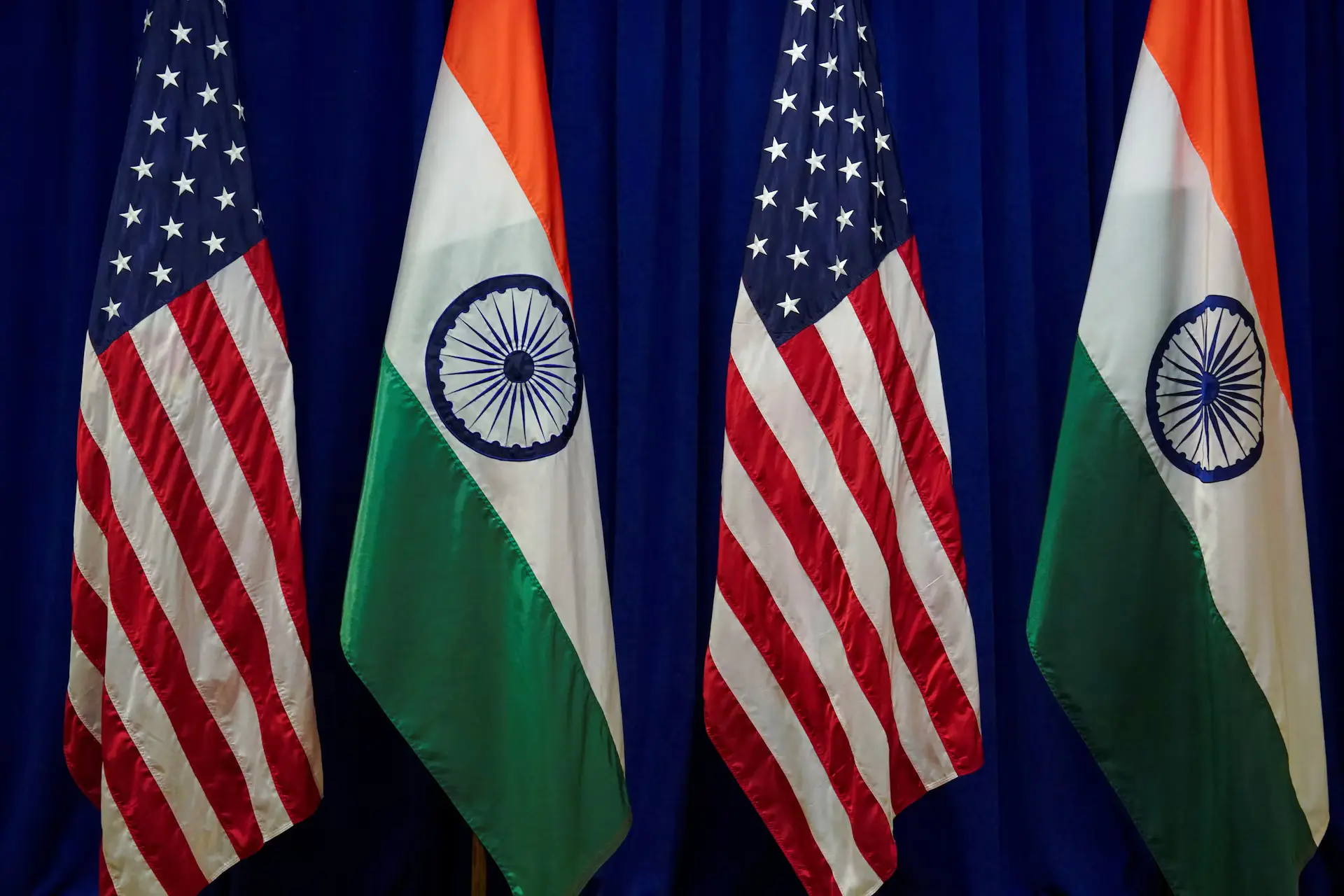
In an era where global powers play hardball in their backyards while probing everyone else’s, India faces a stark choice: passively accept external encroachments in South Asia or respond with the same strategic audacity that defines Washington, Beijing, and Moscow. Recent U.S. moves—offering India a conditional tariff respite while lavishing Bangladesh with even sweeter textile deals—make the message unmistakable. The time has come for New Delhi to encircle America in its own neighborhood, not through confrontation, but through smart, sustained engagement that creates real leverage.
Consider the facts on the ground. In early February 2026, the U.S. and India announced a framework for an interim trade agreement. Washington reduced its reciprocal tariff on Indian goods from 25%, with earlier peaks touching 50% amid energy-sourcing frictions, to 18%, tied to India’s commitments on imports and broader alignments. Indian markets cheered the de-escalation, and Commerce Minister Piyush Goyal highlighted gains for MSMEs, textiles, and exporters. Yet the deal remains provisional.
Barely days later, the U.S. extended a parallel framework to Bangladesh: reciprocal tariffs slashed to 19%, with zero-tariff exemptions for apparel incorporating U.S.-sourced materials. This directly undercuts Indian textile and garment competitiveness, eroding the very concessions India thought it had secured. The timing is no accident. It signals preference for a pliable partner in India’s periphery, especially amid Bangladesh’s post-2024 political flux.
This pattern fits a broader multipolar reality. Great powers jealously guard their neighborhoods while expanding elsewhere. The U.S. has long treated Latin America as its sphere; Russia wages war to secure its European flank; China dominates the South China Sea and courts distant partners. India, as South Asia’s natural leader, cannot afford to let outsiders—particularly a superpower already entangled in Indo-Pacific rivalries—reshape regional dynamics unchecked. Permitting such penetration risks turning South Asia into a proxy arena for U.S.-China competition, with Pakistan as the perennial beneficiary.
The antidote is reciprocity: mirror the playbook. If the U.S. courts India’s neighbors, India must court America’s—Latin America and the Caribbean (LAC), plus Canada—with deliberate intensity. Call it encirclement by engagement: build deep economic, technological, and diplomatic ties that force Washington to divert attention and resources to its own hemisphere, diluting its bandwidth for South Asian meddling.
Latin America offers fertile ground. India’s trade with LAC nations hovered around USD 35-43 billion in recent years (exports USD 14-20 billion, imports higher), dwarfed by China’s dominance but ripe for acceleration. Momentum is building: in 2025-2026, India committed USD 2 billion to Argentine lithium and cobalt projects; advanced critical minerals talks with Peru and Chile; deepened Brazil ties; and pushed to expand the India-MERCOSUR preferential agreement beyond its limited 450 tariff lines.
To make India’s outreach in Latin America and the Caribbean truly impactful, New Delhi should sharpen its priorities around core strengths—where it already excels globally—and pressing national needs, particularly in supply-chain security and self-reliance. The following focused sectors offer the highest potential for mutual gains, backed by recent momentum in bilateral ties:
- Pharmaceuticals and generics: India, as the world’s pharmacy, can aggressively expand access to affordable medicines, vaccines, and biosimilars across the region. Latin American countries face high healthcare costs and supply vulnerabilities; Indian generics provide a cost-effective solution while building goodwill. Recent high-level discussions, including with Brazil, have highlighted vast potential here, including increased exports of quality drugs and collaboration on traditional medicine systems like Ayurveda.
- Defense co-production and R&D: Partnering on equipment manufacturing, technology transfer, joint ventures, and co-development aligns with India’s growing defense export ambitions and the region’s modernization needs. Ties with Brazil e.g., aerospace collaborations involving Embraer and Indian firms exemplify this, fostering strategic trust and reducing import dependencies on both sides.
- Agricultural technology and renewables: Export India’s expertise in drought-resistant seeds, precision farming tools, irrigation systems, and solar energy solutions to address Latin America’s climate vulnerabilities and food security challenges. In return, the region offers vast agri-commodities and renewable energy opportunities. Cooperation in ethanol blending, sustainable aviation fuel, and green tech—emphasized in recent India-Brazil pacts—can accelerate this synergy.
- Manufacturing footholds, especially in Mexico: Establish production bases in Mexico to leverage nearshoring trends, where global firms (including from Asia) are relocating operations for proximity to North American markets. Indian companies can build local supply chains in autos, electronics, and logistics, gaining tariff advantages under United States-Mexico-Canada Agreement (USMCA) while exporting finished goods back to the U.S. and Canada. Recent FDI surges in Mexico highlight its appeal as a manufacturing hub, with Indian presence already growing in these corridors.
- Critical minerals security: Secure reliable supplies of lithium, copper, cobalt, rare earths, and other essentials for India’s electric vehicles, batteries, renewables, semiconductors, and defense manufacturing. Latin America’s “Lithium Triangle” (Argentina, Bolivia, Chile) and Andean reserves (e.g., Peru, Brazil) provide diversification away from China-dominated processing. India has already invested 2 billion INR in Argentine lithium blocks via KABIL, signed cooperation pacts with Brazil in February 2026, and advanced talks with Peru and Chile. Expanding these through investments, exploration agreements, and downstream processing partnerships will bolster strategic autonomy.
Beyond commerce, invest in soft power: frequent leadership visits, cultural exchanges highlighting ancient civilizational parallels, joint research in AI and digital infrastructure, and judicial/diplomatic training to reinforce democratic norms. As Minister of State Kirti Vardhan Singh emphasized in Parliament last year, India’s outreach amplifies Global South priorities. A dedicated forum—perhaps an expanded “Global South Dialogue”—could institutionalize these voices on trade equity, climate finance, and governance.
Canada presents an equally compelling front. Strained ties over diaspora issues are giving way to reset: Prime Minister Mark Carney’s March 2026 visit to India will likely launch or advance Comprehensive Economic Partnership Agreement (CEPA) negotiations, with ambitions to double trade standing currently USD approximately 13 billion toward USD 50 billion by 2030. Energy anchors the pivot—uranium supplies, nuclear cooperation, critical minerals—but opportunities extend to gems, precious metals, processed petroleum, machinery, and vehicles.
Both India and Canada chafe under U.S. tariff pressures and over-reliance on the American market. By aggressively exporting finished goods to Canada while importing resources, New Delhi can help Ottawa diversify, creating mutual stakes that blunt unilateralism. Economic interdependence, in turn, fosters quiet diplomacy on sensitive issues, turning friction into a managed partnership.
The strategic logic is elegant and unforgiving: in multipolarity, neighborhood dominance determines global reach. A power distracted by challenges in its backyard has less freedom to interfere abroad. By pouring resources into trade, defense collaboration, agriculture, minerals security, and cultural bridges across the Americas, India compels the U.S. to play defense at home—exactly as China and America do in South Asia today.
This is not zero-sum hostility; it’s pragmatic emulation. Washington itself values India as a democratic counterweight to Chinese influence in LAC. Frame the outreach as mutual benefit: shared supply-chain resilience, reduced over-dependence on any single player, and reinforcement of a rules-based order where no hegemon dictates peripheries.
Execution demands focus: dedicated inter-ministerial task forces, private-sector incentives, expanded diplomatic posts, and a clear narrative of reciprocity and autonomy. The payoff? Resilient supply chains, resource security, diversified markets, elevated global stature—and crucially, greater freedom to shape South Asia’s future on India’s terms.
In this multipolar chess game, passive defense loses. It’s time for India to make its move in America’s neighborhood. Encirclement by engagement isn’t aggression—it’s the price of strategic parity.