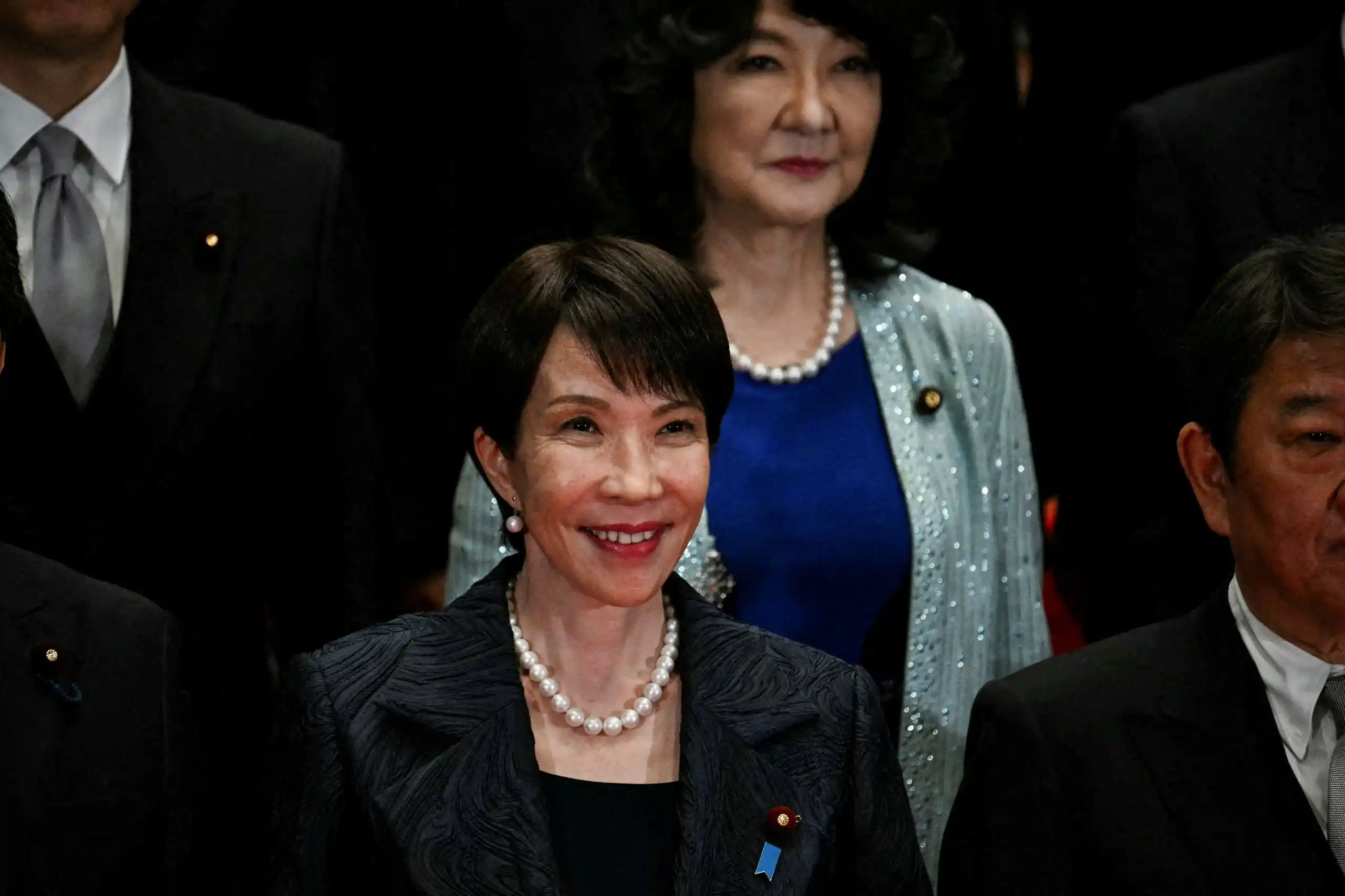
The ascendancy of Sanae Takaichi to the Japanese premiership in October 2025 represents a seminal inflection point in the post-war security architecture of East Asia. For New Delhi, the inauguration of Prime Minister Takaichi’s administration—characterized by an assertive departure from the Yoshida Doctrine’s economic-centric pacifism—offers a unique opportunity to deepen the bilateral strategic partnership. However, an analysis of the administration’s domestic political precariousness suggests that while the geopolitical alignment is robust, the durability of this policy trajectory warrants a measured diplomatic engagement from India.
The Acceleration of Security Normalization
To comprehend the strategic ramifications for India, one must first analyze the velocity of Japan’s defense reorientation. Prime Minister Takaichi’s policy framework, often termed the “Takaichi Doctrine,” is predicated on the rapid normalization of Japan’s military posture. Departing from the gradualism of the Kishida era, her administration has recalibrated the fiscal timeline for achieving the defense spending target of 2% of GDP, advancing the deadline to fiscal year 2025.
Defense Industrial Cooperation: The UNICORN Precedent
This accelerated capital allocation signifies a profound shift in Tokyo’s strategic calculus, prioritizing the acquisition of counterstrike capabilities and the operationalization of active cyber defense mechanisms. For India, which contends with a persistent asymmetry of power along its northern frontiers and an increasingly contested maritime domain in the Indian Ocean, a Japan committed to robust power projection serves as a critical counterbalance to hegemony in the Indo-Pacific. The transformation of Japan from a passive “consumer” of security guarantees to an active “provider” of regional stability aligns seamlessly with India’s objective of a multipolar Asia.
The qualitative deepening of the India-Japan partnership is most visibly manifested in the domain of defense technology transfer. The recent agreement regarding the Unicorn (Unified Complex Radio Antenna) stealth mast system constitutes a pivotal development in bilateral defense industrial cooperation. Historically, Japan’s restrictive Three Principles on Transfer of Defense Equipment and Technology had circumscribed cooperation to non-lethal and dual-use domains.
The Takaichi administration’s willingness to authorize the transfer of such sensitive stealth technology indicates a nascent structural shift toward co-development and co-production. For the Indian Navy, the integration of the Unicorn system is instrumental in enhancing the stealth characteristics and electromagnetic spectrum dominance of its next-generation surface combatants. Furthermore, this precedent opens avenues for dialogue on more advanced platforms, specifically lithium-ion submarine propulsion technologies, thereby diversifying India’s defense procurement portfolio and reducing dependency on legacy suppliers.
Geostrategic Alignment and the Quad Framework
The broader implication of the Takaichi administration’s posture is the potential for “comprehensive deterrence” vis-à-vis revisionist actors in the region. By enhancing the Japan Self-Defense Forces’ (JSDF) interoperability and readiness in the East and South China Seas, Tokyo imposes a resource cost on the People’s Liberation Army Navy (PLAN), effectively constraining its capacity to project power into the Indian Ocean Region (IOR).
Moreover, Prime Minister Takaichi’s ideological disposition suggests a reinvigorated commitment to the Quadrilateral Security Dialogue (Quad). Whereas previous administrations prioritized the Quad’s provision of public goods—such as vaccine diplomacy and climate resilience—the current administration is likely to advocate for a substantive security dimension. This dovetails with India’s evolving strategic preferences, offering a framework to institutionalize maritime domain awareness (MDA) and coordinated logistical support without necessitating a formal alliance structure.
Domestic Constraints and Policy Durability
Notwithstanding these strategic convergences, the domestic political economy of the Takaichi government presents a variable of uncertainty. The Liberal Democratic Party (LDP), in coalition with Komeito, currently governs as a minority administration following the electoral setbacks of October 2024 and July 2025. The government’s survival is contingent upon a confidence-and-supply arrangement with the Japan Innovation Party (JIP), a right-wing populist entity.
This legislative fragility introduces significant implementation risks. The expansive fiscal requirements of the proposed defense buildup necessitate a supplementary budget, passage of which is vulnerable to partisan bargaining. Concessions already granted to the JIP—including the decentralization of administrative functions to Osaka—illustrate the transactional nature of Takaichi’s governance. Should the administration become paralyzed by legislative gridlock, or should the Prime Minister be compelled to dilute her defense agenda to maintain the coalition’s equilibrium, the envisioned deepening of India-Japan security ties could face abrupt deceleration.
The Imperative for Institutionalization
As the geopolitical landscape of 2026 approaches, the India-Japan trajectory will be determined by the interplay between Tokyo’s strategic intent and its domestic political capacity. For New Delhi, the optimal strategy is one of rapid institutionalization. It is imperative to codify current convergences into binding agreements—specifically regarding supply chain resilience and reciprocal logistics—thereby insulating the partnership from potential political volatility in Tokyo.
The Takaichi administration represents a potential paradigm shift in Japanese grand strategy. While the longevity of her tenure remains subject to the vagaries of parliamentary arithmetic, the strategic logic of her policies offers India a pathway to enhance its own comprehensive national power. Consequently, New Delhi must engage with alacrity, securing long-term defense deliverables while the window of political opportunity remains open.