The world of trade is being redrawn. Protectionist industrial policies, carbon-linked market access, and fast-changing digital standards are setting the pace. These shifts originate largely in the Global North, but their weight falls on the Global South. For Southern producers, the new rules arrive not as opportunities but as extra costs: more paperwork, tighter margins, and the constant risk of being left out of premium markets.
For India, which has emerged as the most credible voice of the Global South, the challenge is clear. If we merely react to these pressures, we risk being boxed into low-value corners of the supply chain. If we lead with initiative, however, we can turn defensive compliance into strategic competitiveness. This is the playbook the South needs—and India is positioned to draft it.
Take agriculture. For farmers across Africa, Asia, and Latin America, new climate and food-safety standards are often seen as red tape. Yet they can also become tickets to higher-value markets. Climate-smart cultivation, traceable supply chains, and digital verification of quality can lift incomes rather than erode them. The point is not to resist standards but to shape and adapt them in ways that match Southern capabilities.
This principle extends beyond agriculture. Pharmaceuticals and active pharmaceutical ingredients (APIs), solar hardware, textiles, batteries, and digital services are all sectors where Southern economies already hold competitive edges. If built into integrated South–South supply chains, these strengths can anchor new trade corridors—routes of goods, services, and data that bypass traditional bottlenecks and reduce dependence on Northern gateways.
A trade corridor is not just a shipping lane or a stretch of road. It is a deliberate programme: upgraded ports and railways, redesigned border posts, simplified digital platforms that replace paperwork, and harmonised product standards. If designed around Southern comparative advantages, such corridors can unlock value chains that reflect local priorities rather than external diktats.
Consider a “millets corridor” connecting Eastern Africa and Western India. Producer-owned packhouses handle harvests, solar-powered cold storage cuts post-harvest losses, and supermarkets on both continents commit to steady offtake. Food-safety tests are mutually recognised, so consignments clear customs in hours, not weeks. Farmers see incomes rise while consumers gain a reliable supply of climate-resilient food.
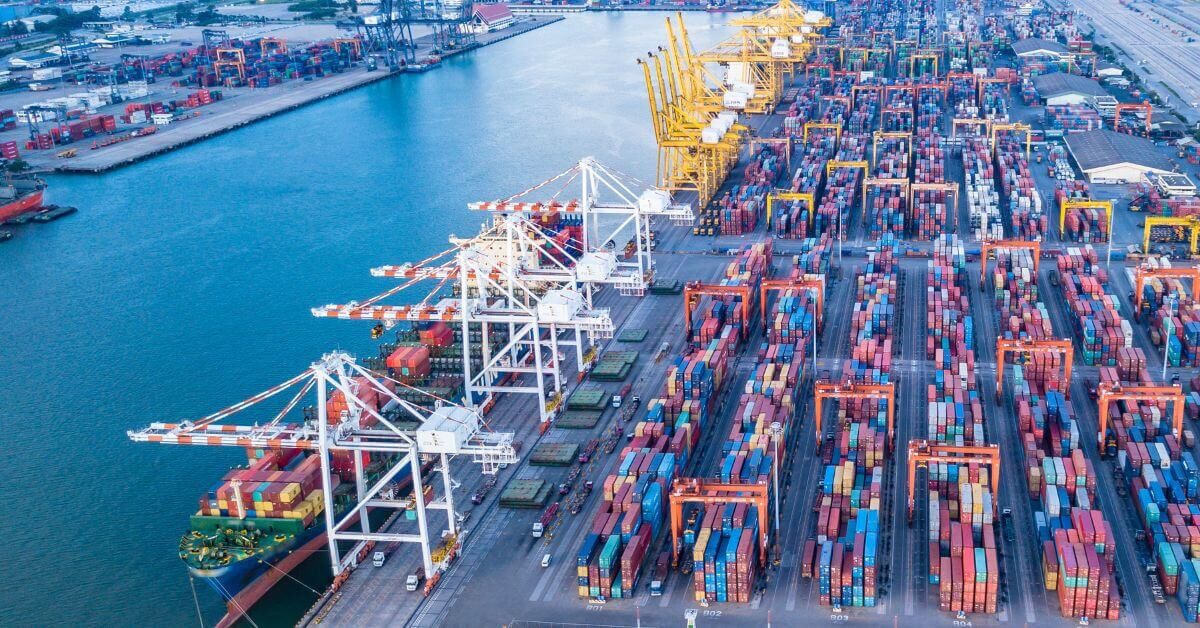
Or picture a “green shipping micro-corridor” between two mid-sized Southern ports. Port systems talk to each other digitally, ships arrive just in time instead of idling, and shore power reduces emissions at berth. Carriers that experiment with cleaner fuels receive targeted incentives. The outcomes are measurable: faster turnaround, lower freight costs, reduced carbon footprints.
If production is the visible part of trade, shipping and warehousing are the invisible backbone. They decide whether goods reach markets competitively or languish at bottlenecks.
Maritime connectivity in the South remains patchy. Too often, containers from Africa to Asia or Latin America are routed through Europe, adding cost and delay. Direct South–South services are essential. Coastal shipping agreements, interoperable port community systems, and pilot projects for green shipping can change the calculus.
Warehousing is equally critical. Harmonised rules for bonded and temperature-controlled sites, digital inventory management, and cross-border recognition of warehouse receipts can unlock finance for small firms. Agro-logistics parks near farms and cross-dock hubs near borders can slash spoilage, particularly for perishables. As a systems approach, when warehouses and ships are integrated into corridor planning, Southern exporters finally capture the value they generate.
Infrastructure alone does not move goods—people do. That is why capacity building must be the accelerator of South–South cooperation.
At the first level, producers and small enterprises need modular, hands-on training: from good agricultural practices to digital traceability, cross-border fulfilment, and inventory management. At the second, institutions—customs officers, food-safety authorities, port managers—must master risk-based inspections, paperless SPS documentation, and carbon-footprinting tools. At the third, policymakers themselves require fluency in digital trade negotiations, maritime decarbonisation, and AI assurance, so that the South speaks with coherence in global forums.
India can lead here. Twinned training academies, joint certifications, and mobile classrooms across partner countries can ensure skills travel as easily as goods. The goal is clear: build human capital alongside physical corridors.
Ambition without finance remains rhetoric. Trade corridors and logistics reforms require capital—but the sources must be more creative than traditional aid or sovereign loans.
At the community level, regulated vehicles such as cooperative bonds for packhouses or revenue-sharing notes for cold storage can mobilise domestic and diaspora savings. At the enterprise level, purchase-order and receivables finance—unlocked by digital proof of delivery—can give MSMEs liquidity at scale. Blended finance can target climate-smart assets like efficient irrigation, solar pumps, or low-emission refrigerants, with performance incentives tied to measurable outcomes.
At sovereign and intergovernmental levels, credit lines should be structured around corridor deliverables, with disbursements contingent on milestones like interoperable port systems or mutual recognition agreements coming into force. Risk must be explicitly managed: political-risk insurance, simplified FX hedges, and standardised dispute-resolution protocols can give investors confidence.
The South cannot ignore the agenda of the North, but it can respond with coherence and alternatives. On carbon border measures, Southern coalitions can propose interoperable measurement, reporting, and verification tools and flexible timelines. On digital trade, we can push frameworks that safeguard privacy and enable legitimate data flows without copying rules optimised for incumbent-heavy markets. On subsidies and industrial policies, the South should demand transparency and reciprocal access.
The key is credibility: our proposals must be practical, resource-linked, and designed to make compliance feasible for small firms, not just multinationals.
Partnership with advanced economies still matters—but only if it aligns with Southern priorities. Triangular cooperation can deliver technology and market access while keeping the ownership local.
In agriculture, Northern retailers could backstop offtake from Southern corridors while co-investing in traceability labs. In shipping, advanced ports and classification societies could help fast-track green and digital pilots. In warehousing, global logistics standards bodies could co-develop conformity assessments that speed up customs clearance.
Among Southern economies, India combines scale, credibility, and technical capacity. Its population-scale digital infrastructure—identity systems, payment platform, electronic documentation—can be adapted for cross-border trade facilitation. Its strengths in frugal engineering, renewable energy, pharmaceuticals, and agri-processing align with partner needs across Africa, ASEAN, West Asia, and Latin America.
India can spearhead a South–South Agri-Trade and Logistics Facility, financing assets from farm-gate packhouses and traceability platforms to bonded warehouses and port digitisation. Clear near-term targets—cut border delays by 30 percent on well-identified pilot corridors, certify 1,000 suppliers in two years, reach 70 percent e-document adoption in one year—would demonstrate seriousness and build trust.
The Global South faces a choice. We can remain passive, adjusting endlessly to rules written elsewhere. Or we can chart our own course—designing corridors, systems, and standards that reflect our realities and ambitions.
India’s task is not to replace one hegemony with another, but to build a cooperative framework where Southern producers, shippers, and regulators gain dignity and competitiveness. By blending reaction with initiative—contesting unfair measures while advancing corridors in shipping, warehousing, finance, and capacity—the South can transform from rule-takers to rule-shapers.
When rules are matched by rails—digital, green, and maritime—the South is no longer walking someone else’s path. It is drawing its own map.
That is the playbook India must now carry to every platform of the Global South—from BRICS to IORA, from BIMSTEC to the India–Africa Forum Summit.
The time to lead is now.