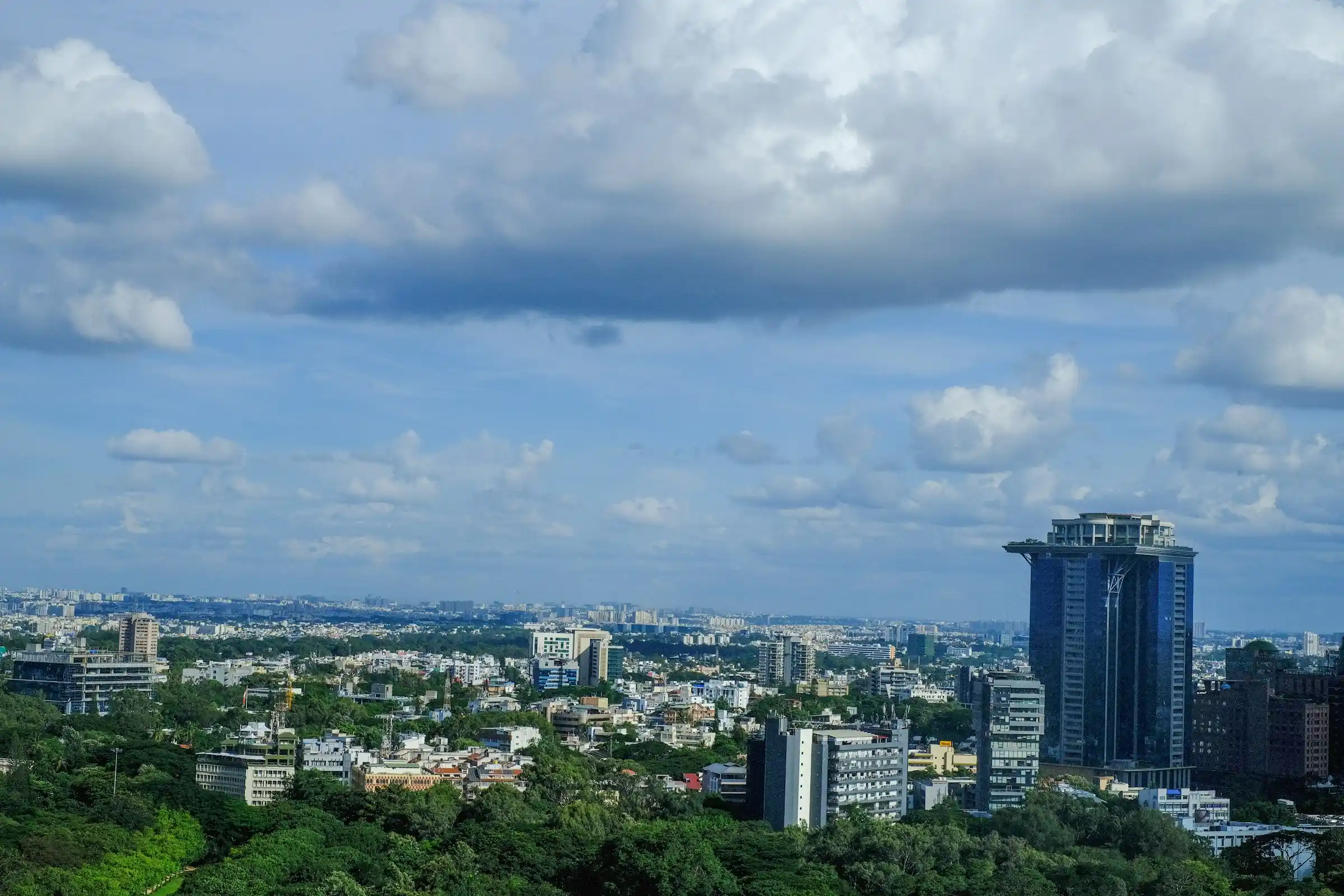
The Union Finance Minister Nirmala Sitharaman’s budget 2026-27 proposals to give a new push to urban growth in India’s seven cities have drawn quite a lot of attention for their potential economic significance and development of modern infrastructure.
Even as a standoff between the treasury bench and the opposition in the Parliament has kept the focus of the country away from the budget, presented in the House on Sunday, it’s equally relevant to analyse how the Union Finance minister’s idea of strengthening economic growth in Indian cities will transform the life and infrastructure.
The move also signals a renewed resolve of the government to assist the state governments in planning the development of cities and creating new employment opportunities and transforming the lives of the urban population, creating new models of economic self-reliance.
As per Nirmala Sitharaman’s announcement, the government will set up seven City Economic Regions (CERs) with a proposed allocation of Rs 5,000 crore per region over five years.
“An allocation of Rs 5,000 crore per CER over 5 years is proposed for implementing their plans through a challenge mode with a reform-cum-results based financing mechanism,” she outlined
The cities chosen for the new initiative include Bengaluru, Pune, Varanasi, Visakhapatnam, the tri-cities of Bhubaneswar-Puri-Cuttack (in Odisha) and Coimbatore-Erode-Tiruppur (in Tamil Nadu), and Surat.
The seven selected urban and peri-urban clusters are designated to become economic regional centers with targeted development support. These are intended to act as engines of growth beyond India’s largest metropolitan hubs.
The economic analysts are of the view that the initiative and allocations will unlock the new economic opportunities through a structured development and help in the region-wise growth, instead of unplanned and ad hoc city expansion. The tier-II and III cities, and some of these temple towns, were lacking modern infrastructure and modern amenities, thus restricting their economic potential.
It is in this spirit, the union finance minister said, “To accelerate and sustain economic growth, I propose interventions in six areas: scaling up manufacturing in seven strategic sectors, rejuvenating legacy industrial sectors, creating champion MSMEs, delivering a push for infrastructure, ensuring long-term security and stability, and developing city economic regions,” she said.
“We shall now focus on Tier-2, Tier-3 cities, and even temple towns, which need modern infrastructure and basic amenities. The cities are our engines of growth, innovation, and opportunities,” she added.
The CERs would be mapped based on their specific growth drivers, and an allocation of Rs 5,000 crore per CER over five years is proposed to build world-class infrastructure, improve connectivity, and upgrade public services.
The projects would be implemented through “challenge mode,” which entails a competition among the cities with a reform-cum-result based financing mechanism. This will ensure time-bound and effective implementation,” she declared.
The plan for CERs is much different from earlier smart city projects, as most of the project components in the cities chosen for the projects did work well on the ground and even failed to meet the timelines.
The details available reveal that under CERs, the government plans to take up sector-specific growth initiatives, including IT innovations in Bengaluru, while Coimbatore-Erode-Tiruppur will be taken up for strengthening manufacturing clusters, and Surat will see the expansion of the trade hubs based on local industrial needs.
According to a finance ministry official, the CERs seek to integrate urban centers with surrounding areas through improved infrastructure, transport connectivity, land-use planning, and municipal financing to promote inclusive and environmentally sustainable growth corridors.
Earlier in the 2025-26 budget, the Finance Minister had announced the setting up of an Urban Challenge Fund of Rs one lakh crore to carry out projects for “cities as growth hubs, creative redevelopment of cities, and water and sanitation.”
To back it all, Nirmala Sitharaman has also announced plans to develop seven high-speed rail corridors to serve as growth connectors between major cities as part of the government’s push to promote environmentally sustainable passenger transport systems. These include Mumbai–Pune, Pune–Hyderabad, Hyderabad–Bengaluru, Hyderabad–Chennai, Chennai–Bengaluru, Delhi–Varanasi, and Varanasi–Siliguri, strengthening intercity connectivity and supporting economic activity.