In 2006, a film titled Rang de Basanti was released in Indian theaters. The film’s title, which literally translates as “Colour me Spring,” drew parallels between a group of five Delhi University students and a group of five freedom fighters in colonial India. The film fundamentally had an anti-corruption message, which captured the political mood of millennial India. In 2014, Narendra Modi tapped into this anti-corruption sentiment against the Indian National Congress and molded it into a resurgence of Hindu nationalism to win the general elections in 2014. In a metaphorical sense, he managed to turn the color of spring into a saffron wave that swept the country. The film celebrated its 20th anniversary in the spring of February 2026. PM Narendra Modi is now in his 3rd term as Prime Minister, albeit without a single-party majority and a challenging geopolitical environment.
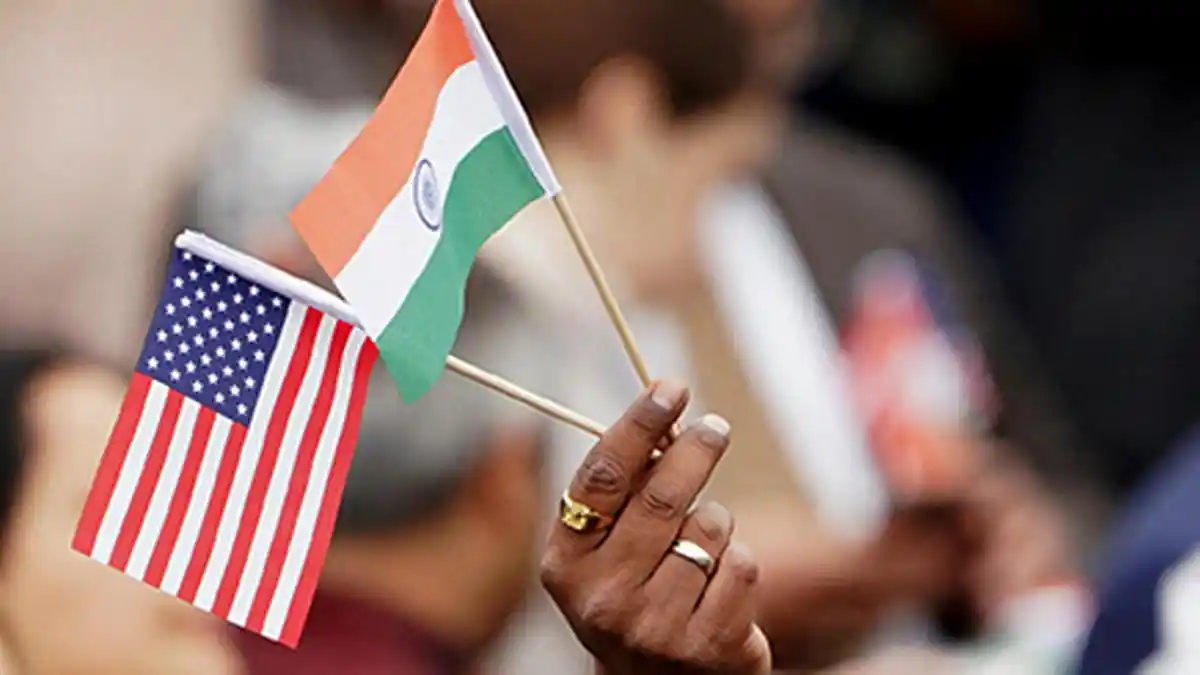
The Spring of 2026 marked a year of intense geopolitical pressures for India. In January 2025, Donald Trump, an American Businessman was sworn in as the President of the United States for the second time. In February 2025, PM Modi was one of the first leaders to visit the white house, and a detailed joint statement was issued between India and the United States, captured by the phrase “MAGA+MIGA= MEGA”. Policymakers in New Delhi and Washington widely believed that Donald Trump would not rupture the India-US relationship. These expectations turned out to be wrong as Donald Trump announced many policies targeting India on trade tariffs, Russian oil purchases, immigration, aid, development, and Democracy policy, Bangladesh, Pakistan, Iran, Ukraine, Europe, and China. Suffice to say that there was a wave after wave of statements from Trump about how India was ripping off the United States, and he would set the relationship straight. This period finally culminated in the spring of 2026 when India finally agreed to a framework for an interim bilateral trade deal with the United States. Many commentators and opposition in India were surprised by India’s final concession and signing of a lopsided trade deal with the United States. But the deal was wholeheartedly welcomed in the United States, breaking with long-standing Indian history linked to strategic autonomy. Over the course of the year, Donald Trump had managed to pressure India to concede to him. It was implicit that the shade of saffron was now turning to orange- a colloquial reference to Donald Trump’s hair. Why did India sign this deal, and what are the implications of this change of shade from saffron to Orange?
Shades of Politics
To answer this question, we need to understand the rapid changes underway in international politics. It is important to recall that the U.S.-China trade truce was formally announced on October 30, 2025, following a high-stakes summit between President Donald Trump and President Xi Jinping held at Gimhae International Airport in Busan, South Korea. The agreement, often referred to as a “one-year truce,” established a 10% baseline tariff rate and included several key concessions:
Chinese Commitments: Beijing agreed to suspend export controls on critical minerals (such as gallium, germanium, and graphite) and pledged significant purchases of U.S. agricultural products, including soybeans and corn. China also committed to curbing the flow of fentanyl precursor chemicals.
U.S. Commitments: In exchange, the United States suspended its planned “reciprocal” tariffs—which at the time had escalated to levels as high as 34%—and reduced specific tariffs related to fentanyl-producing chemicals.
However, the US-China deal was not the main reason for India’s decision. It is evident that India has taken a conscious decision to sign a one-sided deal to integrate itself into the emerging worldview of President Donald Trump. It is a clear signal from the Prime Minister that, despite the present and future concessions to Donald Trump, India has hitched its wagon to the United States in the political sense of the word. This despite the fact that all evidence points to the US being an unreliable and extractive strategic partner. The calculation seems to be that the domestic political priorities of both leaders are overlapping in terms of fundamentally changing the social and political characteristics of both their countries.
This will have far-reaching implications and has hence invited a backlash in the form of opposition protests in India and the Supreme Court decision on Trump tariffs in the United States. The Indian opposition and Indian social media have invoked neo-colonialism in its criticism, much like the film “Rang de Basanti”. However, this backlash is too feeble to prevent the strategic implications of this deal. Therefore, India is looking at a period where the actions of the United States will continue to cause problems for India while ostensibly professing to be a strategic partner. This is because there is a deep-seated realization in the United States that it is declining and, therefore, its policies are becoming more aggressive and revisionist.
Shades of Freedom
At the 62nd Munich Security Conference (February 14, 2026), Chinese Foreign Minister Wang Yi delivered a keynote speech titled “A Compass for the Ship of History,” positioning China as a “pillar of stability” in a world he described as increasingly defined by “wrecking-ball politics”. Regarding the United States, Wang noted that while China is prepared for risks like “decoupling” or “exclusive blocs,” the prospects for the relationship are “promising” due to the mutual respect between President Xi Jinping and President Trump. He emphasized that “Europe should be at the table, not on the menu” for peace negotiations (referring to Ukraine) and urged the U.S. to choose a path of cooperation over “containment. This Chinese signaling was directly aimed at the United States and a message to the world that China wants to be a stable partner to the rest of the world.
India would have carefully taken note of these developments and calculated that such turbulence is best negotiated by conceding to the primary actor, which is causing the turbulence – the United States. This is a political decision rather than a strategic decision and could backfire. It may also force India to course-correct more radically at a later stage.
In the film Rang de Basanti, the five protagonists are shocked to find that the main antagonist is being feted by the media and the public despite his corrupt actions. This prompts them to take radical measures, culminating in conflict. In the 20 years of this film and the 20 years of the strategic partnership between India and the United States between the spring of 2006 and the spring of 2026, we have never seen so much rupture and strategic deficit in the Indo-US relationship being patched up by top-down political decisions. While the floor may not be falling off the relationship due to sudden political decisions by both governments, the bedrock of trust has fallen off and will require radical corrections in the future. After all, the bedrock of the India-US relationship, and incidentally, the film is the value of freedom. For now, the shades of freedom have been changed to the political shades of saffron and orange in the India-US relationship.