The abrogation of Article 370 on August 5, 2019, marked a pivotal shift in the constitutional status of Jammu and Kashmir (J&K), transforming it from a state with special autonomy to a Union Territory integrated fully with India’s legal framework. Article 370, introduced in 1949 as a temporary provision, granted J&K its own constitution, flag, and autonomy over internal matters, while Article 35A, added in 1954, defined permanent residents and restricted outsiders from owning property or settling there. This setup, while intended to preserve regional identity, inadvertently perpetuated gender inequalities. Women in J&K faced discriminatory laws, particularly in property rights and marriage.
For instance, a Kashmiri woman marrying a non-resident lost her inheritance rights, a provision rooted in patriarchal norms and residency rules under Article 35A. The abrogation nullified these barriers, extending India’s progressive laws to the region, including protections against child marriage, domestic violence, and equal property inheritance. This change has been hailed as a catalyst for women’s empowerment, enabling access to central schemes, political reservations, and economic opportunities. However, it has also sparked debates on implementation amid ongoing socio-political challenges.
Legal and Constitutional Changes
The revocation of Article 370 dismantled a legal architecture that discriminated against women, aligning J&K with India’s Constitution. Previously, women who married outside the state were stripped of their permanent residency status, barring them from owning or inheriting property. This not only reinforced gender bias but also limited women’s autonomy in personal choices. Post-abrogation, women retain full property rights regardless of their spouse’s origin, a reform grounded in gender equality principles. Central laws such as the Prohibition of Child Marriage Act (2006) and the Protection of Women from Domestic Violence Act (2005) now apply, addressing gaps where child marriages and abuse were inadequately regulated. The Indian Penal Code replaces the outdated Ranbir Penal Code, offering stronger safeguards against crimes like triple talaq, which was banned nationally in 2019 but previously inapplicable in J&K. These changes have tangible effects. Women can now access the National Commission for Women for grievances, and dedicated women’s police stations have been established in several districts. A 2024 study highlights that the abrogation has removed legal hurdles, allowing women to buy, sell, and transfer property freely, fostering financial independence.
However, critics argue that while legal equality exists on paper, customary practices in rural areas continue to undermine these rights, with familial pressures often overriding statutory provisions. Despite these, the legal overhaul represents a foundational step toward empowerment, correcting decades of institutionalised discrimination.
Political Empowerment
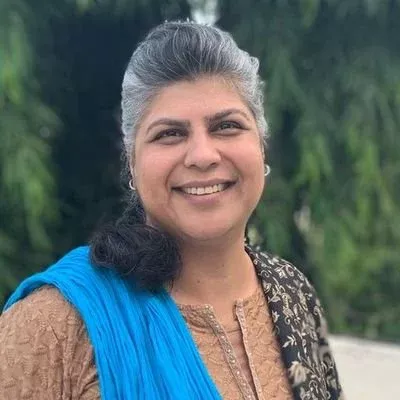
Political participation has seen a remarkable upsurge, driven by reservations and inclusive policies. The abrogation enabled the implementation of 33% reservation for women in Panchayati Raj Institutions (PRIs) under the Tejaswini Scheme, mirroring national standards. The Nari Shakti Vandan Adhiniyam (2023) extends this to 33% in the Lok Sabha and state assemblies, a historic push for representation. In the 2020 District Development Council elections, women secured significant seats, with voter turnout among females reaching 60% in some areas. This contrasts with pre-2019 figures, where women’s assembly representation hovered below 3% from 1952 to 2014. Examples abound: Fatah Begum, an 80-year-old Sarpanch from Sopore, entered politics post-abrogation, leveraging reserved seats to advocate for village development. Arifa Begum, the first woman Sarpanch of Khumriyal, emphasises how these roles reclaim women’s voices in policy-making. Schemes like Mahila Shakti Kendras provide skill training and legal aid, benefiting over 70,000 women through One Stop Centres. A 2025 analysis notes a rise in female leaders within parties like the BJP, with women like Darakhshan Andrabi contributing to mainstream discourse.
Yet, challenges persist: a 2019 survey revealed 60% of women voters were disillusioned due to perceived corruption and violence, deterring candidacy. Patriarchal biases and security concerns in conflict zones limit broader engagement, but the trajectory indicates growing agency.
Economic Empowerment
Economic independence has flourished through targeted schemes and entrepreneurial support. Women’s labour force participation climbed from 26.5% in 2018-19 to 32.8% in 2021, with further growth projected. Over 300 women-led startups registered under the J&K Startup Policy 2024-27, spanning eco-tourism, handicrafts, and digital services. Initiatives like Hausla and Tejaswini offer financial aid and training, while PM MUDRA Yojana has sanctioned loans to over 2 lakh women accounts in J&K by 2025, amounting to ₹47,704 crore. Self-Help Groups (SHGs) under the UMEED Scheme have empowered rural women, especially during COVID-19, by promoting income-generating activities. Tourism’s boom—2.3 crore visitors in 2024—has created jobs in women-dominated sectors like handicrafts. Platforms like Kashmir Box connect artisans to global markets, enhancing earnings. A 2024 study links improved safety and security, widening entrepreneurial opportunities, with 82% of respondents noting positive impacts.
However, tribal women face disparities, with literacy at 39.7% versus the national 49.4%, hindering economic access. Despite progress, women from Jammu and other mountainous districts are yet to be brought under the umbrella of economic empowerment.
Education and Social Empowerment
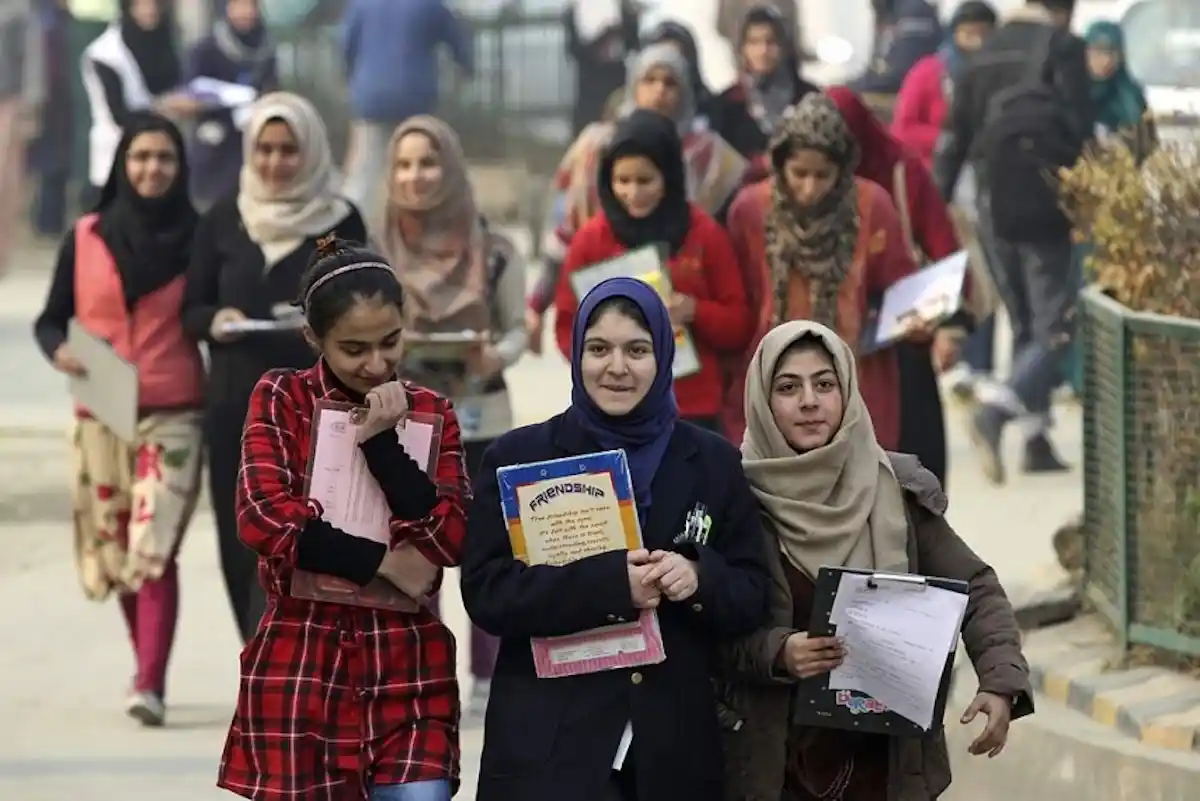
Educational advancements have been instrumental in social upliftment. Female literacy, at 56.4% in 2011, has improved with schemes like Beti Bachao Beti Padhao, providing scholarships and outreach. Enrollment among girls surged post-2019, supported by new institutions like AIIMS Awantipora and IIT Jammu. Over 14,000 children, including girls, benefit from 46 Goodwill Schools run by the Indian Army under Operation Sadbhavana. Vocational centres offer IT and tailoring skills to women, with ₹3 crore in scholarships aiding higher education. Socially, abrogation has reduced violence, with an 81% drop in civilian deaths, enhancing women’s mobility and safety. Women Helplines (181) and Nari Adalats provide grassroots justice, operational in 50 Gram Panchayats each in J&K. Testimonies from Kashmiri women highlight gains in security and dignity.
Yet, conflict legacies and stigma persist, with 3,069 dowry-related cases in 2018-19 indicating ongoing social issues.
Challenges and Criticisms
Despite gains, challenges remain. Patriarchal norms and weak enforcement limit legal benefits, while continued terrorism and security issues may heighten vulnerabilities. Demographic shifts post-abrogation raise fears of cultural erosion, disproportionately affecting women. A 2025 paper notes that while opportunities exist, political representation stays low due to conflict legacy and corruption perceptions. Economic disparities in tribal areas and rising crimes demand targeted interventions. Addressing persistent challenges like cultural barriers and security concerns is crucial for sustainable progress. By building on these foundations, J&K can realise a truly empowered future for its women, contributing to India’s vision of inclusive growth.