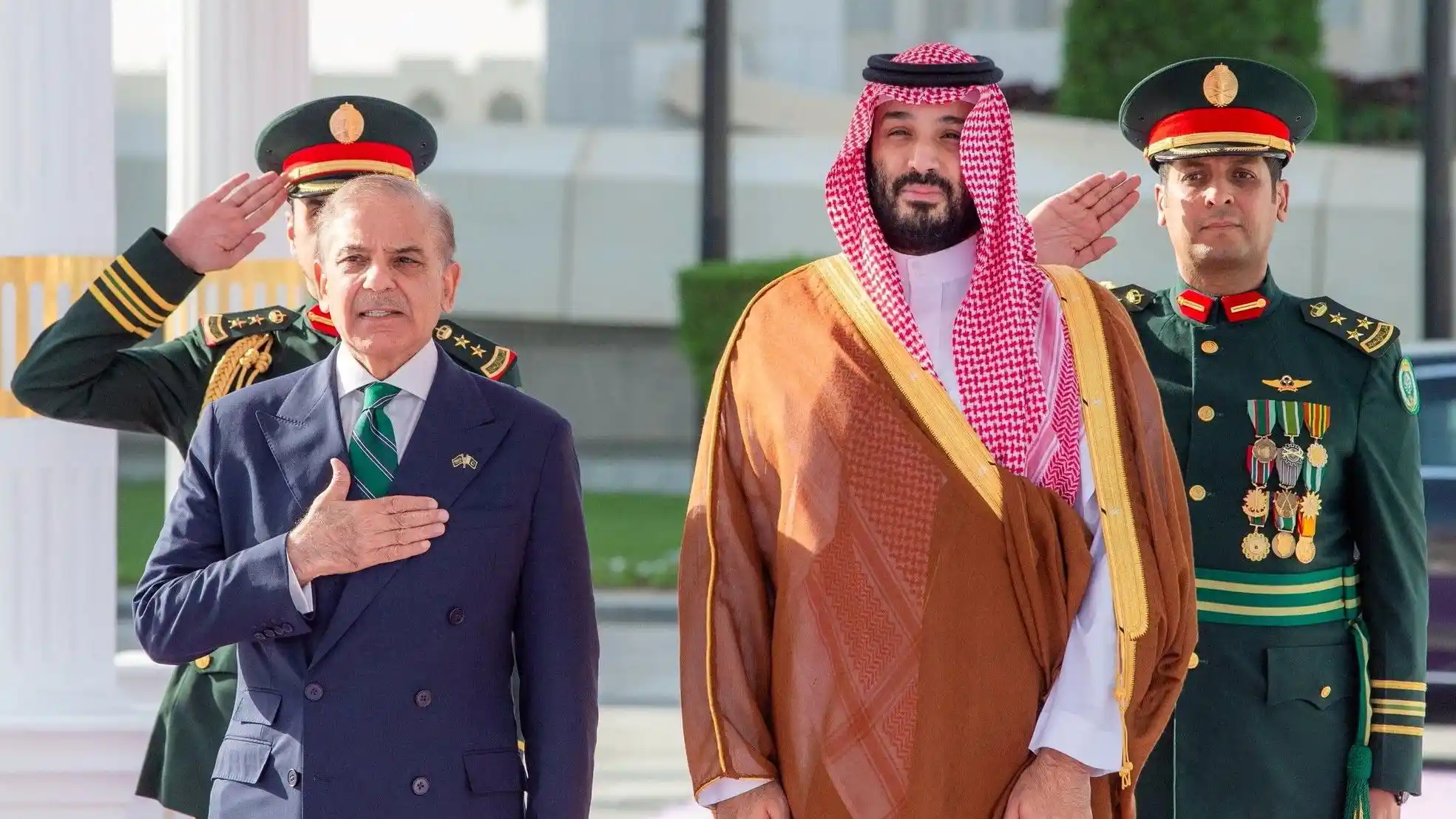
Pakistan once again engages in a pointless spectacle that emphasises nuisance over substance. The propaganda-driven diplomacy aimed at preserving its declining strategic importance and handling backlash is nothing new. The current instance of Pakistan’s involvement in the Gulf, aimed at securing a major diplomatic event for itself, hardly holds strategic significance. Its diplomatic tactics lack the value and depth needed to establish itself as a key mediator in high-stakes conflicts.
The Propagandist diplomacy vs. Persuasive diplomacy
Pakistan’s diplomacy in the Gulf relies on two strategies: first, symbolic outreach, and second, ideological appeal. Both traditional factors have been waning for decades; the main reason is the lack of strategic reliability and relevance, which are crucial for diplomacy to have persuasive value. The major example of a persuasive diplomatic actor in the region is Qatar, which has strategically built its diplomatic tactics and policies on reliability and relevance rather than on purely ideological appeal. Qatar’s strategic reliability stems from its reputation as an “honest broker” that maintains open communication channels with diverse, often adversarial actors, including the United States, Iran, the Taliban, and Hamas.
This reliability in maintaining open communication and influence with multiple state and non-state actors positions Qatar as an important player in managing influence and mediation. Its strategic relevance stems from its role as a key LNG supplier (energy diplomacy) and from hosting critical US military infrastructure, which together project it as a major regional security player. Both factors help Qatar increase and sustain its persuasive diplomatic role—an essential trait for a regional stabiliser or mediator. While Qatar has major ideological ties and appeals similar to those of the Muslim Brotherhood and other ideological actors, in modern times it has shifted away from ideology and focused more on pragmatic, niche diplomacy to build its long-term regional influence.
The ideological appeal of Qatar gives it an additional strategic advantage when negotiating with non-state actors. In summary, to maintain long-term regional influence and persuasive power in diplomatic efforts, one needs legitimacy and relevance, not just ideological appeal. In recent years, Qatar has worked to boost its soft power and branding by hosting the FIFA World Cup in 2022 and making high-profile investments, thereby strengthening its credibility in strategic and persuasive diplomacy.
The recent episodes of Qatar’s diplomatic success in brokering peace agreements and ceasefires, including one in June last year, saw Qatari Prime Minister Sheikh Mohammed bin Abdulrahman Al Thani secure Iran’s agreement to a U.S.-proposed ceasefire after a 12-day conflict. Even in the Russia-Ukraine conflict, Qatar played a major role in ensuring child repatriation and acted as a mediator for reuniting families separated by the war. As of August 2025, its efforts have successfully returned around a hundred children to their families in both Ukraine and Russia, according to a report.
The Israel-Hamas ceasefire and hostage release agreement in January last year, along with secret prisoner swap negotiations between the U.S. and Venezuela from 2023-2024, further highlight Qatar’s diplomatic influence and its growing strength in clean diplomacy—managing crucial peace negotiations and agreements in a rule-based and transparent manner. In recent past, we have seen strategic pragmatism and normalization between Arab key rivals with ideological differences, such as Egypt and Turkey, and for the time being, Saudi Arabia, Iran, and the UAE.
The Propagandist and Diminishing Value
Pakistan’s propaganda diplomacy mainly relies on ideology, communication, and media rather than on strategic, niche, and persuasive diplomacy, which depends on relevance and credibility. This approach ultimately diminishes its legitimacy as a mediator, unlike Qatar’s case. In Pakistan’s situation, relevance, credibility, and especially a strategic niche are missing. The only factor supporting Pakistan’s influence is ideology, which does not make it an effective or persuasive diplomatic actor. The longstanding tensions between Saudi Arabia and Iran, simmering for years, were escalated by a new mediator: Pakistan. Former Prime Minister Imran Khan repeatedly offered to mediate between the two regional rivals, but Saudi Arabia outright refused. The real breakthrough came in 2023 when China brokered an agreement, with Pakistan largely sidelined. The well-known Afghan peace process, where Pakistan claimed to be the primary mediator between the US and Taliban, also failed as its ties with TTP and the Afghan Taliban gradually worsened.
The Saudi Illusion
The extensive noise about the Saudi-Pakistan pact last year still does not appear to be gaining practical traction or diplomatic value, as Pakistan’s limited influence makes the pact largely symbolic diplomacy. These limitations stem from conflicts between Pakistan’s core interests and Saudi Arabia’s regional ambitions.
The first signs of friction appeared in 2015 when Saudi Arabia launched a military intervention in Yemen against the Houthis, whom Riyadh sees as an Iranian proxy, and asked Pakistan to join the coalition. Saudi Arabia expected that, due to longstanding military cooperation, Pakistan would not refuse, but Pakistan’s Parliament passed a resolution calling for neutrality. This angered Riyadh and strained relations. Similarly, when Malaysia’s Prime Minister tried to create an alternative platform outside the OIC for the Islamic world, Pakistan showed interest and co-convened the event. However, Saudi Arabia viewed this as a threat to the current OIC system and warned Pakistan, leading Prime Minister Imran Khan to refuse to attend the summit.
The conflict is not one-sided. Saudi Arabia’s regional ambitions to diversify cooperation across the region and beyond were clear when, in one instance, the Kingdom gave a muted response to India’s 2019 decision to revoke Kashmir’s special status and also refused to hold a special OIC meeting on Kashmir. This inaction frustrated Pakistan, and relations worsened when Pakistan’s foreign minister warned Saudi Arabia, “if you cannot convene it [a special meeting on Kashmir], then I’ll be compelled to ask Prime Minister Imran Khan to call a meeting of the Islamic countries that are ready to stand with us on the issue of Kashmir and support the oppressed Kashmiris.”
Within months of this episode, Riyad demanded the return of the US$3 billion loan and refused to sell oil to Islamabad on deferred payment, denting the crucial economic partnership between the two countries.
The Iran Fiasco and Pakistan’s Desperation
After days of claiming to mediate the ongoing US-Iran conflict, Iran returned Pakistan’s tanker and refused permission for it to enter the Strait of Hormuz. More importantly, Iran even rejected talks and US ceasefire attempts by turning down Trump’s 15-point peace proposal. While the broader dynamics of peace and conflict have shifted, certain and specific developments—such as pushing back a Pakistani vessel and a blunt rejection by Iran’s envoy regarding Pakistan’s role in mediation—reveal two things: first, Pakistan’s influence and importance in the Gulf are very limited and gradually decreasing; second, it exposes Pakistan’s propaganda diplomacy, which it believes gives Pakistan’s diplomatic strength, but in reality, it is further damaging Pakistan’s remaining influence in the Gulf and portraying it as a propagandist player in the region.