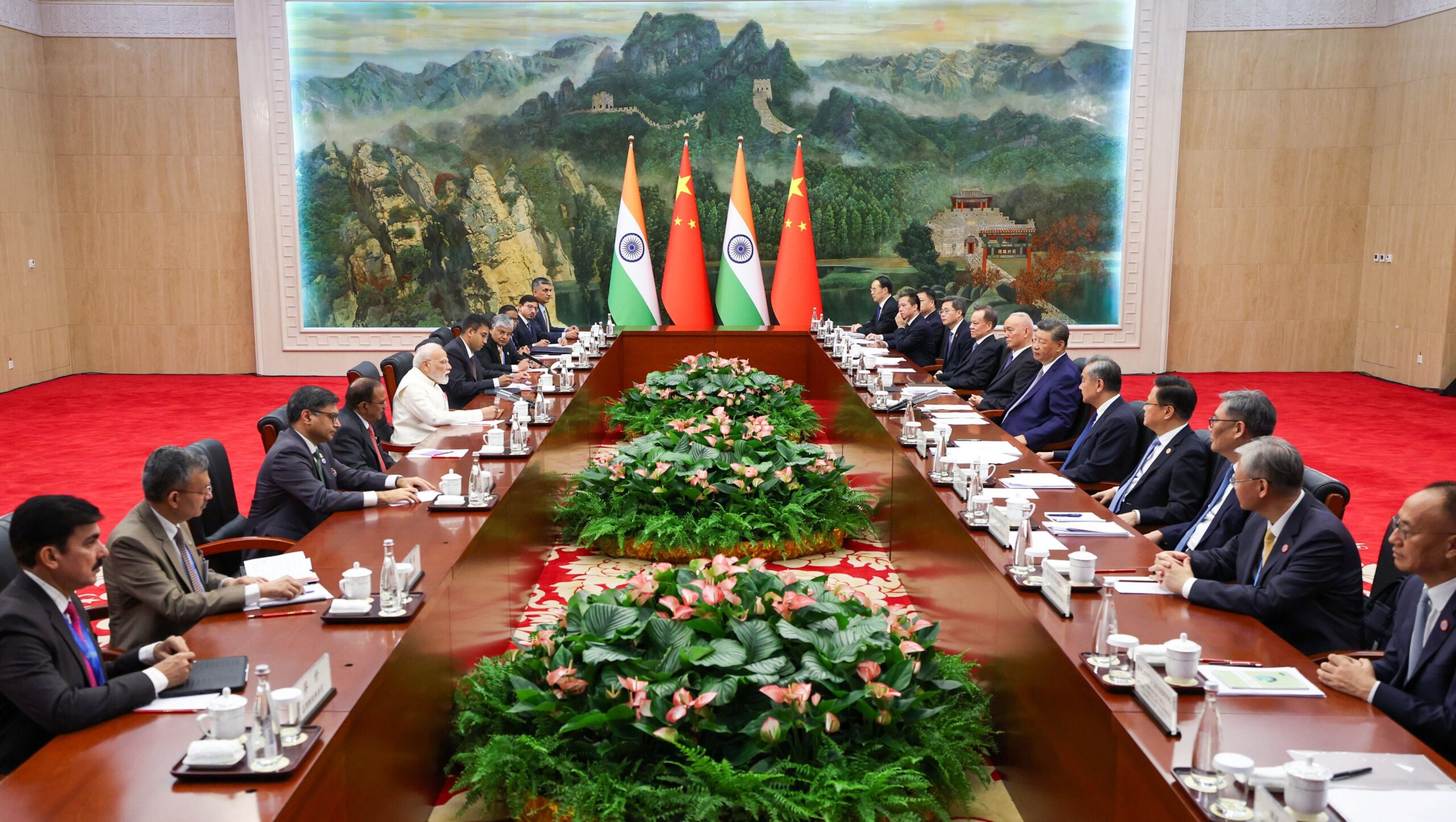
Indian Prime Minister Narendra Modi’s ongoing visit to China entered a pivotal phase yesterday, with a high-profile meeting with Chinese President Xi Jinping and active participation in the Shanghai Cooperation Organisation (SCO) Summit. The visit, PM Modi’s first to China in seven years, is being closely watched for signs of a reset in relations strained since the Galwan Valley clashes of 2020.
A Strategic Conversation in Tianjin
In a meeting that underscored the importance of direct engagement, PM Modi and Xi convened in Tianjin to address key issues in India-China relations. The two leaders agreed that “mutual trust, respect, and sensitivity” — or vishwas, samman aur samvedanshilta — must form the foundation of future ties.
They discussed concrete measures to maintain stability along the disputed border, with PM Modi noting that peace had largely held since recent disengagements. In a significant step towards normalizing relations, both sides confirmed that direct flights between the two countries will soon resume.
Warm Welcome and Multilateral Diplomacy
PM Modi received a grand reception in Tianjin, complete with performances of Indian classical music by Chinese artists and an enthusiastic turnout from the local Indian community.
The SCO Summit gathered leaders from across Central, South, and Southeast Asia, as well as the Middle East. Russian President Vladimir Putin is also to attend. He extended an invitation to Xi to attend the BRICS Summit that India will host in 2026, reinforcing his call for sustained dialogue and multilateral cooperation.
Focus on Stability in a Turbulent World
Against a backdrop of global economic uncertainty and geopolitical rivalry, PM Modi stressed the need for India and China — as two of the world’s largest economies — to work together to stabilize the global economic order. He also emphasized that bilateral relations should not be swayed by third-party perspectives, a pointed reference to avoiding external geopolitical pressures.
The Prime Minister was accompanied by Foreign Secretary Vikram Misri and National Security Advisor Ajit Doval. External Affairs Minister S. Jaishankar, however, was notably absent from the trip.
Yesterday’s developments reflect a pragmatic approach from both New Delhi and Beijing – prioritizing dialogue, confidence-building measures, and regional engagement. While deep-seated differences remain, the resumption of direct flights, commitment to border stability, and shared participation in the SCO framework point towards a slow but steady thaw in relations.