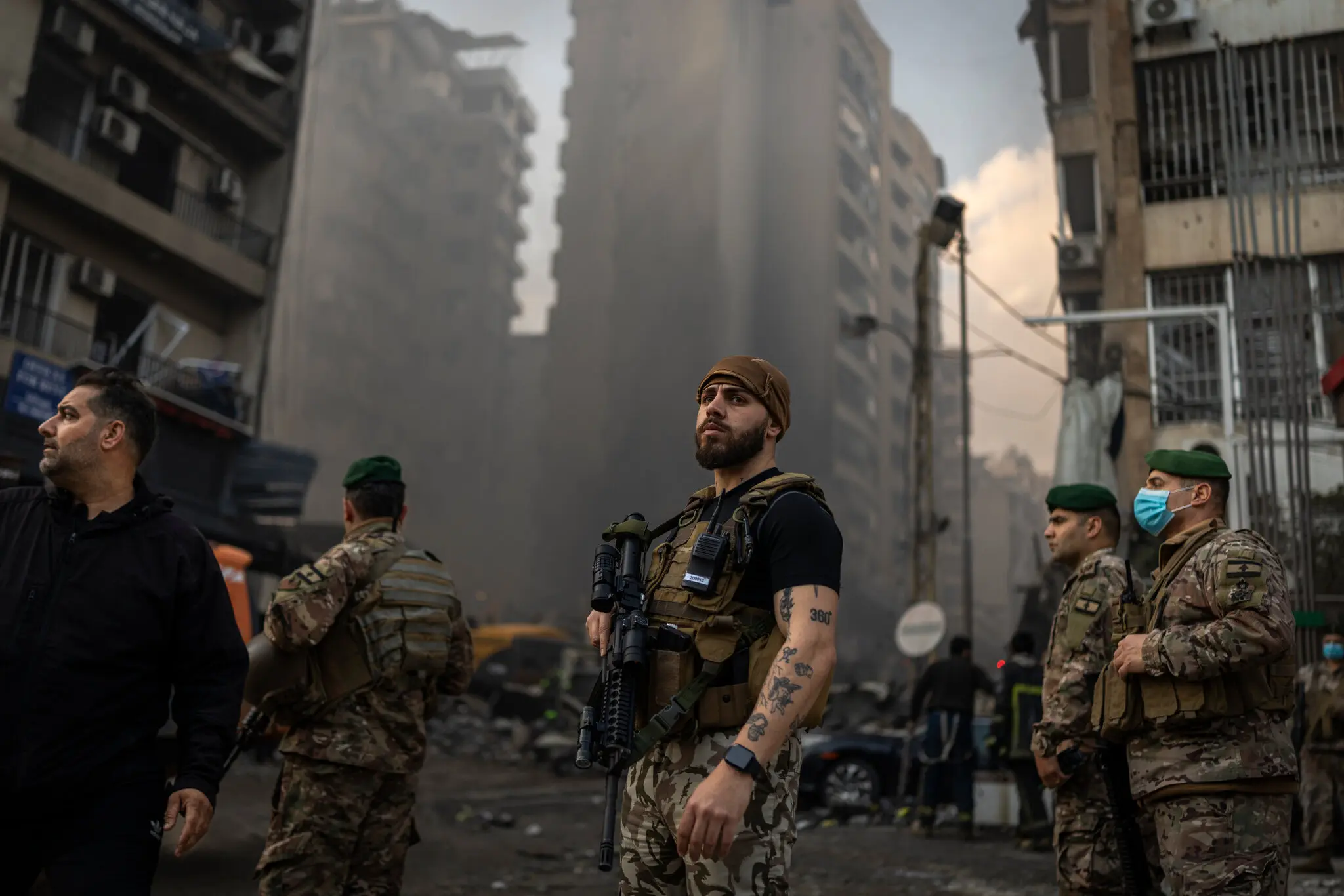
After nearly 40 days of intense conflict in the Middle East, the guns have at least been silent for two weeks, but this silence hangs by a single thread that can snap at any moment. This ceasefire is a result of desperation and the lack of options. The US’s rapid strike exit strategy did not inspire confidence in the security community. The last attempt was to strike Kharg Island to assess the ground, but that also seemed to present an unstable and risky situation for ground operations. As the US ran out of options a day before Trump’s ultimatum, the US had no choice but to make a quick move for survival, facing diplomatic pressure, and thus a ceasefire circus ensued.
The Ceasefire Circus and Fragility
The fragility of the ceasefire depends on three main factors. First are Iran’s ten-point demands, which are difficult to negotiate. Second is Israel’s strategic impatience. Third is the trust deficit between the US and Iran. These three factors are enough to threaten the stability of the ceasefire. A close look at these critical points shows that it is just a pause, not a resolution of the conflict, and may even signal a new phase of war.
First, the ten-point demands Iran presented to the US appear to be a surrender proposal on the surface. These demands nearly undermine the US’s strategic goals and the main reason for engaging in this prolonged conflict, especially after the February 28 strikes failed to achieve certain implicit objectives. Many argue that these objectives included regime change and causing systemic destabilisation in Iran to improve Iranian people position in power calculations.
Second, Israel’s strategic impatience with the ten-point demand is also evident. Israelis are highly anxious because fulfilling the demand could strengthen Iran and significantly weaken Israel’s efforts to weaken Iran and derail Israel stated objectives in war. Maybe Israel’s impatience is obvious, as it conducted strikes on Iran and Lebanon after a ceasefire at one end on the other end Israeli PM is under pressure by opposition over ceasefire.
If negotiations do not go Israel’s way or if Israel feels Iran might gain a stronger position, Israel could facilitate the derailment of this ceasefire.
Third: US-Iran trust deficit — There is a significant trust deficit between the two sides, as both hold core objectives that take precedence over negotiations — specifically, maintaining their positions of strength and influence, which this two-week negotiation window threatens. In fact, Trump, just hours after receiving the proposal, clarified that there will be “No Uranium enrichment,” and that’s the first sign of tensions over the negotiations. The ten-point demand of Iran clearly mentions Nuclear Right Recognition, which states the formal acceptance of Iran’s right to domestic uranium enrichment. The ten-point demand of Iran is not really seeking concessions but trying to establish a permanence in their demands that are difficult for the US and especially Israel to accept. This permanence factor, this demand, is most likely to create a serious trust deficit during negotiations and, unsurprisingly, to cause the window to close much earlier than the set two-week deadline. For negotiations, both parties need to keep implicit and strategic objectives outside the room of contention, which they likely won’t, and therefore, a plain reading of Ceasifre would be nothing less than romanticism with idealism, for which the current global security environment severely punishes.
Learning from the Oslo Accords
This is not the first time such ambitious deals have taken place. Take the famous Oslo Accords. Signed in 1993 and 1995, they outlined compelling agreements for a mutually negotiated two-state solution between Palestine and Israel. The Accords failed despite three negotiations, and their deadlines were never met — turning a short-lived peace into prolonged mistrust between Israelis and Palestinians.
The Oslo Accords, although later undermined by mistrust between Israelis and Palestinians over its implementation, called for the withdrawal of Israeli troops and the establishment of a Palestinian Authority (PA) or Palestinian National Authority (PNA).
Even Israelis, within the framework of the accords, believed that the PA would act against Hamas and Islamic Jihadi groups. Notably, the Oslo Accord created a joint patrol system with Israeli and Palestinian soldiers working together to prevent terror attacks. Essentially, Oslo embodied a deal that aimed to balance economics and security: Israelis prioritised security, and Palestinians aimed for development.
As the deal and negotiations advanced toward establishing the PA and appointing Yasser Arafat as its President, mistrust began to grow as Israelis became suspicious of Arafat’s actions as President of the PA. Arafat did not take any meaningful and practical steps to stop terror attacks on Israelis and sometimes even refused to arrest terrorists. Conversely, Arafat was arming Palestinians in large numbers, which raised concerns and created the impression that Arafat did not intend to build police institutions or cooperate with Israelis to fulfill the agreement. From Israel’s perspective, this was seen as a breach and a betrayal of trust, leading Israel to tighten security measures and causing Palestinians to believe there was a breach of trust from the Israelis’ side, ultimately resulting in the collapse of the accord.
The failure of the Oslo accord clearly shows that the cost of negotiations with implicit strategic objectives can widen the trust deficit, which is highly likely during this two-week window, as both parties will adhere to their respective implicit strategic objectives while at the negotiating table. To make matters worse, Israelis are also closely monitoring this deal and may act swiftly, potentially breaking it.
Pakistan’s Mirage
The fanfare around Pakistan’s role in negotiating a ceasefire between Iran and the US is only symbolic, not substantive. The series of tweets by Iran and the US are seen as credible evidence supporting the idea that Pakistan actually did the mediation work that ensured this two-week ceasefire.
The diplomatic calculations and logical analysis don’t justify all this fanfare and celebration of Pakistan as a key player. Therefore, one needs to look at the facts rather than the spin to understand the situation. There are three reasons that clearly reveal the truth: Pakistan is merely engaging in a high-voltage symbolism game through propaganda to portray itself as a main player.
First, there is a lack of diplomatic and persuasive value because Pakistan has served only as a simple facilitator from the start, a role its media desperately promotes as that of a key mediator. A few days ago, Iran’s envoy to India explicitly stated that Pakistan has no role in conflict mediation.
The only support Pakistan relies on is its Islamic politics, which limits Islamabad’s role in the conflict, allowing it only to act as an intermediary or middleman with very little diplomatic influence or impact on mediation, contrary to what has been suggested. Diplomatic wisdom depends on a crucial question: What leverage or influence does Pakistan hold to persuade Iran or the US to agree to a ceasefire? Barely anything, so what justifies Pakistan as the primary player in this event- only symbolism.
Second, the evidence from the statements indicates that Iran and the US both recognise Pakistan’s role in mediation, but this acknowledgement has been misinterpreted as showing that Pakistan is a key player in the process. The main takeaway from the statements issued by the leaders of both countries is that Pakistan should act as a facilitator rather than a mediator.
Third, the China factor reveals that China, which exerts significant influence over Iran and is gradually expanding its regional influence, is the true mediator and effective backchannel diplomat. The China-brokered Saudi-Iran pacts from a few years ago demonstrate that the region is receptive to China as an active external stabilizer. The report itself confirms who played the primary role.
“The Associated Press quoted sources saying that Beijing pressured Iran for a path of peace by working with intermediaries, including Pakistan, Turkey and others”. This clearly defines the roles China and Pakistan played, and there must be no doubt that it was a China-backed ceasefire, with Pakistan acting only as a facilitator of paperwork and venue.
What defines a diplomatic victory in establishing and implementing a ceasefire? It involves persuasive diplomacy, engaging in serious negotiations to influence one side toward a ceasefire, which is exactly what China did. Therefore, there must be clarity about what constitutes effective persuasive diplomacy and what qualifies as propaganda diplomacy.
Even after the ceasefire, Iran is launching strikes in the Gulf to deter Iran from striking in Lebanon, perhaps the sand has started to slip through fingers.