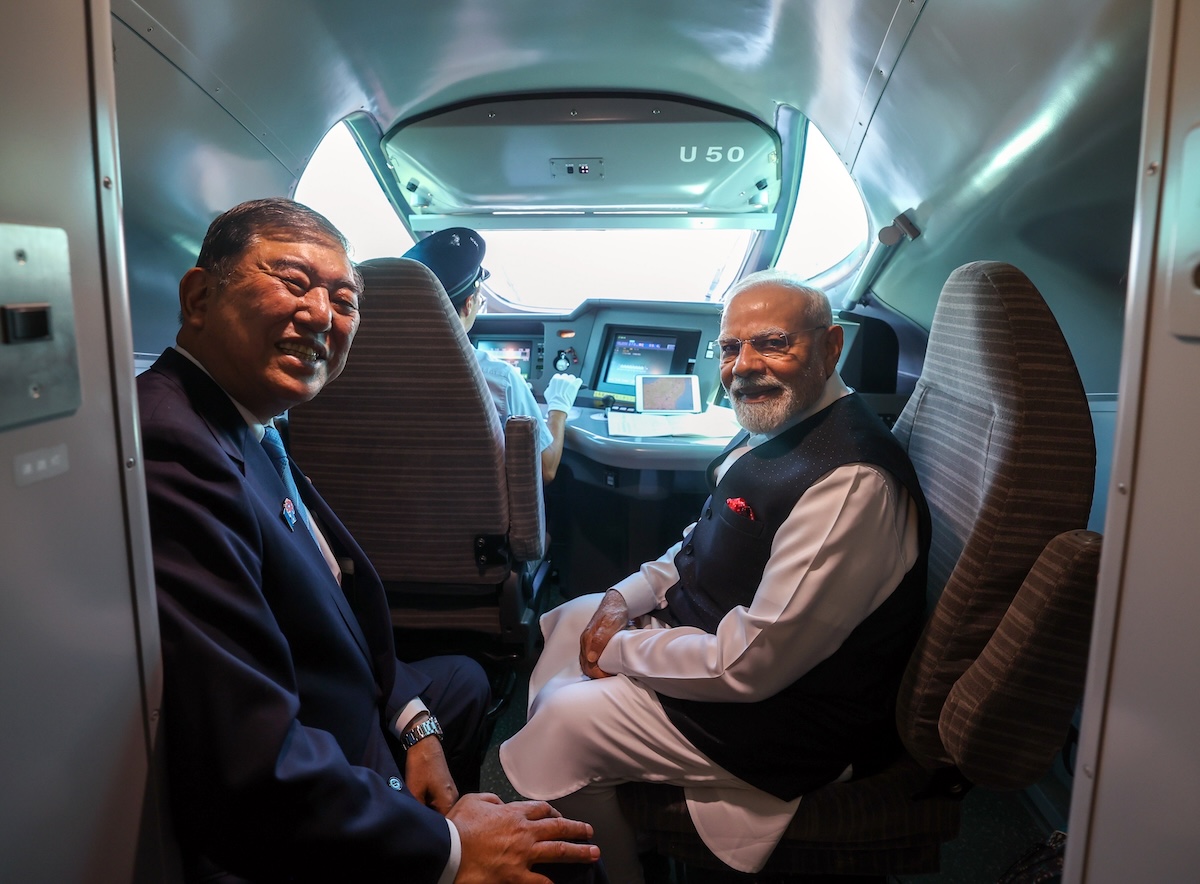
India-Japan relations have entered a renewed phase of partnership, strengthening their Special Strategic and Global Partnership to adapt to today’s evolving geopolitical realities. The recent visit of Indian Prime Minister Narender Modi marks a pivotal step in the relationship. During the visit, a new chapter is being created, where both sides have raised the relationship through comprehensive agreements on various areas, including security, economy, technology, sustainability, and people-to-people relations.
Why This Reset Matters to Both Nations
This fresh approach to engagement is critical in light of supply chain vulnerabilities, the rapidly changing world order, which is creating tension in the Indo-Pacific region, and the urgent need to address clean energy. This reset is based on a profound recognition of mutual complementarities: India’s vast young population and growing market align with Japan’s advanced technology and financial muscle. For India, Japan holds a crucial position in realizing the vision of Atmanirbhar Bharat (self-reliant India) through substantial investment, technology, and diplomatic support in global and regional security. For Japan, India forms an ally that supports its vision of a free and open Indo-Pacific, supports the shrinking workforce issue, and secures the critical supply chain.
Strategic and Security Partnership Enhanced
A Joint Declaration on Security Cooperation was agreed upon to enhance defense collaboration by building capabilities that address current challenges, such as cyber threats, terrorism, and maritime security, in the Indo-Pacific region. The declaration is rooted in deep trust, as both countries will increase joint exercises, intelligence sharing, and cooperation on emerging security technologies. PM Modi launched the action plan for Human Resource Exchange, which aims to relocate 500,000 people over five years, including 50,000 Indian skilled workers to Japan.
Economic Ambitions and Investment Boost
The newly signed India-Japan Joint Vision for the Next Decade focuses on economic security, mobility, sustainability, technology, and health. Japan has committed 10 trillion yen (~$68 billion) in India over the coming decade. Primary focus to be given to semiconductor, green energy technology, AI, high-speed rail, and medicine. The most crucial initiative by both countries is the India-Japan Economic Security Initiative, aimed at strengthening supply chain resilience and safeguarding critical technologies.
Innovation and Space Cooperation
The nature of projects to be conducted under the agreements will be innovation-driven, which will elevate the competitive global technology landscape. New areas of cooperation are to be explored in startups and quantum computing, with initiatives such as the Japan-India AI Cooperation Initiative.
Reinforcing their leadership in space exploration, ISRO and JAXA have agreed to work together on the Chandrayaan-5 lunar mission. With the aim of focusing on digital public infrastructure, AI, IoT, and joint R&D projects, an agreement was signed to set up the India-Japan Digital Partnership 2.0.
Sustainable and People-Centric Development
Both countries share the objective of combating climate change while promoting a greener future. Several agreements have been signed on joint environmental management efforts and decentralized wastewater treatment projects, including those related to clean hydrogen and ammonia technologies. The visit also highlighted enhanced cultural, educational, and diplomatic exchanges, including diplomatic training between the Sushma Swaraj Institute of Foreign Service and Japan’s Ministry of Foreign Affairs, as well as increased state-prefecture business forums.
Geopolitical Implications Amid Global Flux
The reset in the India-Japan partnership signals a message of working together despite global challenges. It aims to establish a peaceful Indo-Pacific region based on international rules and cooperation. It is also observed in the balance of national interest with global responsibilities, and helps create an axis that strengthens Asia’s security and economic stability.
Charting a Future of Mutual Prosperity
Post PM Modi’s visit, it is the beginning of an era where the relationship is carefully framed to meet the challenges of the next decade and beyond. The nature of the partnership is rooted in national interests with global responsibility, shared values, democratic principles, and mutual strategic goals. Through the massive agreements on stronger defense ties, record economic investment, robust people-to-people exchange, and sustainable development, it reaffirms how both countries are foremost in each other’s eyes as global partners. A stage will be created through this positioning of the partnership that will co-architect the free, open, and inclusive Indo-Pacific. Through this realignment, it paves the way for a forward-thinking and multidimensional partnership.