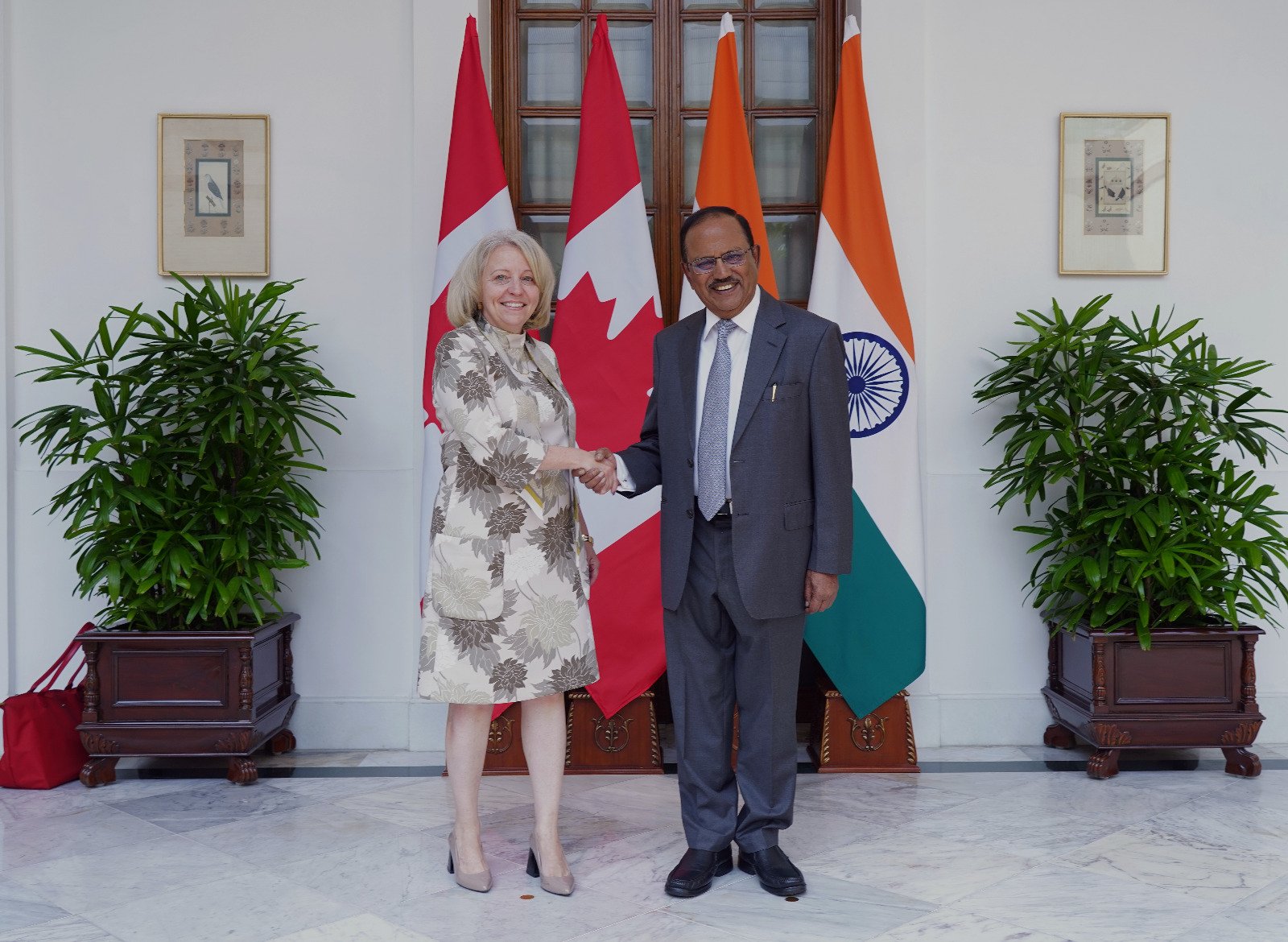
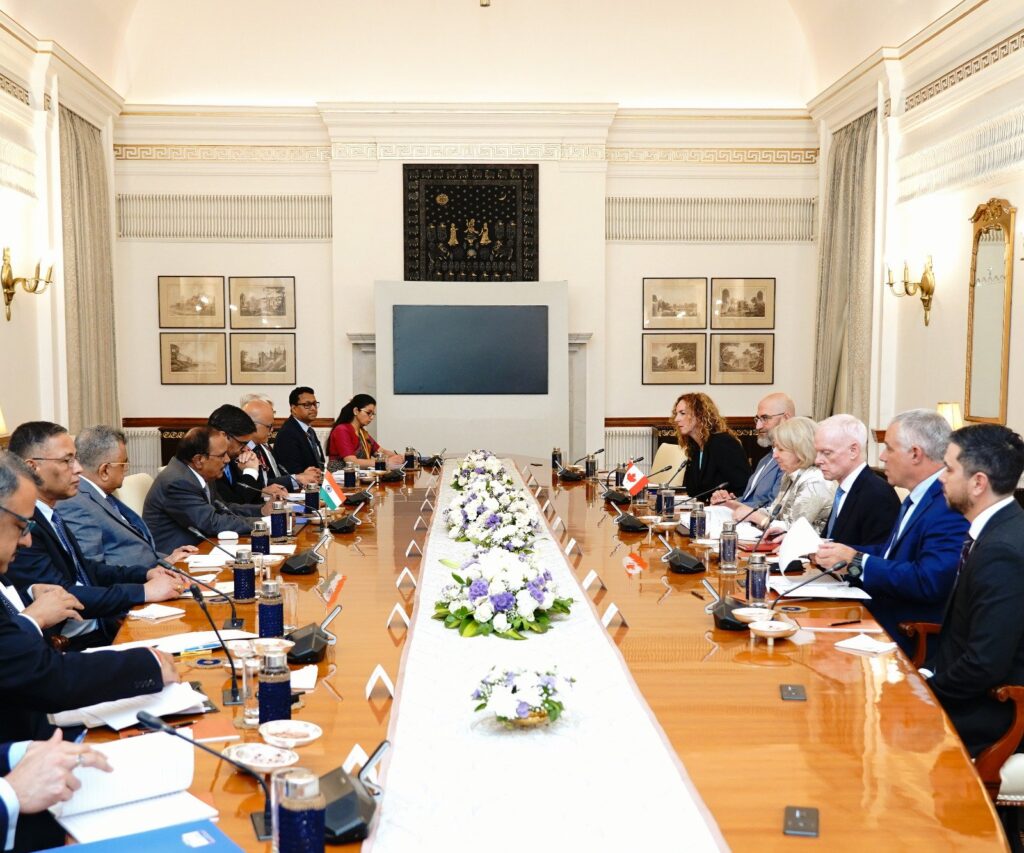
When the National Security Advisers of India and Canada, Ajit Doval and Nathalie Drouin, met in New Delhi on September 18, 2025, the encounter marked something significant: the return of a structured channel to manage differences and anchor cooperation. After two years of rupture, the two sides are no longer trying to restore the past; they are cautiously constructing a new normal, grounded in reciprocity, rules, and operational trust.
The meeting was presented as part of a standing security dialogue, less a dramatic restart than a methodical re-engagement. For India, the priorities were clear—countering terrorism, defending territorial integrity, safeguarding sovereignty, and fighting transnational organised crime. For Canada, the emphasis was on non-interference, rule of law, sovereignty, and transnational repression. What emerged was not an ambitious agenda but a pragmatic convergence, a shared willingness to manage the relationship through principles and mechanisms rather than political gestures.
This approach reflects lessons from the rupture that began in mid-2023. Then Prime Minister Trudeau’s parliamentary allegation of Indian involvement in the killing of Hardeep Singh Nijjar, a designated terrorist under Unlawful Activities (Prevention) Act, 1967, plunged ties into their most serious breakdown in decades. The fallout—Ottawa’s October 2023 withdrawal of 41 staff, the declaration of senior Indian diplomats, including the High Commissioner, as persona non grata (unwelcome person) in 2024—hollowed out representation and paralysed consular services. Political atmospherics deteriorated sharply. By late 2024, the relationship was reduced to skeletal exchanges.
Against this backdrop, the return of the NSA dialogue was intentionally framed by both governments as routine rather than exceptional. New Delhi stressed continuity with existing counter-terrorism and crime-fighting mechanisms. Ottawa highlighted reciprocity and non-interference as rules of engagement. The subtext was clear: the goal is not to return to the old normal but to craft a manageable equilibrium—a set of habits and commitments that can prevent crises from spiralling while allowing selective cooperation to move forward.
Three features define this cautious approach. First, the agenda is practical and narrow. Counter-terrorism, transnational crime, and intelligence exchange were reaffirmed as the core lanes, with instructions to strengthen mechanisms already in place rather than invent new ones. Second, normative guardrails were set: commitments to sovereignty, non-interference, and reciprocity in responsiveness. These are intended not as abstract principles but as working rules to contain flashpoints when political rhetoric flares. Third, by embedding NSA-level understandings within broader diplomatic consultations, the effort shifts responsibility to bureaucracies that can deliver timelines, milestones, and casework, insulating cooperation from political mood swings.
The arrest of Inderjit Singh Gosal in Ontario shortly after the NSA meeting illustrates this emerging new normal. Long identified by India as a coordinator for the Sikhs for Justice- an organisation formally banned under the Unlawful Activities (Prevention) Act since July 2019, on grounds of fomenting secessionism and promoting violence in the name of Khalistan. Gosal’s detention on firearms charges followed years of Indian complaints about reactive Canadian enforcement. Ottawa’s earlier posture under the gaze of the then Prime Minister Trudeau, framed by protections of expression and assembly, had fed perceptions of permissiveness. His September 2025 arrest, however, underscored that without political interference, logical enforcement can proceed within Canada’s own legal framework. For India, this was a sign that structured engagement can yield results. For Canada, it was an affirmation that such action was consistent with its laws and sovereignty, not a concession to external pressure.
Yet neither side harbours illusions. Flashpoints remain: threats to Indian missions and officials, contested extradition requests, and criminal networks that span both countries. Canada continues to wrestle with balancing legitimate advocacy against intimidation and violent mobilisation. India remains insistent on the security obligations enshrined in the Vienna Convention and the timely provision of usable intelligence. Both countries, however, now acknowledge that unmanaged drift is costlier than managed engagement.
Their security assessments converge. Canada’s CSIS has publicly noted, in its 2024 report, that a small but active group of Canada-based Khalistani extremists continues to use Canadian soil for fundraising, propaganda, and operational planning, leading to criminal activities in India. The same report also acknowledges that such activities and groups undermine not just bilateral relations but also Canada’s own national security.
The logic of the recent rounds of dialogue, therefore, is to normalise cooperation without overstating expectations. It is less about grand reconciliation than about building predictable processes. Operational revival of counter-terrorism mechanisms, reciprocity codified into timelines and evidential standards, diplomatic security safeguarded by pre-agreed measures, and insulated lanes of cooperation in energy, minerals, and science—all are elements of a new equilibrium. Just as important is restraint in public messaging: minimalist, rule-based, and consistent with legal processes, avoiding the megaphone diplomacy that fuelled earlier crises.
The Doval–Drouin meeting should thus be seen as the careful construction of a rules-based compact to manage the relationship’s most combustible issues. This is the essence of the new normal: incremental, reciprocal, and deliberately modest, designed less to resolve all disputes than to prevent them from derailing the wider relationship. If the NSA track remains empowered, produces casework outcomes, and keeps political rhetoric tethered to operational reality, the fragile thaw of 2025 may consolidate into a durable equilibrium. In the long history of India–Canada ties, this may not count as dramatic progress, but it is a necessary stabilisation—a recognition that in fractured times, rules and reciprocity are the only foundations on which trust can slowly be rebuilt.