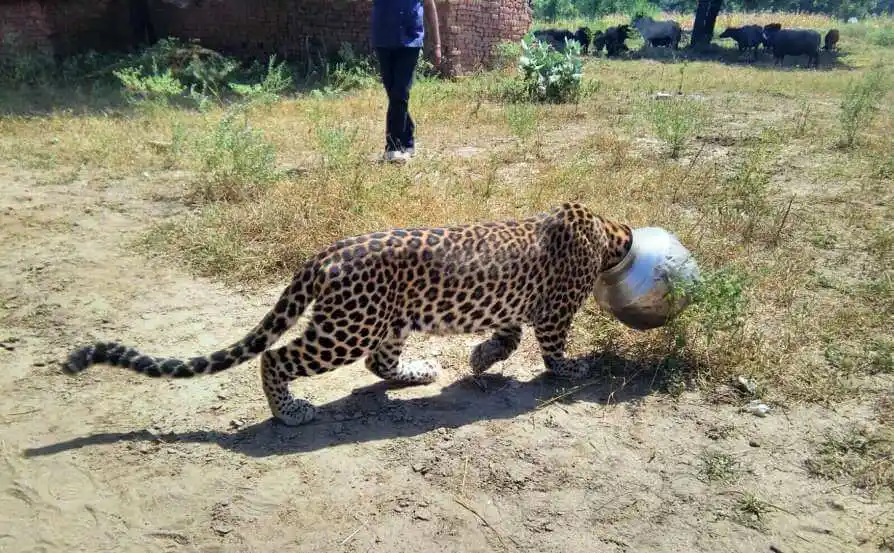
The Himalayan state of Uttarakhand, woven in its rich culture, history, and environmental consciousness, is globally recognised as the birthplace of the iconic Chipko movement that rose to protect its forests in 1973-74.
With nearly 71 per cent of its geographical area under forest and tree cover, Uttarakhand ranks among India’s greenest states. Covering the fertile Terai plains and high Himalayan peaks, its unique altitudinal range nurtures vast biodiversity and majestic rivers that sustain some of the ecologically sensitive ecosystems in the country.
But these days, Uttarakhand is facing a worrying situation arising from human-animal conflict in some of the districts, forcing the local population to live their lives under fear and even restricting their movements in the forest areas or neighbourhoods.
The tigers, leopards, wild bears, and elephants are not only attacking the human habitations and school-going children but also not sparing the domestic animals of the farmers and families in the vicinity of the forest.
A 55-year-old woman was killed while she was going to the forests to gather firewood in the Nainital forests. A tiger on the prowl dragged a woman from a field in Pauri Garhwal. Another 45-year-old person, Rajender Nautiyal, was killed in a leopard attack at Gajald village in Pauri.
The incident prompted the local administration to issue shoot-on-sight orders for the animals attacking human beings. Local schools were closed for two days after panic spread in the area.
Some of the families have lost their only breadwinners in wild animal attacks, especially wild bears and leopards. The children are frightened to go to schools where they have to pass through the lonely forest paths.
Dehradun-based social activist Madhudsudan, a senior government employee, admits that attacks have been on the rise during the past few months, and vulnerable families in some of the districts, like Tehri, Pauri, Rudraprayag, Bageshwar, and Uttarkashi, have even migrated to safer places.
“The state is home to iconic wildlife species like tigers, leopards, Himalayan black bears, snow leopards, elephants, musk deer, and bharal. There are some iconic protected places in Uttarakhand, like Jim Corbett National Park, Rajaji Tiger Reserve, Valley of Flowers, Nanda Devi Biosphere Reserve, and Gangotri National Park,” he says, adding that the human–animal conflict is not new, but the point is this is on the rise this time, maybe the result of changing animal behaviour and shrinking of the forests, their habitats getting threatened, or even shortage of prey, their feeding sources.
Media reports suggest that leopard, bear, and other wild animal attacks have claimed more than 900 lives in Uttarakhand in the last 25 years. The number of such attacks has been more alarming recently, while several incidents also go unreported.
Even the Kashipur and Halwani areas of Terai are also witnessing attacks by elephants and the destruction of crops. The number of deaths has also exceeded the 200 mark since the formation of the state. In 2025 alone, 12 humans were killed, and 5 were injured in tiger incidents.
Wildlife experts in Uttarakhand note that while leopard attacks are reported across almost all parts of the state throughout the year, incidents involving bears show a distinct seasonal pattern, peaking between October and December and also in January.
Alarmed by the situation and mounting public protests, the Pauri district magistrate has ordered the installation of a cage in the affected village. As a precautionary measure, schools and Anganwadi centers have been temporarily closed.
The state’s Principal Chief Conservator of Forests, Ranjan Kumar Mishra, admits that Uttarakhand districts, like Pauri, have reported the highest human-wildlife conflict in the state. This is particularly related to bear and leopard attacks.
Wild animals entering human habitations are primarily driven by the search for food and prey. In view of this, forest officials have advised villagers not to dump green waste, rotten fruits, or leftover food in the open, as it attracts wildlife into residential areas.
“We have CCTV recordings of bears feeding on garbage dumps in certain parts of Joshimath through camera traps. When they encounter humans or stray dogs, they tend to become unusually aggressive,” he told media persons.
Meanwhile, the Uttarakhand government has announced it will reimburse the entire cost of treatment for the injured and provide compensation of Rs 10 lakh to the families of those killed in the attacks.
Meanwhile, the Congress has accused the BJP-led Uttarakhand government of negligence regarding wildlife attacks.
State Congress President Ganesh Godiyal alleges, “The government has neither the will nor a concrete plan. We made several suggestions, but none of them were implemented.”
Uttarakhand Chief Minister Pushkar Singh Dhami has directed the forest department to provide escort facilities for schoolchildren in wildlife-affected areas and has ordered the immediate removal of the Pauri district forest officer (DFO).
Dhami instructed officials that forest teams must reach the spot of any human-wildlife conflict incident within 30 minutes of receiving information.
Experts link the change to climate change—delayed snowfall and scant food disrupt hibernation, keeping bears active and hungry. Expansion of agriculture, settlements, and tourism infrastructure brings humans into closer proximity with wildlife.