
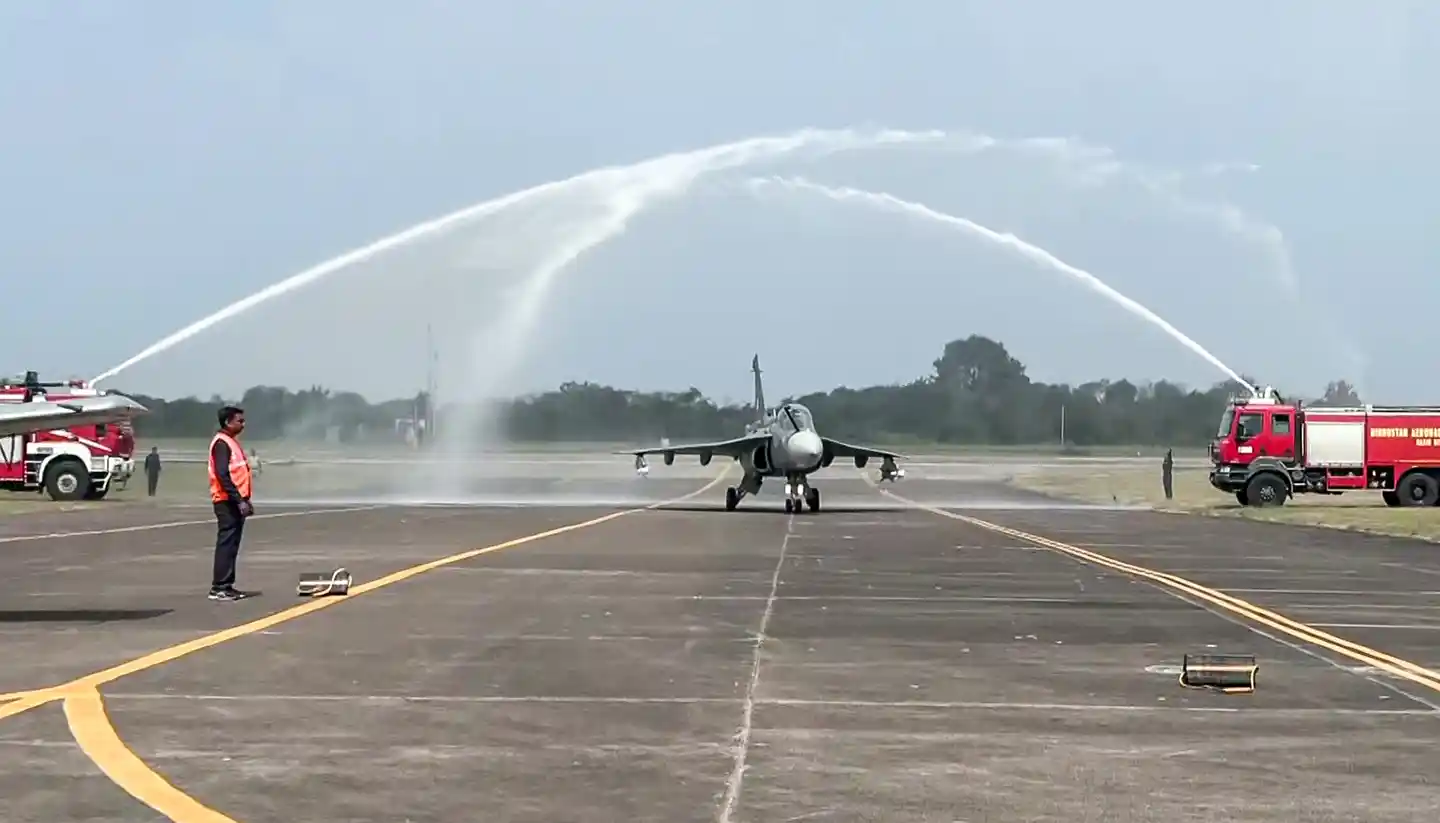
India recently signed a significant $1 billion deal with US aerospace giant General Electric (GE) to procure 113 F404-GE-IN20 jet engines for its indigenous Tejas Mark 1A fighter jets. The agreement, inked by Hindustan Aeronautics Limited (HAL) and GE, is set to power the 97 Tejas Mk-1A aircraft ordered by the Indian Air Force (IAF) and marks a crucial step in strengthening India’s defense manufacturing and strategic autonomy. Deliveries of these engines are expected to begin in 2027 and continue through to 2032, supporting India’s ambitious plan to ramp up fighter aircraft production as it modernizes its air force.
The latest deal supplements an earlier 2021 contract under which HAL ordered 99 of the same engines from GE to power the first batch of Tejas Mk1A jets. However, delivery delays owing to COVID-19 related supply chain disruptions impeded the arrival of the initial engines at the desired pace. With this new order of 113 engines, HAL aims to ensure continuity of production lines and timely delivery of the aircraft to the Indian Air Force. The engines will support both single and twin-seat variants of the fighter jets which are manufactured domestically by HAL in Bengaluru and Nashik.
The Tejas Mk1A is an advanced version of India’s homegrown Light Combat Aircraft (LCA), designed to replace older fighter jets in the IAF’s inventory. It features modern avionics, better endurance, and higher weapon payload capabilities. Meeting the production target of 24 jets annually and delivering 97 aircraft over the next six years is vital for addressing India’s shortage of combat squadrons amid regional security challenges, particularly vis-à-vis China and Pakistan.
Strategic Significance for Make in India
This $1 billion contract holds deeper significance beyond procurement—it integrates with India’s Make in India initiative, aiming to boost indigenous defense manufacturing and technology transfer. While the GE F404 engines are supplied directly by the US company, they will power an Indian-designed aircraft being progressively manufactured at multiple Indian facilities. This reinforces India’s industrial base and engineering expertise in aerospace defense sectors.
Moreover, this deal complements HAL’s broader strategy to manufacture next-generation fighter jets, such as the upcoming LCA Mk2, which will feature more advanced GE F414 engines. That program involves substantial technology transfer agreements with GE, targeting over 80% domestic production content in future fighter jet engines and systems. The transfer of technology and skill development associated with these deals align tightly with long-term Make in India objectives, which focus on reducing dependency on imports and encouraging home-grown design and manufacturing capabilities in defense.
The deal underscores India’s gradual and pragmatic pivot towards strategic partnerships with the US amidst a complex geopolitical landscape. After a brief period of tariff-related tensions during the Trump administration, this renewed defense engagement signals warming ties and mutual interests in counterbalancing regional power dynamics, especially in the Indo-Pacific. It also helps India refresh its aging fleet, which has struggled against newer aircraft fielded by neighboring adversaries, thus boosting operational readiness and air combat capabilities.
Timely engine deliveries will also smooth out previous production bottlenecks that delayed Tejas rollout, enabling India’s air force to gain strength in numbers with the indigenous fighter jets—a core warfighting asset developed with significant Indian technological input. The $1 billion deal is therefore a critical enabler in India’s defense industrial roadmap, ensuring sustained fighter jet production and supporting broader defense ecosystem growth under indigenous leadership.
India’s $1 billion agreement with General Electric for 113 jet engines powering Tejas Mk-1A fighters is both a milestone in indigenous defense aviation and a reinforcement of the Make in India vision. Deliveries starting 2027 will help HAL meet ambitious manufacturing targets for the next generation of jet fighters, reducing strategic vulnerabilities while building India’s aerospace industrial capabilities. This deal also exemplifies India’s growing defense cooperation with the US, showcasing a blend of technology partnership and domestic capacity expansion that will strengthen national security and industrial sovereignty in one of the world’s most dynamic defense sectors.

