2026 opened with US muscle-power exercises, intended to revive the Monroe Doctrine and reinforce its security dominance, which had been under scrutiny since Israel’s strikes on Qatar escalated tensions in the Middle East last year. The Trump Administration made clear commitments regarding its sphere of influence and was willing to reassert the Monroe Doctrine in its National Security Strategy, released in November. Within two months, the US carried out a military operation in Venezuela to topple the Maduro regime, demonstrating its strategic will and seriousness of purpose.
This has prompted reflections on the global order entering another geopolitical spin. More importantly for India, which readjusted its strategic autonomy, it has prompted a grand strategy for dealing with a contested global order.
The Monroe Doctrine
Under the Trump Administration, the Monroe Doctrine was reshaped into an offensive deterrent tool rather than a quiet diplomatic, soft-power, and collective-security construct in which the US relied on pragmatic calculations to address security and strategic issues. The Obama Administration declared that the Monroe Doctrine was over, but preferred soft power and preventive diplomacy to ensure the US’s sphere of influence. However, in the Trump Administration, the Monroe Doctrine was dubbed the “Donroe Doctrine,” which seeks not only to secure the US’s sphere of influence but also to assert the US’s America First mindset through tactics once popular during the Cold War. Even during Trump’s first administration, when the US gradually began to rethink the Monroe Doctrine and prepare to incorporate it into its strategic calculus, the efforts were not accelerated, unlike in the second administration, where the Monroe Doctrine is followed under three strategies.
First, Transactionalism, in which the US focuses solely on maximising interests through power-based bargaining, leaves less room for diplomatic manoeuvres. Trade negotiations during Trump’s second administration are a salient manifestation of Transactionalism, which has become increasingly aggressive.
Second: Credible Threats – Sanctions and credible threats of the use of force, as forms of coercive diplomacy to ensure U.S. security and strategic space. Although it has long been a central feature of U.S. security calculus, it has become more direct and stronger under Trump’s second administration, as evidenced by Operation Absolute Resolve against Venezuela and the tariff war.
Third: Unilateralism – withdrawal from international organisations, tariff politics, military actions, and power politics during conflicts. All were designed and executed to put an American-first approach on the table rather than collective or multilateral engagement. The only reason for the sharp unilateral actions by Trump’s second administration was to send a strategic message to the global order about the US’s hegemonic revival.
None of these features resembles the original Monroe Doctrine, yet its core purpose remains intact—to protect the US’s sphere of influence. To sum up, Donro’s version of Monro is a blueprint for blitzkrieg-style diplomacy to globalize an American-first approach, akin to a “preponderant power”, a concept popular in the US security and strategic community during the Cold War. It holds that a single dominant state (hegemon), such as the US post-Cold War, prevents major wars by possessing overwhelming military, economic, and political strength, deterring rivals and fostering stability.
India’s Grand Strategy
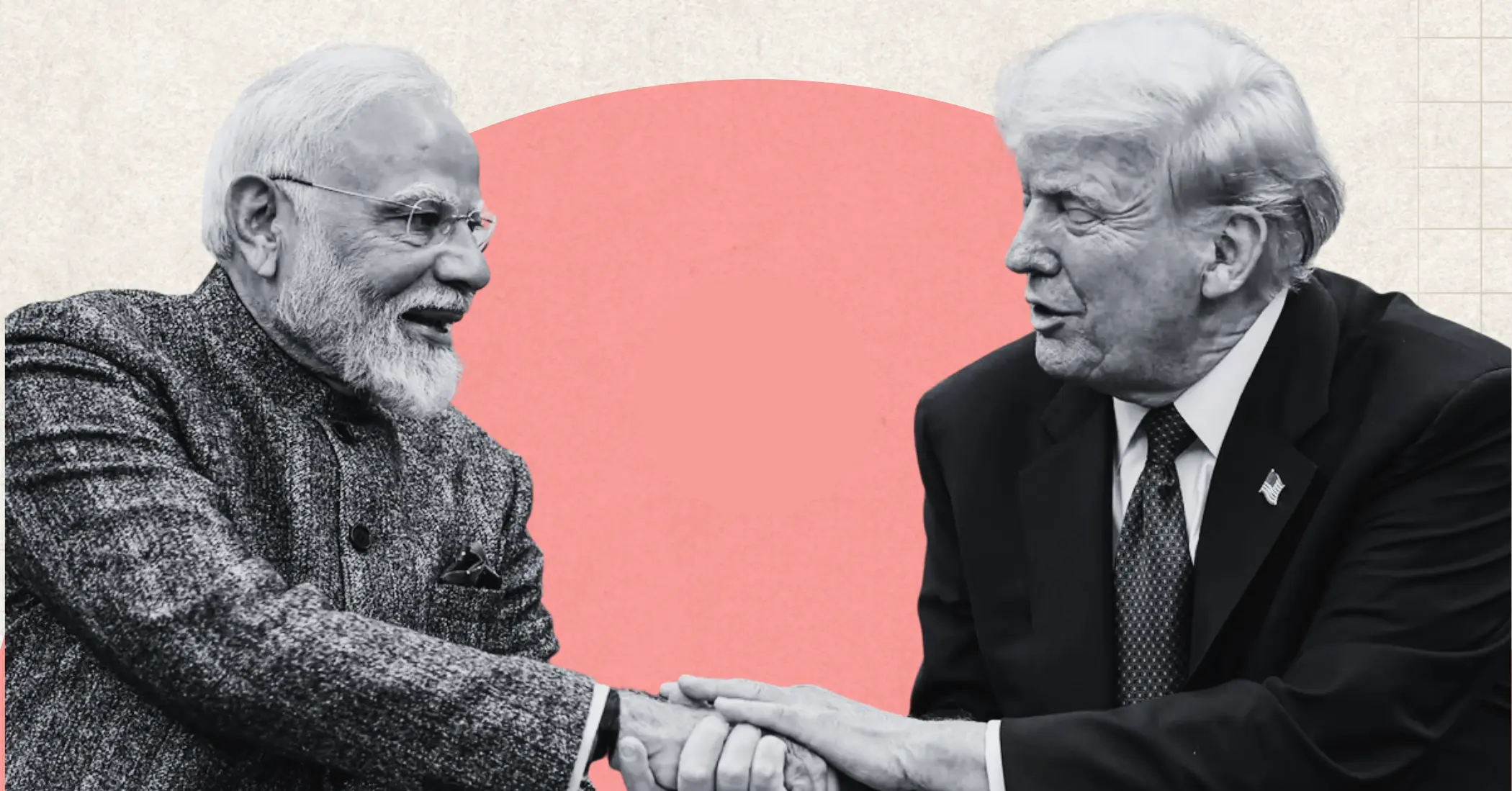
The US’s decision to reduce tariffs on India from 50 per cent to 18 per cent signals a relaxation of the tight pressure in the Indo-US relationship. The US’s attempt to re-engage with India, perhaps to reduce tensions, may signal a rethink of its engagement strategy in Asia. This rethink and re-engagement by the US with India are largely influenced by India’s grand strategy, which has effectively brought the US to the table and convinced Americans that India has more options and the will to endure headwinds caused by the US’s blitzkrieg.
India has placed strategic autonomy at the forefront of its strategy for navigating the contested world order. The strategy is based on multi-vectoring diplomacy and diversification, moving beyond superpower orbits while working towards what is best for India’s interests, while remaining committed to superpower engagements. While important lessons have been learned from the shortcomings of the Non-Aligned Movement, India’s strategic autonomy strategy is now akin to a grand strategy in the global order, which it uses its hard and soft power to assert and negotiate India’s strategic and security interests. However, as the Donro doctrine sets the tone for the global order and India prepares to confront a more hawkish U.S. diplomatic posture in the coming period, it recalibrated its grand strategy, which enabled India to withstand these three crucial tests.
First, Strategic Endurance: India showed strategic endurance by pushing for re-engagement, primarily as a strategy against the US Blitzkrieg, the threat of more and heavier sanctions, dry trade negotiations, and repeated episodes of Trump’s belittling tactics against world leaders, especially the Prime Minister, while exploring effective re-engagement options and withstanding the US’s diplomatic onslaughts.
Even the deft diplomacy helped strategically navigate the headwinds. The backdoor negotiations maintained space for renegotiations, while, at the front, the headwinds were endured. The recently announced Budget also showed some promise of support for vulnerable sectors affected by the tariff war, while demonstrating confidence in Indian markets globally.
Second, Diplomatic Cushions to mitigate damage: India’s grand strategy should now also focus on finding diplomatic cushions to contain the damage inflicted by the Donro doctrine and geopolitical spin. To this end, India has reassessed how far it can go in strategically normalising relations with China, reassuring Russia, and exploring alternative strategic mechanisms, such as navigating its Look West Policy to cultivate deeper cooperation and trust with Middle Eastern powers.
The recent Arab Foreign Ministers’ meeting and the UAE President’s visit to India to explore further engagement options with Tehran. India’s FTA card, part of a larger geo-economic strategy, saw the success of the mega trade deal between the EU and India send a strategic signal of India’s growing credibility and stability as a market for engagement and investment. This has helped India manage superpower engagements and leverage these cushions not only as buffers but also as bargaining chips in negotiations.
Third: Sharp Diversification – India is gradually reassessing its readiness to pursue sharp diversification beyond routine diplomatic measures, moving away from buying-selling engagements and focusing more on co-creating technologies, issue-based alignments, and engagement with minilaterals and multilaterals, with fewer balancing acts and a willingness to accept a certain level of risk to pursue interests aggressively. Shallow-level engagements are not on the priority lists but are being leveraged effectively to build deeper strategic partnerships – multi-vector partnerships by upgrading its “Look” engagement policies from Europe, Central Asia, and Africa to the Middle East.
In short, India’s grand strategy has navigated the tests of diversification, normalisation, and re-engagement, and, to some extent, enhanced its resilience to headwinds.
Learning From Kissinger’s Gamble
The readjustment of strategic autonomy also prompts us to revisit history, where important lessons from India’s Cold War failure are worth revisiting as it struggled to diversify and normalise. In the 1970s, Kissinger employed triangular diplomacy against India, using Pakistan as a proxy and China as a strategic partner to limit India’s regional ambitions and check Soviet influence in South Asia. This doctrine is similar to strategic encirclement, which uses clever power tactics to challenge and counter a country’s influence and ambitions in a region. Even then, India pursued elements of strategic autonomy within the Non-Aligned Movement, but this proved ineffective because its strategic response was constrained by overreliance on the USSR, limited diversification, and a lack of strategic endurance. India missed opportunities to diversify its security relations with France, Germany, and Japan, particularly after withdrawing from NATO’s integrated command in 1966.
This ultimately failed its grand strategy when tested. Perhaps India learned its lessons and recalibrated its grand strategy of Strategic Autonomy by bridging the diversification and re-engagement gaps. The broader strategic message India’s grand strategy showcased in the global order is that India has the capability for high-level negotiations, the endurance to withstand geopolitical headwinds, and, most importantly, the will to become a global competitor.
Similarly, India’s grand strategy, which faced a crucial test this time not under the Kissinger doctrine but under the Donro doctrine, has, to some extent, steered its course successfully, taking calculated risks while withstanding US blitzkrieg and the anxiety-ridden global order.