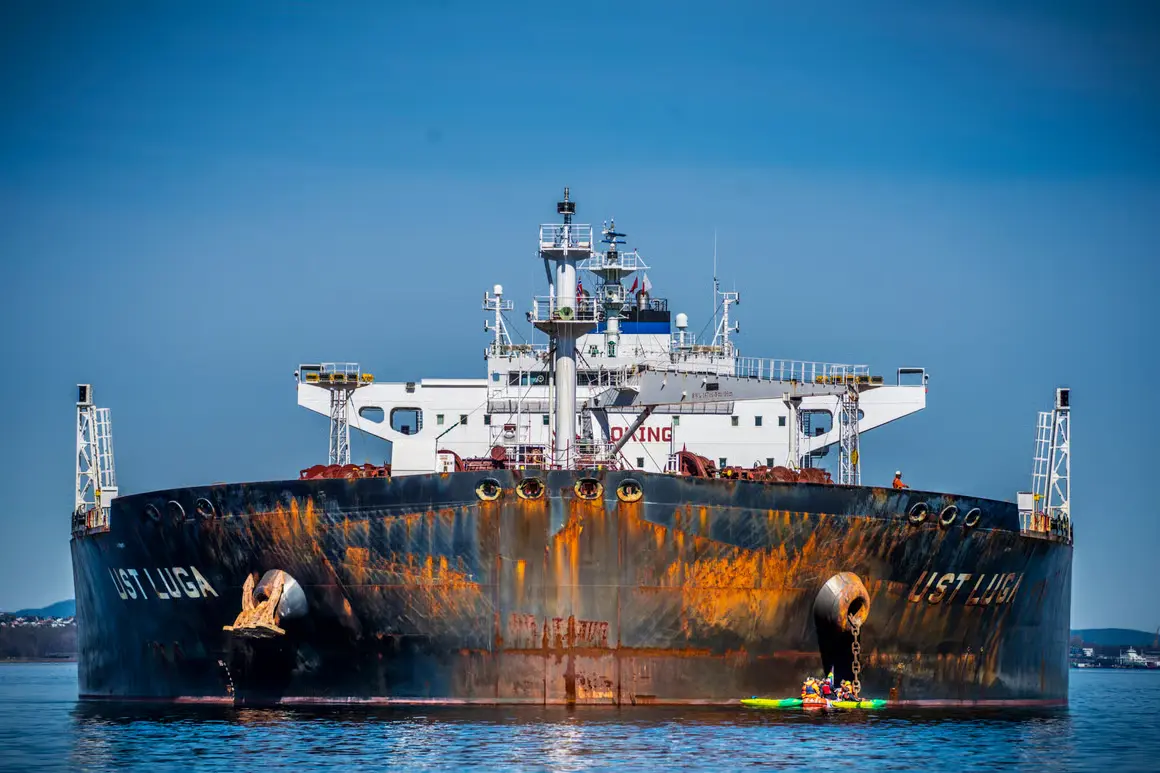
As of December 2025, the pressure on global tanker traffic had increased significantly due to sanctions on Venezuelan and Russian oil exports, as well as a series of seizures and attacks on “shadow fleet” tankers. These actions were intended to persuade the international community to cease energy trade with countries subject to Western sanctions. But while the geopolitical dimensions of tanker interdictions and sanctions are frequently the focus of media attention, a parallel, less visible concern persists: the ecological risks posed by oil tankers even when they are not carrying cargo.
It is a commonly held belief that an empty oil tanker does not constitute a threat to the environment. However, this is not necessarily the case. Decades of maritime accident investigations, spill response records, and marine ecological research demonstrate that vessels in ballast condition can cause significant pollution through bunker fuel releases, residual oil contamination, fire-related emissions, and contaminated ballast water discharges. These risks are particularly acute in coastal and semi-enclosed waters, where limited dispersion amplifies ecological damage.
Bunker Fuel as the Primary Pollution Hazard
The International Tanker Owners Pollution Federation (ITOPF) has repeatedly emphasised that a tanker in ballast condition may still carry substantial quantities of oil capable of causing severe pollution, particularly in the form of heavy fuel oil used for propulsion. Bunker fuel represents the most significant pollution risk associated with empty and ballast tankers. It is an established fact that contemporary crude carriers are typically equipped with fuel tanks capable of accommodating several thousand tonnes of heavy fuel oil and marine diesel. These tanks are generally located outside the protective double-hull system in place for cargo tanks. According to technical assessments, a Panamax and Aframax tankers typically carry 1000 tonnes of bunker fuel, a Suezmax approximately 2000-2500 tonnes, and a VLCC as much as 3000-6000 tonnes, depending on voyage length and operational requirements. From an environmental perspective, these volumes pose a substantial pollution risk because bunker fuel is chemically persistent, highly viscous, and rich in polycyclic aromatic hydrocarbons that are toxic, mutagenic, and carcinogenic. Scientific studies show that when released, bunker fuel adheres strongly to sediments, shorelines, mangroves, and biological surfaces, leading to long-term habitat contamination and chronic exposure in marine food webs. Unlike many crude oils that may partially evaporate or disperse, heavy fuel oil weathers slowly, can remain biologically available in sediments for years to decades, and is associated with prolonged impacts on fisheries, seabirds, and coastal ecosystems. ITOPF’s global spill statistics indicate that while the number of very large crude oil spills has declined markedly since the 1990s, bunker fuel spills now account for a substantial share of marine pollution incidents. The available data demonstrate that there have been multiple occurrences of medium-sized spills, with a range of 7 to 700 tonnes per year, on a global scale, from 2020 to 2025. A significant proportion of these incidents are attributed to vessels that were not transporting oil cargo at the time of the accident.
Fire, Explosion, and Atmospheric Contamination Risks
Another significant risk pathway pertains to conflagrations and detonations on tankers in ballast condition. From an engineering and operational standpoint, oil tankers have been found to retain hydrocarbons for extended periods following the discharge of their cargoes. Residual oil remains in cargo tanks, pipelines, slop tanks, and pump rooms even after standard tank-cleaning procedures have been completed. This reality is the foundation for the MARPOL Convention, which establishes regulatory frameworks for tanker operations based on actual discharges rather than the status of the cargo. Following the process of cargo discharge, it is not uncommon for empty tanks to contain potentially flammable mixtures of hydrocarbon vapours and air, a situation that can be exacerbated by inadequate maintenance of inert gas systems. Accidents during maintenance, electrical failures, or collisions have been shown to ignite these vapours, resulting in fires that release combustion by-products such as soot, unburned hydrocarbons, and toxic gases. While these incidents may result in the release of smaller quantities of liquid oil, environmental studies demonstrate that combustion residues can contaminate water and sediments, particularly in enclosed port environments.
Pollution from Ballast Water
The ballast water carried by oil tankers constitutes another scientifically documented ecological risk, particularly when ballast is taken into cargo tanks following oil discharge. In such instances, ballast water may become contaminated with residual hydrocarbons, oily sediments, and dissolved toxic compounds, thereby resulting in chemical pollution. Research published in the Marine Pollution Bulletin and Ocean & Coastal Management demonstrates that ballast water contaminated with oil can contain measurable concentrations of petroleum hydrocarbons, including polycyclic aromatic hydrocarbons (PAHs). These concentrations persist after discharge and have the potential to induce chronic toxicity in plankton, benthic invertebrates, and the early life stages of fish. It has been demonstrated that even low-level contamination by hydrocarbons has the capacity to impair growth, reproduction and immune response in marine organisms. Furthermore, ballast water frequently contains fine sediments that adsorb hydrocarbons and subsequently settle on the seabed after discharge, creating long-term contamination hotspots in harbour basins and nearshore ecosystems. The International Maritime Organization has explicitly recognised this risk, noting that oil-contaminated ballast discharges were historically a major source of marine oil pollution prior to the introduction of MARPOL controls, and that they remain environmentally relevant during accidents or emergency ballast releases. The monitoring of the environment in the aftermath of incidents related to tanker ballast has demonstrated that sediments enriched with hydrocarbons can persist for extended periods, thereby engendering chronic exposure within food webs and complicating the process of remediation.
Indian Cases: Mumbai and Ennore
In India, a particularly noteworthy incident was the MSC Chitra collision in Mumbai Harbour in August 2010. This incident occurred during the monsoon season when the container ship MSC Chitra collided with the bulk carrier Khalijia-III. The incident resulted in the release of approximately 800 tonnes of bunker fuel oil into the coastal waters of Mumbai. Research conducted by India’s National Institute of Oceanography revealed elevated concentrations of petroleum hydrocarbons in sediments and biota weeks after the spill, with documented impacts on organisms and local fisheries. Total damage was estimated at around $351 million. The oil spill incident that occurred in Ennore in January 2017 constitutes a significant case study. The collision between the oil tanker MT Dawn Kanchipuram and the LPG carrier BW Maple in proximity to Chennai resulted in the estimated release of 251 tonnes of bunker oil into coastal waters. As reported by scientists from the Integrated Coastal and Marine Area Management (ICMAM), the seabed between the spill site and Chennai Port was contaminated with sediments and sludge, with patches of oil adhering to man-made structures such as groynes. This indicates that the hydrocarbons are dispersing and weathering slowly. The total petroleum hydrocarbon (TPH) concentration in water shortly after the incident was measured at 1 000–5 573 micrograms per litre, which is dramatically higher than the typical background levels of 10–20 micrograms per litre for the Chennai coast. The effects of the oil spill on marine life were significant. Several species of mullet and anchovy died shortly after the incident, and oil was observed on the bodies of benthic fauna, such as worms. This suggests that the oil directly contaminated the organisms. It was projected that sediments might take a minimum of three months to drift away or evaporate, and for marine life to begin recovering, even as visible oil residues continued to taint the coast.
The financial implications of cleaning up bunker fuel spills often show an imbalance, with costs disproportionately high relative to the spill volume. It is estimated that the financial outlay necessary for the remediation of a single tonne of heavy fuel is approximately $24000. TOPF documentation demonstrates that the cleanup costs of oil spills amounting to only a few hundred tonnes of heavy fuel oil have frequently exceeded $50 million, particularly in cases where sensitive coastlines, ports, or regions dependent on tourism are affected. This cost escalation is attributable to the physical properties of heavy fuel oil, which is challenging to recover mechanically and necessitates labour-intensive shoreline cleanup.
Contemporary Risk Context
In synthesis, the scientific evidence demonstrates that oil tankers in empty or ballast condition pose sustained ecological risks. Bunker fuel spills, residual oil releases, fires, and contaminated ballast water can all generate environmental damage, particularly in coastal and semi-enclosed marine systems. The declining frequency of catastrophic crude oil spills should not obscure the persistent hazards associated with non-cargo tanker incidents, which often result in long-lasting sediment contamination and high cleanup costs.
Recent geopolitical developments in the contexts of Venezuela and Ukraine have drawn attention to the ecological aspects of the seizure and damage of oil tankers. As of late 2025, Lloyd’s List Intelligence estimates that over 1400 tankers worldwide operate in opaque ownership and insurance structures, with more than 900 vessels linked to sanctioned governments. It is a documented fact that such ships are typically older and less rigorously maintained, thus increasing the likelihood of mechanical failure, collision, or fire. Environmental analysts contend that incidents involving this type of ship increase the probability of pollution incidents involving ballast or empty vessels. Whilst the United States continues to seize tankers in proximity to the Venezuelan coastline without causing any damage, Ukrainian special services have been known to conduct drone strikes on Russian “shadow fleet” tankers, even at a considerable distance from active war zones. This has resulted in significant risks to the ecological balance of international waters and to third parties not directly involved in the conflict.