
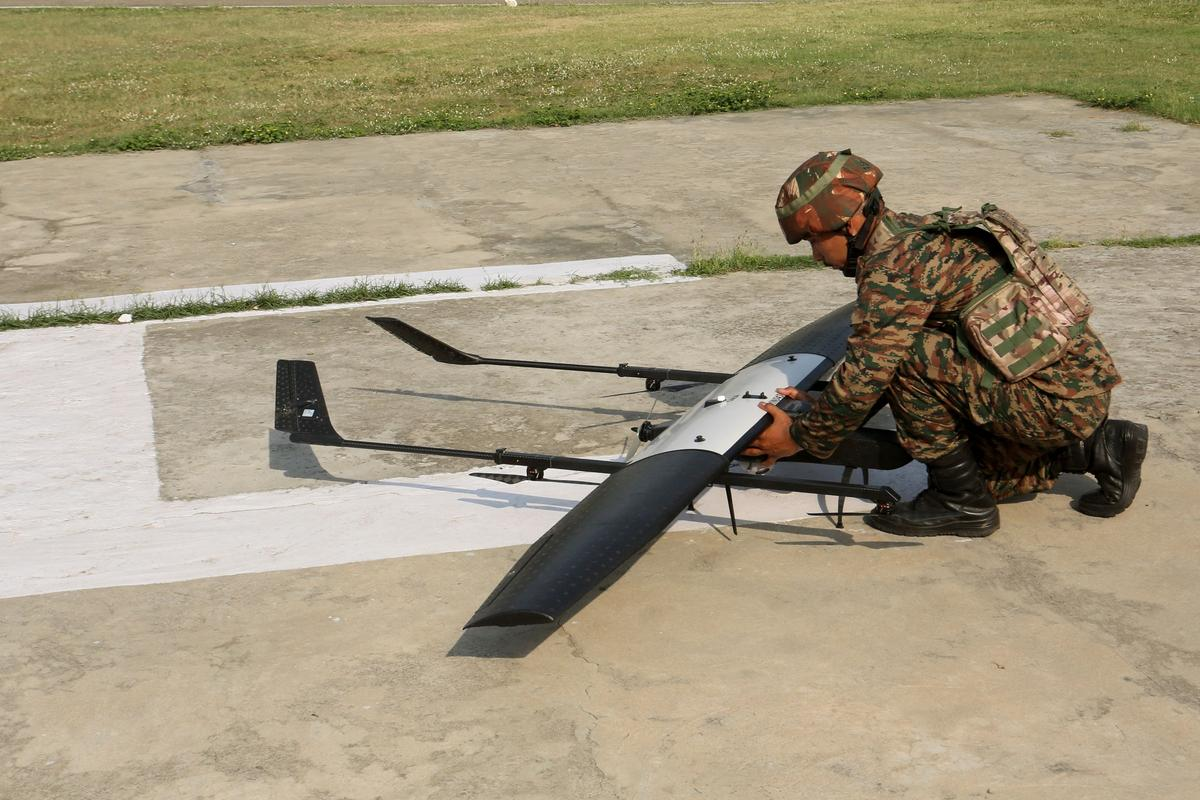
In July 2025, the Indian Army announced a sweeping reorganization, signaling the most ambitious modernization drive in decades. Under the shadow of escalating border threats and following the tragic Pahalgam attack, Operation Sindoor has catalyzed institutional changes that may define the Indian military’s trajectory for a generation.
The Era of Drone-Enabled Battalions
The centerpiece of this overhaul is the standardization of unmanned aerial vehicles (UAVs) and counter-UAV (CUAV) systems across infantry, armored, and artillery battalions. No longer relegated to specialized surveillance operators, drones in Indian units are rapidly becoming as ubiquitous as rifles and radios. This reflects a global recognition: contemporary battlefields—from Ukraine to Gaza—are increasingly shaped by the eyes and stings of affordable drones.
Crucially, this isn’t mere gadgetry. The Indian Army’s move signals a doctrinal shift: every frontline formation will field organic drone capabilities, enabling real-time reconnaissance, precision strikes, rapid logistics (“drone drops”), and agile electronic warfare. Dedicated personnel will manage and maintain these assets, forcing a reallocation of resources and, likely, a retraining of existing roles.
Light Commando Battalions: Bhairav’s Ascent
Another pillar is the raising of thirty new “Bhairav” light commando battalions. With smaller footprints—about 250 soldiers each—these formations promise nimble, high-impact responses, especially in fraught terrains like Kashmir and the Northeast. Drawing parallels with Western military trends, such as the U.S. Army Rangers or Russia’s Spetsnaz, these “strike teams” are designed to seize initiative, conduct cross-border raids, and counter asymmetric threats swiftly.
The symbolism is potent. In renaming and restructuring, the Army acknowledges that conventional, lumbering formations are inadequate for a theatre where milliseconds—and megabytes—count. Smaller, digitized commando units can be redeployed rapidly, leveraging drones for both offense and defense.
Towards Integrated, Tech-Enabled Brigades
The evolution doesn’t stop with battalions. The formation of integrated “Rudra” brigades—melding infantry, armor, artillery, logistic, and UAV elements into operationally flexible groups—embraces the ‘combined arms’ principle. But there’s a twist: technology is the central enabler. UAVs and CUAVs will glue these diverse elements together, offering shared situational awareness and synchronized firepower.
This model seeks to preemptively counter “gray-zone” tactics—hybrid warfare, swarm drone attacks, coordinated terrorist strikes—that adversaries have employed, from China’s PLA maneuvers in Ladakh to Pakistan-backed infiltration in J&K.
The Artillery’s Renewal: Eyes in the Sky, Shields on the Ground
The Army’s Regiment of Artillery will not be left behind. New batteries, including specialized anti-drone and electronic warfare units, are being raised to provide depth. With adversaries fielding their own drone swarms and loitering munitions, robust countermeasures are indispensable. The artillery now gains not just sharper “eyes” (UAVs for targeting) but also tougher “shields” (anti-drone systems) to survive and strike in saturated electronic warfare environments.
A Calculated Gamble
General Upendra Dwivedi’s announcement, suitably timed on Kargil Vijay Diwas, is more than symbolic. It represents a recognition, at the highest level, that inertia is no longer an option. The lingering lessons of Galwan (2020), constant cross-border infiltration, and—globally—the devastation caused by drone warfare in Ukraine, have made clear that transformation is a strategic imperative.
Yet, this transformation is not without risk. Training thousands of new drone operators and technicians, reshaping organizational culture, and ensuring resilience against cyber and electronic warfare are Herculean tasks. There are fiscal and logistical challenges, as legacy systems are phased out and fresh supply chains established.
The Road Ahead
For the Indian public, whose faith in the military is unshakable, these changes should inspire optimism. But hard questions remain: Will the new commando battalions and technology investments be matched by better intelligence and civilian-military synergy? Will procurement be streamlined to ensure indigenous, secure, and upgradable drone platforms?
India’s adversaries will be watching closely. With the drone and commando revolution now at brigade scale, the Indian Army signals it is fighting not the last war, but preparing for the next. The stakes—of security, sovereignty, and survival—could scarcely be higher.

