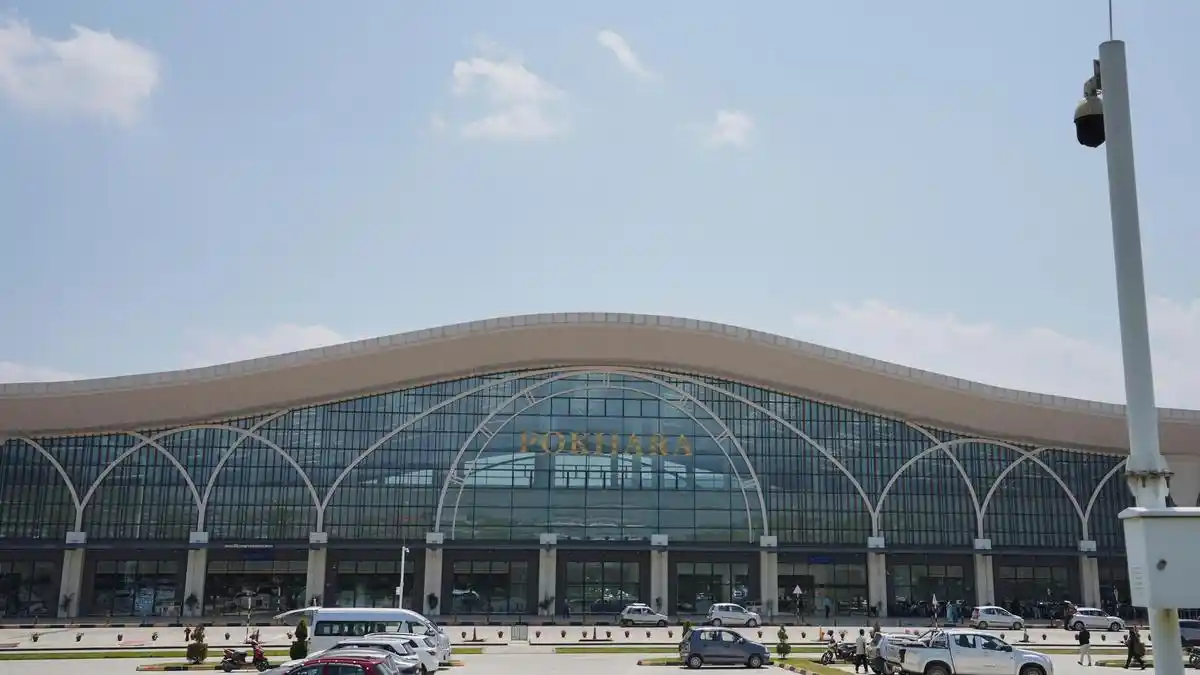
The celebrated Chinese Belt and Road Initiative is bringing more shame than success to the home government. Nepal’s anti-corruption body has recently filed criminal charges against a Chinese State-owned construction company for inflating costs and manipulating contracts at a multimillion-dollar airport infrastructure project. The China CAMC Engineering is charged with colluding to inflate construction costs and siphoning off at least US$74 million during the construction of Pokhara International Airport. The Commission for Investigation of Abuse of Authority (CIAA) has also charged Nepal’s five former tourism and finance ministers, 10 ex-government secretaries, and dozens of other high-ranking officials with complicity.
However, this is not the first case of Chinese indulgence in corruption in foreign lands. Accusations against former Malaysian Prime Minister Najib Razak, using funds from a China-backed infrastructure programme to help pay debts owed by the state investment fund, triggered huge uproars in 2018. There were allegations that China offered to help bail out scandal-hit Malaysian state fund 1MDB and get foreign probes into the controversy dropped in return for securing infrastructure deals in railway and pipeline projects as part of China’s Belt and Road Initiative. The Chinese companies are also charged of serious faulty constructions under the BRI infrastructural project like in Ecuador where a massive $2.6 billion hydroelectric dam built at the foot of an active volcano is scarred with 17,000 cracks in its structure that force it to operate at limited power and risk failure or collapse while the country’s President Lenin Moreno and other officials received $76 million in bribes related to the dam construction. In Democratic Republic of Congo (DRC) Chinese state-owned businesses paid bribes of $55 million to President Joseph Kabila and his entourage where China didn’t build the bulk of the promised infrastructure at all, constructing less than $1billion of the agreed $3billion in infrastructure.
In Nepal, when bids were called to develop Pokhara International Airport in 2011, China’s CAMC initially quoted $305 million, which was far higher than the Nepal government’s own estimate of $169.69 million. In May 2014, the Civil Aviation Authority of Nepal and the Chinese company signed a contract to build the airport for $215.96 million, but there were allegations that the deal lacked transparency and was negotiated behind closed doors. Chinese AXIM Bank provided loans for the construction of the airport, but the venture proved a failure since the airport could not attract enough international passengers. Since its unveiling (in 2023), the airport has not had regular international flights, and only domestic flights are operating. Meanwhile, reports surfaced of the new Pokhara international airport scheme being victim of irregularities and corruption indulged in by officials and lawmakers who had allowed a Chinese state-owned contractor to ignore its obligations and charge for work it never completed. Apart from the corruption amounting to $105 million, Nepal’s parliamentary sub-committee, constituted to probe the corruption charges, had reported grave engineering flaws and safety concerns (related to the constructions) early this year.
The Belt and Road Initiative apparently highlights the Chinese economic plan to replace sea cargo transportation with new networks of rails and roads across the Asian landmass. But at the same time, it is a weapon Beijing plans to use to further its strategic deliberations, like in India’s neighbourhood. The Initiative poses a number of intractable challenges to India, in the form of CPEC (China-Pakistan Economic Corridor) passing through Pakistan-Occupied Kashmir down to the Gwadar port in the south on the Arabian Sea. Although China claims the corridor to be exclusively economic in character, its strategic implications under the shadow of China-Pakistan-India complicated relations cannot be overlooked. Similarly, Nepal’s traditional ‘pro-India’ and ‘pro-China’ oscillations do not project its association with the BRI scheme differently to New Delhi. In fact the Pokhara airport scheme (which although Nepal denies as part of BRI much to the chagrin of Beijing) is juxtaposed in India with the Gwadar port (which also failed in its economic mission like Pokhara) and is opined by experts as part of Chinese mission to build an international network of coercion through what is termed as predatory economics to expand its sphere of influence. And to do so, it seems that China is ready to stoop to any extent.
The problem with the BRI scheme is its arcane character. It limits outside scrutiny and lacks transparency, which gives Chinese companies an edge in risky markets, paving the way for China to exercise political influence, turning it into a debt-trap for the recipient countries. With Pokhara failing to attract enough passengers, Nepal is struggling with crippling debt, and the Himalayan Republic will face significant challenges in meeting its loan repayments, like Pakistan. With the Chinese Communist Party determined to counter the US, which it calls hegemony, a reason China invested in the Pokhara scheme, it seems to be ready to indulge in corruption as well. Many Chinese companies are already debarred from the World Bank and other multilateral development banks for fraud and corruption, involving inflating costs to giving bribes, like the China Communications Construction Co. (CCCC), which was debarred by the World Bank in 2009 for eight years for alleged fraudulent bidding on a highway contract in the Philippines. In 2018, Bangladesh ministers alleged that CCCC’s subsidiary had offered bribes to a government official in relation to a construction project.
What is more concerning is the willingness of the ministers and officials of the recipient countries to be complicit in these unlawful Chinese acts as revealed in the latest case in Nepal. The Chinese offers ‘with no strings attached’ are indeed a boon for many Afro-Asian countries whose internal governing system and political situation deprive them of investments from the West. However, sometimes, their strategic calculations vis-à-vis a big neighbour encourage them to overlook the risk of Chinese overtures. On the other hand, the seductive opportunity of forwarding a strategic mission, even by indulging in corruption, brings bad name to the Chinese mission.