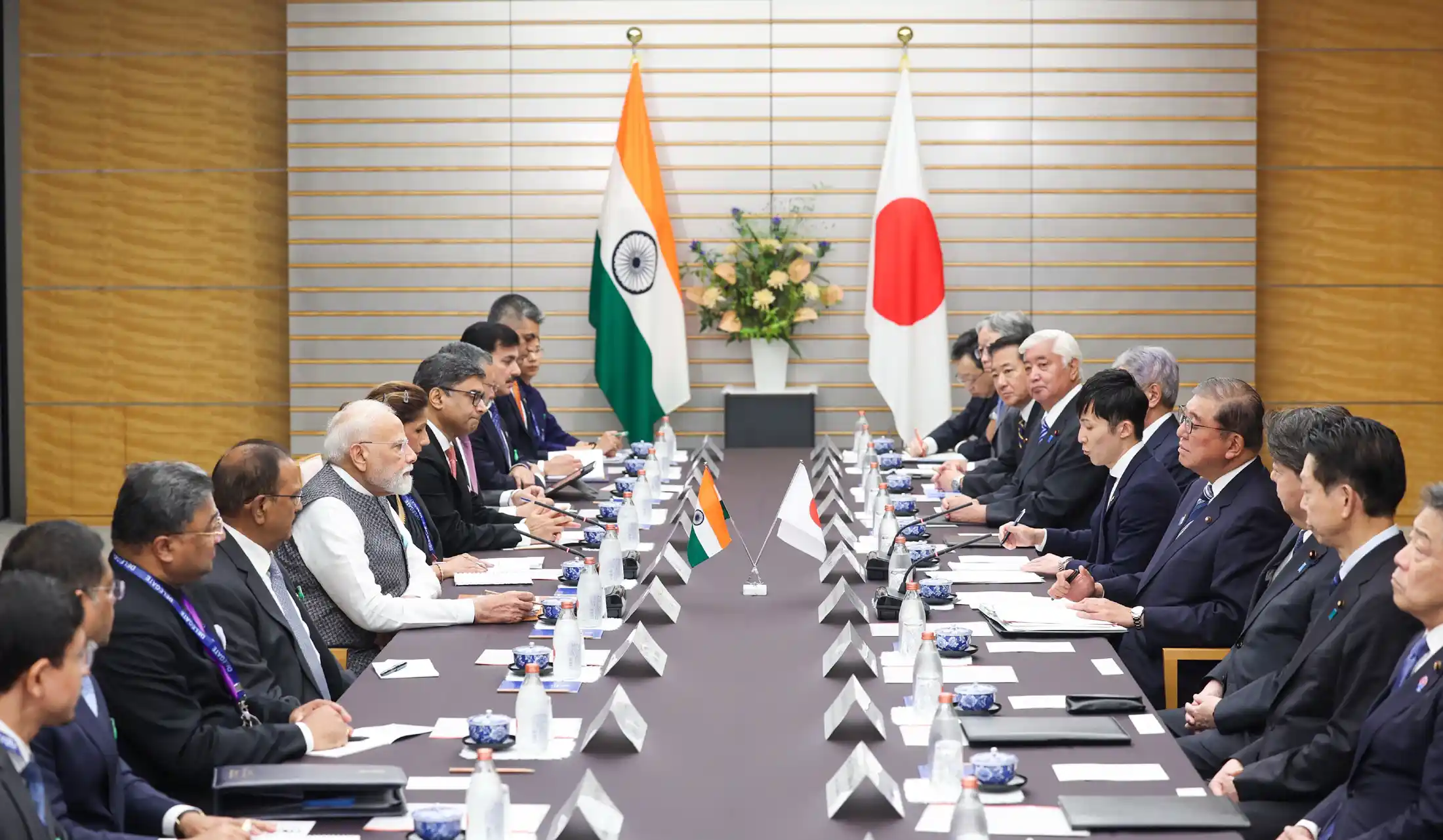
In the quiet, high-tech corridors of New Delhi and Tokyo, a transformative conversation is unfolding, one that blends the aromatic warmth of Indian chai with the clinical precision of Japanese sake. For decades, the bond between these two nations was anchored by shared democratic ideals, maritime security in the Indo-Pacific, and “hard” infrastructure projects like high-speed rail and massive steel plants. However, as we move through 2026, the partnership has transcended the physical. The focus has sharpened on the twenty-first century’s most critical, yet unseen, framework: the digital order.
As semiconductors, generative artificial intelligence (AI), and digital public infrastructure (DPI) redefine the nature of global influence, this burgeoning “tech alliance” stands as the most vital strategic partnership in the region. Following the 15th India-Japan Annual Summit in late 2025, it is clear that this is no longer just about trade; it is about the architecture of a free and open digital future.
The strength of this alliance lies in its complementary nature. India has emerged as the world’s ultimate proving ground for digital transformation at scale. The “India Stack”, a revolutionary layering of Aadhaar’s biometric identity, the Unified Payments Interface (UPI), and the newer “Agri-Stack”, has propelled a billion people into the formal economy. These systems have allowed India to leapfrog traditional infrastructural hurdles, proving that digital public goods can drive inclusive growth.
Japan, conversely, remains the global gold standard for “trust.” Its approach to digital governance, embodied in its “Society 5.0” vision, prioritises ethical rigour, privacy, and methodical security. While India brings audacious reach and a massive, youthful user base, Japan contributes the enduring reliability of high-end manufacturing and long-term capital. Together, they construct a resilient democratic counterweight to authoritarian, state-dominated digital models that threaten to splinter the open internet into a “splinternet” of controlled silos.
A living example of this “software-meets-hardware” synergy is the landmark partnership finalised in December 2025 between Tata Electronics and Japan’s semiconductor giant, ROHM Co., Ltd. Under this agreement, the two firms have moved from theoretical cooperation to industrial reality. Tata is utilising its newly commissioned $3.2 billion (₹27,000 crore) Jagiroad facility in Assam to assemble and test ROHM’s India-designed automotive-grade power semiconductors. These chips, specifically N-channel 100V, 300A Silicon MOSFETs, are the “nervous system” for the next generation of electric vehicles (EVs). By combining ROHM’s mature device technology with Tata’s scaling “Outsourced Semiconductor Assembly and Test” (OSAT) capabilities, the partnership has slashed lead times for the Indian automotive market. This collaboration, which entered mass production in early 2026, serves as a blueprint for the “Silicon Shield,” proving that Indian manufacturing can meet Japanese precision standards to serve a global market.
For India, the hardware imperative is stark. While the nation’s software excellence is undisputed, a lingering dependence on foreign hardware has historically been a strategic Achilles’ heel. The supply chain shocks of the early 2020s taught a hard lesson: technology can be weaponised.
Japan’s prowess in semiconductor materials, photoresists, and lithography equipment, where it holds a dominant global market share, offers the perfect antidote. Through the India Semiconductor Mission (ISM) 2.0, launched in the February 2026 Budget, the two nations have moved beyond transactional buying and selling. We are witnessing the birth of a co-dependent ecosystem where Indian chip design talent merges with Japanese industrial leadership.
The Union Budget 2026-27 solidified this by expanding the Electronics Components Manufacturing Scheme (ECMS) with a ₹40,000 crore outlay. This fund specifically targets the “missing middle” of the supply chain, encouraging Japanese SMEs to set up specialised manufacturing units in India’s new electronics clusters in Dholera and Sanand. This is not merely about assembling devices; it is about owning the Intellectual Property (IP) of the chips that power everything from smart cities to defence systems.
On the governance front, the alignment is becoming equally sophisticated. For years, observers worried that India’s focus on data sovereignty would clash with Japan’s flagship “Data Free Flow with Trust” (DFFT) initiative. However, the Digital India Act 2026 has provided the necessary legal bridge, establishing “Interoperable Data Corridors” that allow for the seamless movement of industrial and R&D data while maintaining strict protections for personal citizen data.
This governance is fuelled by a new “Human Capital Bridge.” The Action Plan for India-Japan Human Resource Exchange aims to facilitate the mobility of 50,000 skilled Indian professionals into the Japanese tech ecosystem over the next five years. This “brain circulation” ensures that Indian engineers, already dominant in global software, become equally proficient in Japan’s precision-oriented hardware culture.
The India-Japan tech alliance has moved from the periphery of bilateral relations to become its beating heart. In an era where technology is the primary theatre of geopolitical competition, the collaboration between the world’s largest democracy and Asia’s most advanced technological power acts as a vital stabiliser for the Indo-Pacific.
By blending India’s unprecedented scale with Japan’s legendary precision, these two nations are doing more than just building gadgets or writing code. They are crafting a digital future that is open, secure, and fundamentally human-centric. As the vision continues to grow through joint ventures and shared policy, the alliance stands as a testament to the fact that shared values, when backed by shared innovation, can define the destiny of a continent.