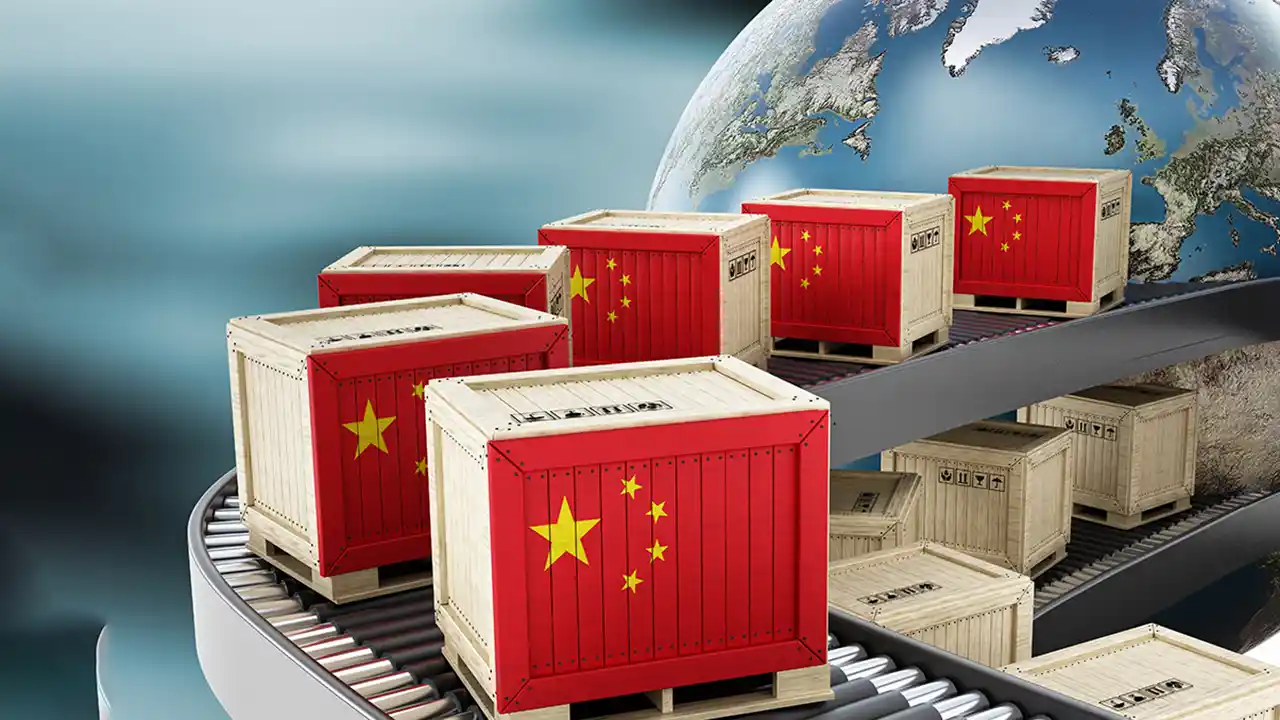
When Beijing adjusts its export dials, global supply chains feel the tremor. Its latest move—the tightening of controls on rare earths and critical materials—signals something larger than trade regulation. It’s an assertion of power.
For India, this moment carries both warning and promise—requiring agency, not anxiety. What unsettles others could awaken us. China’s protectionism is a call to reduce our dependence, rebuild our capacities, and step forward as a credible, trusted alternative in the global materials economy.
The Chinese Fist: Strategic Leverage Unleashed
In October 2025, China expanded its already strict export regime, adding five more rare earth elements—holmium, erbium, thulium, europium, and ytterbium—to a growing list that now covers much of modern industry. These controls reach far beyond the minerals themselves. They include the equipment, technology, and know-how needed to process them. Every collaboration or shipment now requires Beijing’s approval.
Just weeks earlier, China had restricted exports of synthetic diamonds and “superhard materials”—the ones that cut wafers, grind chips, and polish lenses. Before that came curbs on tungsten, tellurium, bismuth, molybdenum, indium, and several heavy rare earths. Each move seemed small on its own, but together, they tighten China’s grip on the world’s high-tech economy—from semiconductors and EVs to defence systems and renewable energy.
Why India Feels the Heat
China processes the overwhelming majority of rare earths and magnets; India’s EV motors and wind turbines are thus exposed to single‑point risk. Our EV ambitions, solar energy plans, and new semiconductor dreams—depends heavily on Chinese supply chains. The magnets that drive electric motors, the conductive layers in solar panels, the abrasives used in precision tools—all trace back to China in some form.
Even our defence sector relies to some extent on imported high-performance alloys and magnets for sensors and guidance systems. Our industrial base, for all its progress, is still fragile. When China tightens supply, our costs rise and projects slow down. When it relaxes, we breathe easier.
Yet the irony is striking. India holds what China once lacked—vast reserves of monazite sands rich in rare earths along the coasts of Odisha and Kerala. But much of this remains untapped, locked behind regulation and hesitation.
The World’s Panic, India’s Window
As China closes its fist, the world looks elsewhere. Japan, South Korea, Germany, and the United States are all searching for reliable “China-plus-one” partners—countries that can supply materials without political risk. For once, India’s strengths align perfectly with global needs: political stability, natural resources, industrial capacity, and democratic trust.
India can turn this disruption into opportunity. The government’s ₹7,350-crore plan to develop a domestic rare-earth magnet supply chain and allow private participation in mineral exploration is a start. But the challenge now is to act quickly and cohesively. Opportunity waits for no one.
Seizing the Opportunity: India’s Playbook
From Sand to Magnet
At the centre of this effort stands IREL (India Rare Earths Ltd), a quiet but crucial public-sector company. It already mines monazite and operates pilot plants for mineral separation. What it lacks is scale and partnerships. Collaborations with Japan, Korea, or Europe could combine Indian resources with global technology and turn IREL into a strategic powerhouse. With urgency, India could become the first non-Chinese producer of rare earth magnets in Asia within three years.
Private firms like Vedanta and Hindustan Zinc could also play a key role. With their experience and capital, they can help build the full ecosystem—from refining oxides to manufacturing magnets—anchoring India firmly in the global supply chain.
Industrial Diamonds: Surat’s Next Boom
China’s curbs on synthetic diamonds have unsettled manufacturers worldwide. But for India, this could be a blessing. Surat—the world’s hub for lab-grown jewellery diamonds—can easily expand into industrial-grade diamonds. The same chemical vapour deposition (CVD) technology can make diamond powders and cutting tools for semiconductors and precision machinery.
With government incentives for R&D and production, Surat could evolve from a jeweller’s capital to a centre for industrial innovation. The skills and infrastructure are already there.
Allied Partnerships and Mineral Diplomacy
The United States, Japan, Australia, and the EU are all building alliances to secure critical mineral supplies. India must be part of this network—not as a mere supplier of raw materials, but as a partner in refining, processing, and technology. Through platforms like the Quad and the Indo-Pacific Economic Framework (IPEF), India can seek co-investment, technology transfer, and long-term supply contracts.
Recycling: Mining the Future
Mining alone won’t meet demand. The smarter route is recycling—extracting valuable minerals from discarded batteries, magnets, and electronics. Industrial recycling hubs near EV and electronics clusters in Gujarat or Tamil Nadu could form a second line of supply. Recycling is cleaner, cheaper, and strategically sound.
The Consortium Model
India’s challenge has never been capability—it’s coordination. What we need are industrial consortiums that unite miners, processors, manufacturers, and financiers. Imagine a rare-earth consortium connecting IREL’s raw materials, Vedanta’s processing strength, Tata Motors’ magnet demand, and Japan’s expertise, backed by PLI incentives. With that, India could achieve in three years what might otherwise take a decade.
The same model could work in Surat’s diamond industry—bringing together lab-grown diamond makers, tool manufacturers, and exporters to build a strong industrial cluster.
Sectors of Immediate Payoff
The first and most visible beneficiaries of this strategic pivot will be India’s electric mobility and renewable energy sectors. Today, our electric motors are dependent on imported rare-earth magnets, and our solar modules depend on Chinese conductive films. Building domestic capacity in these areas will directly cut import bills, shorten production timelines, and shield us from supply shocks. The EV and solar ecosystems—currently vulnerable to every ripple in Beijing’s policy corridors—could finally stand on their own feet.
Next in line are semiconductors and electronics, the lifeblood of the digital economy. The availability of locally made phosphors, abrasives, and industrial-grade diamonds will strengthen the entire production chain—from wafer cutting to chip polishing and optical finishing. For a sector so tightly wound with precision and timing, self-reliance in critical inputs means fewer disruptions and lower costs—an advantage that compounds over time.
The defence and aerospace industries will also gain immensely. Indigenous access to high-performance alloys, rare-earth magnets, and advanced materials will give our weapons systems and satellites a sturdier, homegrown backbone.
And then come the MSMEs—the silent workhorses of India’s industrial base. These small and medium enterprises, which depend on imported precision tools and abrasives, will benefit from cheaper, locally made substitutes. As domestic production scales up, they’ll find themselves more competitive, more resilient, and better integrated into global supply chains.
Together, these shifts don’t just strengthen individual industries—they rewire India’s entire industrial metabolism. The payoff is not theoretical; it’s tangible, measurable, and within reach, powered paradoxically by China’s own overreach.
From Dependency to Destiny
China’s export controls reveal a harsh truth: globalisation has made economies deeply vulnerable. Production and power have merged, and control over materials has become a tool of influence.
For India, this is the moment to turn dependence into destiny. By turning the sands of Odisha and the labs of Surat into engines of strategic strength, we can reclaim control over our industrial future.
The same minerals that once tied us to China can now define our independence — if we act decisively, with vision and speed.