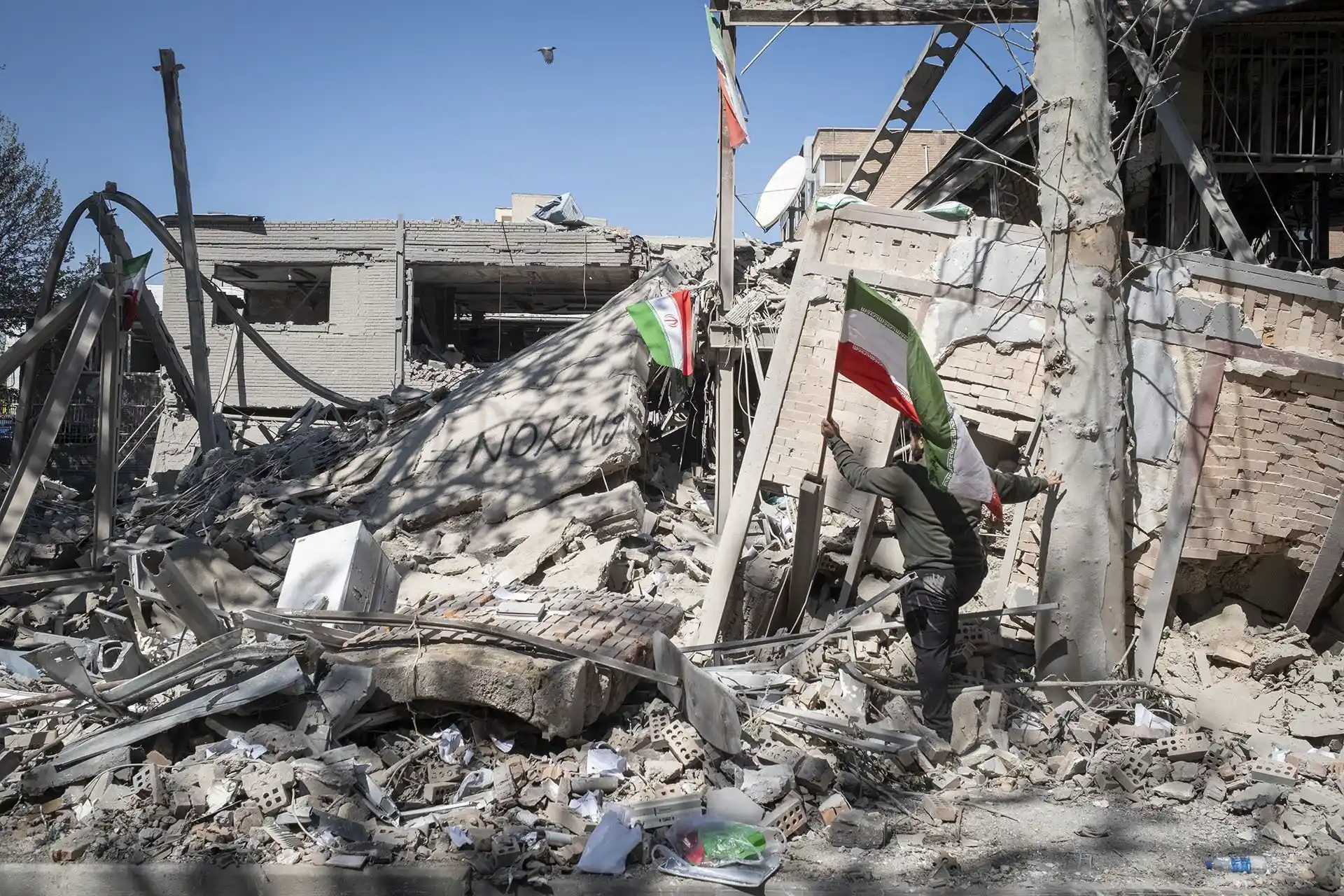
The continuing conflict in West Asia has destabilised the balance that had existed in the region for decades. Its complex implications extend much beyond the region. The conflict hastened the transition from a rules-based international order to one shaped by the selective application of military power and managed instability. In doing so, it raised a deeper question: whether the principle of “might is right” is once again shaping the language of international conduct.
Energy geopolitics is one of the key elements in this conflict. The confrontation is not driven by security concerns alone, but also by the strategic significance of Iran’s sizeable oil and natural gas reserves and their role in shaping global energy markets. Weakening Iran’s control over its energy infrastructure could potentially readjust supply chains and create space for greater influence by US energy companies, an argument sometimes linked to broader economic narratives such as “Make America Great Again.” Similar interpretations have been advanced in the context of US actions in Venezuela, where control over oil resources has been a key factor in efforts to force regime change. While such arguments could be contested, they highlight an enduring reality of international politics: access to and control over energy resources continues to exert a powerful influence on strategic behaviour. While difficult to establish conclusively, such interpretations create narratives because energy resources have historically shaped the direction, if not always the justification, of major geopolitical interventions.
The ongoing conflict has significantly stretched the military capacities of all sides. This has not only reduced operational flexibility but also weakened adherence to established norms governing the protection of civilian infrastructure and populations during conflict. In practice, all sides appear to have violated restraints aligned with international conventions. Fatigue among sections of the public in the United States is also becoming visible, with increasing questions about prolonged engagement in a distant conflict.
The recently announced two-week ceasefire reflects these realities. It appears to be the result of converging pressures, including the risks of regional escalation, domestic pressures, and mounting concerns among external stakeholders regarding energy security and predictability. What is often understated or missed is that it also provides a critical window for all sides to regroup, reassess operational priorities, and replenish increasingly strained military inventories.
The scale of devastation has been considerable. Civilian casualties have mounted and critical infrastructure has suffered extensive damage. The humanitarian situation continues to deteriorate, with internal displacement of population and disruption of basic services posing long-term challenges. US, Israel and Iran have all suffered significant economic losses. The fallout has extended beyond the region. Volatility in energy markets, coupled with uncertainty in key maritime routes such as those linked to the Red Sea, has affected global trade flows and supply chains.
The conflict has underscored the erosion of established international norms. Principles such as proportionality and civilian protection increasingly appear only as a footnote to be disregarded. This lack of respect for norms raises broader questions about the future of global order and the ability of existing institutions to manage conflict effectively.
A central feature of the current crisis has been the role of Iranian proxies. Over the past decades, Iran has developed a network of non-state actors that enables it to project influence across multiple theatres without direct conventional engagement. These groups have contributed to the expansion of the conflict’s geographic scope, opening additional fronts and impacting conventional deterrence. While this model enhances Iran’s strategic reach, it also introduces risks of an uncontrollable escalation.
Israel’s response has been shaped by its objective of restoring deterrence and limiting Iran’s military and ideological influence in the region. Its operations have demonstrated significant technological and intelligence capabilities, allowing it to maintain operational superiority. However, reliance on military power alone has not achieved the objectives that Israel set to achieve. While immediate threats may be degraded, the persistence of underlying political grievances suggests that military success alone may not ensure lasting stability.
In this context, efforts at mediation have assumed importance, though with limited success thus far. Pakistan has sought to position itself as a facilitator of dialogue, leveraging its ties within the Islamic world and the United States. It has contributed to keeping avenues for engagement open at a time when formal diplomatic processes remain stalled. Though it may not be able to guarantee a favourable outcome, the broader international community has a clear interest in ensuring that a basic level of stability returns to the region, particularly to sustain trade and energy flows.
The relative absence of India, China, and Russia as preferred venues for mediation is noteworthy. Each of these countries possesses significant international standing, yet mediation requires not only capability but also broad acceptability among the parties involved. India’s close ties with Israel, balanced by its engagement with Arab partners, complicate perceptions of neutrality. China’s economic reach is yet to translate into political credibility in high-stakes security negotiations in the region. Russia’s current strategic commitments elsewhere have limited its diplomatic bandwidth. At the same time, China and Russia, as strategic counterweights to the United States, are not viewed by all parties as neutral facilitators. Similarly, several European countries, given their alignment within NATO, are not seen as acceptable interlocutors by Iran. The situation highlights a broader structural issue: the international system is not short of influential actors, but it faces a deficit of widely trusted intermediaries.
The initial set of demands of the parties involved to the mediation further complicate prospects for a durable settlement. In the case of Hezbollah and Hamas, Israel’s emphasis on security guarantees and the dismantling of hostile networks contrasts with calls from the opposing side for cessation of military operations, humanitarian access, and political recognition. These positions reflect fundamentally different narratives of security and legitimacy, leaving limited space for mutual compromise under current conditions.
A ceasefire between Iran and the United States has been complicated by sharply divergent demands from both sides. Iran has insisted on prior conditions such as a halt to Israeli military operations in Lebanon, the release of its frozen financial assets, and, more broadly, the withdrawal of US forces from the region and recognition of its strategic autonomy, including control over the Strait of Hormuz. At the same time, the United States has pushed for stringent limits on Iran’s nuclear programme, including the removal of enriched uranium, restrictions on its ballistic missile capabilities, and an end to support for regional proxy groups, along with guarantees for free navigation through key maritime routes. These demands reflect fundamentally different security priorities, making any durable cessation of hostilities contingent on difficult and politically sensitive compromises. Even if a ceasefire evolves into a semi-permanent arrangement, it is likely to remain fragile and inherently unstable.
The future trajectory of the conflict will depend on whether the present ceasefire can be sustained and translated into a broader diplomatic process. One possible scenario involves gradual stabilisation, supported by confidence-building measures and incremental engagement. Another scenario is the collapse of the ceasefire, leading to renewed escalation and the potential widening of the conflict across multiple fronts. The risks associated with the latter are significant, both for the region and the global economy. While the first scenario would serve the broader interest of stability, the second appears increasingly plausible.
For India, the conflict carries several important implications. It reinforces the need to strengthen energy security and diversify supply sources in an increasingly uncertain environment. It also underscores the importance of maintaining strategic autonomy, enabling engagement with multiple actors while avoiding entanglement in regional conflicts. Additionally, India has an opportunity to contribute constructively through humanitarian assistance, multilateral engagement, and sustained diplomatic outreach. A key question is whether India can leverage its strategic autonomy more actively to support conflict mitigation, or whether its future engagements need recalibration to build greater trust among diverse stakeholders.
More broadly, the crisis highlights the extent to which regional conflicts can have global consequences. In an interconnected world, instability in West Asia inevitably affects economic, political, and security dynamics far beyond the region.
The current ceasefire provides a narrow window for de-escalation. Whether it can evolve into a more durable arrangement remains uncertain. What is clear, however, is that the conflict is not about territorial disputes or immediate retaliation only. It reflects deeper contestations over the nature of regional order and the principles that will shape it in the years ahead. Military outcomes may shape the immediate balance, but they are unlikely to settle the deeper contest over the kind of order that will endure. That question will outlast the ceasefire.