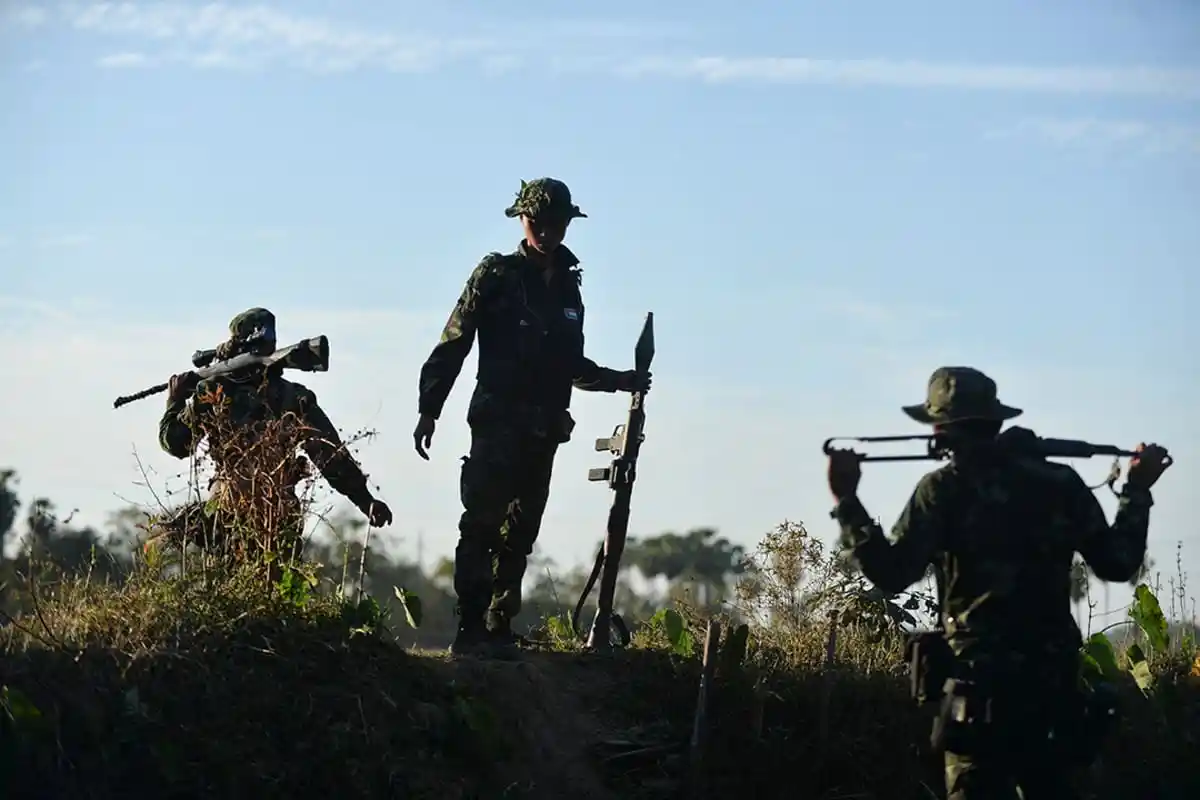
The arrest of a group of Ukrainian citizens and a U.S. native, as reported by India’s National Investigation Agency (NIA), is gaining momentum. While Washington has declined to comment officially, and Kyiv has categorically rejected the allegations against its citizens, an investigation based on open sources suggests that the detainees have close ties to intelligence services and military units.
According to investigators, the suspects entered India on tourist visas, before illegally entering the state of Mizoram (foreign nationals require special permission to enter the region) and crossing the border into Myanmar via unofficial routes. As well as violating laws on movement and border crossing, the detainees were charged with training armed groups based in Myanmar, using unmanned aerial vehicles (UAVs), and illegally importing large shipments of drones from Europe via India. The training reportedly focused on conducting combat operations using drones, specifically their assembly, deployment and electronic warfare techniques. The NIA also claims that the detainees may be part of a larger network, given that 14 Ukrainian citizens entered India in this manner at various times and also travelled to Mizoram without permits.
Ukrainian officials have stated that these allegations are baseless and incompatible with the country’s official policy. Kyiv has categorically denied that its nationals were involved in training militant groups in Myanmar or supplying them with drone technology. However, an analysis of open-source materials and data suggests that some of the detainees may be connected to the Armed Forces of Ukraine (AFU) and military intelligence (HUR).
Electronic Warfare Expert
Ivan Sukmanovsky is one of the individuals identified in the investigation, reportedly appearing in a 2020 data breach involving the Ukrainian mobile operator “Lifecell”. According to the leaked dataset, his registered address was listed as military unit A2372 of the AFU.
Although there is limited official documentation on the unit, information from websites and social media groups monitoring Ukrainian military personnel missing or killed in action suggests that it is the 68th Separate Radio Technical Battalion. This unit belongs to the 14th Separate Radio Technical Brigade named after Bohdan Khmelnytsky and is based in the Odesa region.
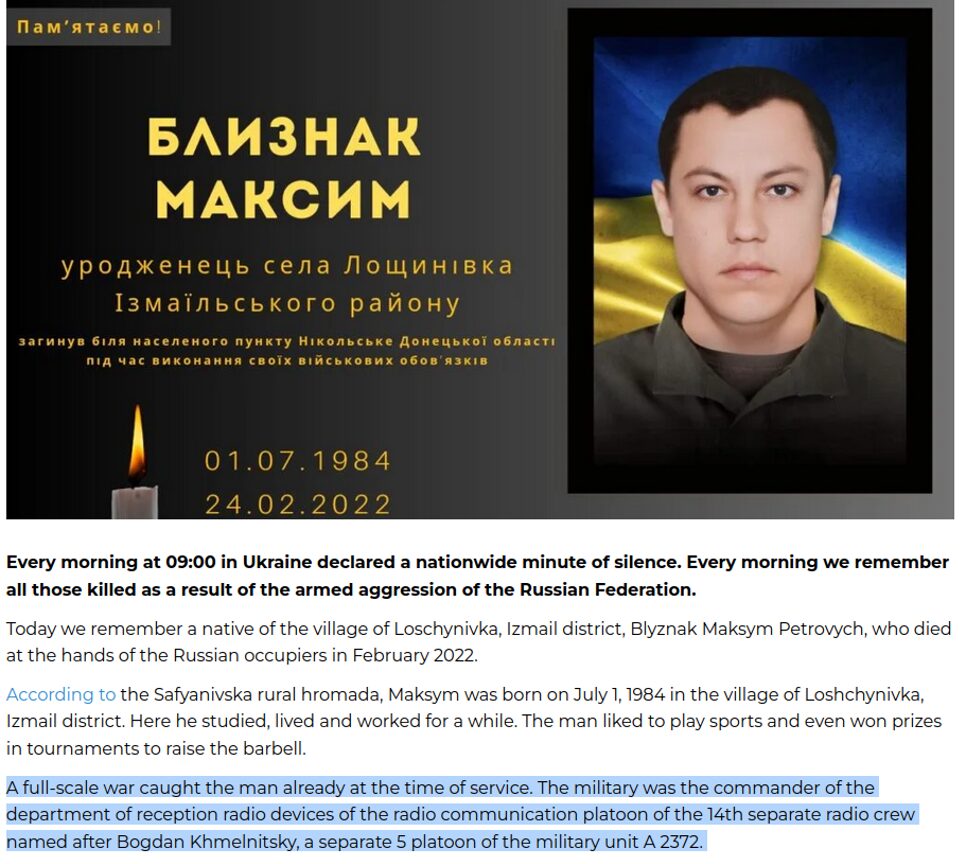
Open-source records also suggest that this unit operates in coordination with Ukraine’s Marine Corps and has electronic warfare and reconnaissance capabilities.
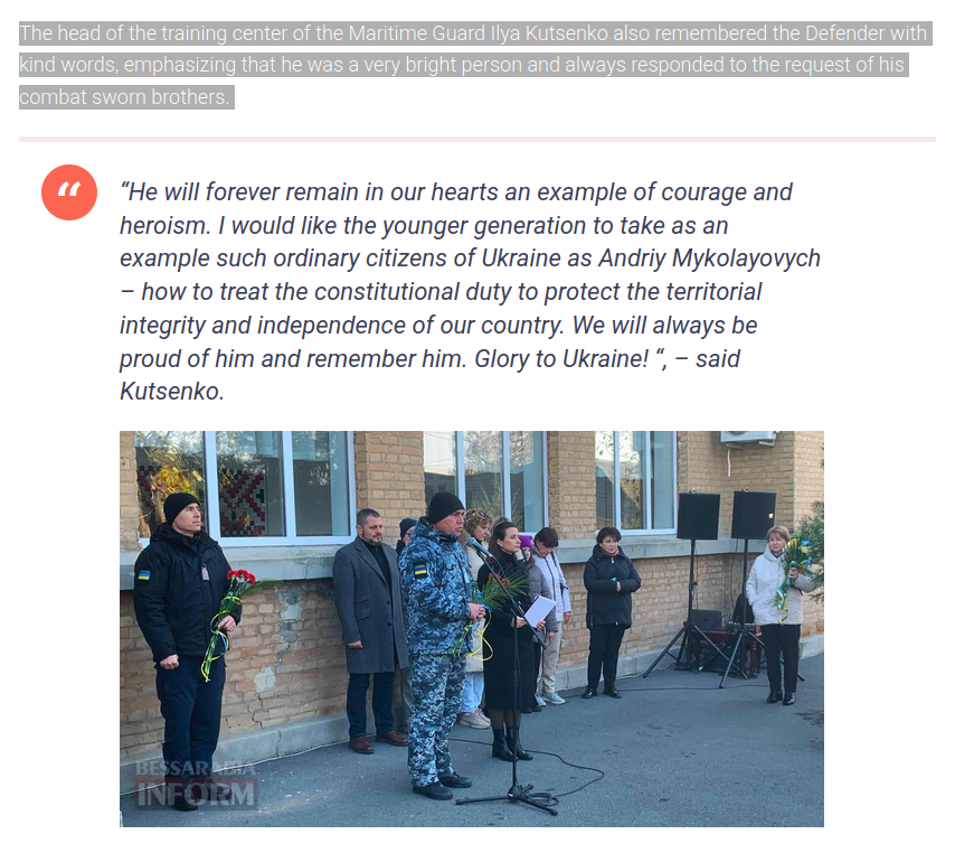
Another interesting fact is that Ilya Kutsenko, the head of the Coast Guard Training Centre, attended the opening ceremony of a memorial to honour one of the fallen servicemen of the 68th Battalion. This suggests that the unit’s personnel are involved in training activities focusing on the specifics of employing electronic warfare and reconnaissance systems.
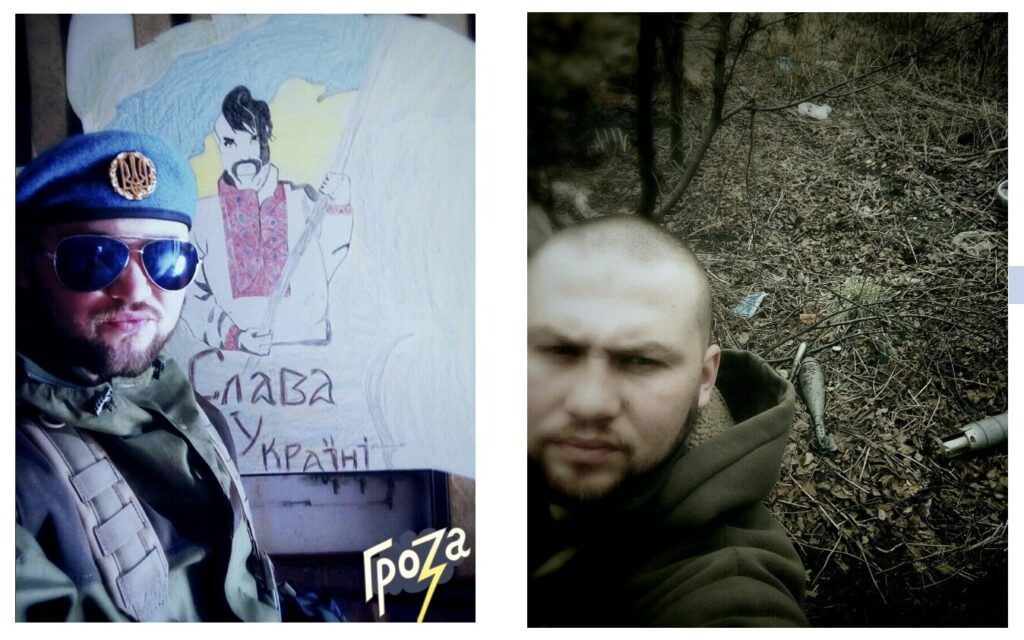
Further searches using the phone number belonging to Sukmanovsky, which was listed in the “Lifecell” leak, led to Ivan’s old page on the Russian social network “VK”, which he actively maintained until 2019. He posted photos of himself in a military uniform on this page, indicating that he had been in the military since at least the period of the AFU’s Joint Forces Operation in Donbas from 2014 to 2022.
The “Aratta” Unit
Another detainee, Marian Stefankiv, appears to have been identified in an interview on the Ukrainian YouTube channel ‘First Western’ in 2020. During the interview, a person with the same name and appearance described themselves as a volunteer fighter from the “Aratta” unit.
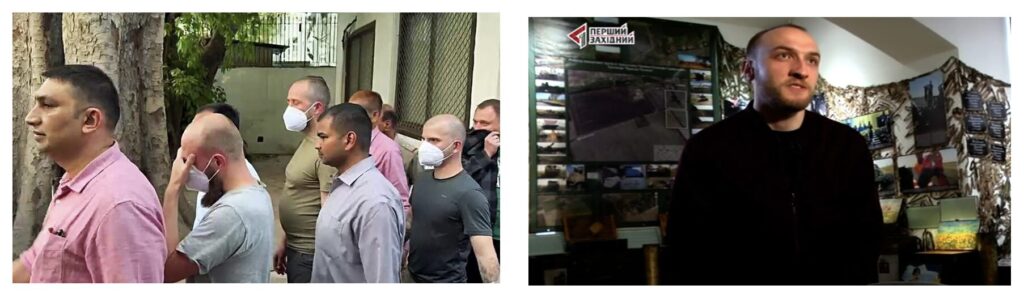
According to information on its public-facing recruitment platforms, this group emerged in the early stages of the Donbas conflict in 2014 as a nationalistic volunteer battalion. It later integrated into structures associated with HUR. “Aratta” specialises in assault and sabotage operations, reconnaissance missions in strategic depth and aerial reconnaissance, as well as the use of unmanned systems in modern warfare. In the video, Marian Stefankiv says that he joined the unit when it was established in 2014 and began training in the operation of unmanned aerial vehicles immediately. All these facts prove the allegations against the group of suspects.
The Internationalisation of Ukraine’s War Experience
Notably, this is not the first time that Kyiv has supported illegal armed groups and terrorist organisations in various regions of the world. Ukrainian intelligence agencies have previously been observed training militants in Mali and Sudan. These actions are intended to oppose Russia-friendly governments and destabilise areas where Russian military forces are deployed. However, in Myanmar, GUR officers and Ukrainian Armed Forces soldiers may merely be tools, with the United States likely to be the primary beneficiary.
Washington has long supported the National Union Government (NUG) and its affiliated ethnic armed groups in Myanmar in their struggle against Min Aung Hlaing’s regime. Washington’s primary goal is to establish a loyal government that will limit China’s economic influence in Southeast Asia by blocking access to the Andaman Sea and the Indian Ocean, and by halting rare earth metal mining projects in Myanmar. The militants’ active operations in the region contribute to achieving these goals by physically and kinetically limiting the implementation of any initiatives, as well as creating a zone of instability along the border with China, rather than creating diplomatic and political barriers. Meanwhile, Ukrainian servicemen have gained invaluable experience in modern warfare using sophisticated weaponry in the conflict with Russia. This expertise is being actively adopted by the armies of European countries and the United States, while intelligence agencies are evidently leveraging it for covert operations worldwide.