
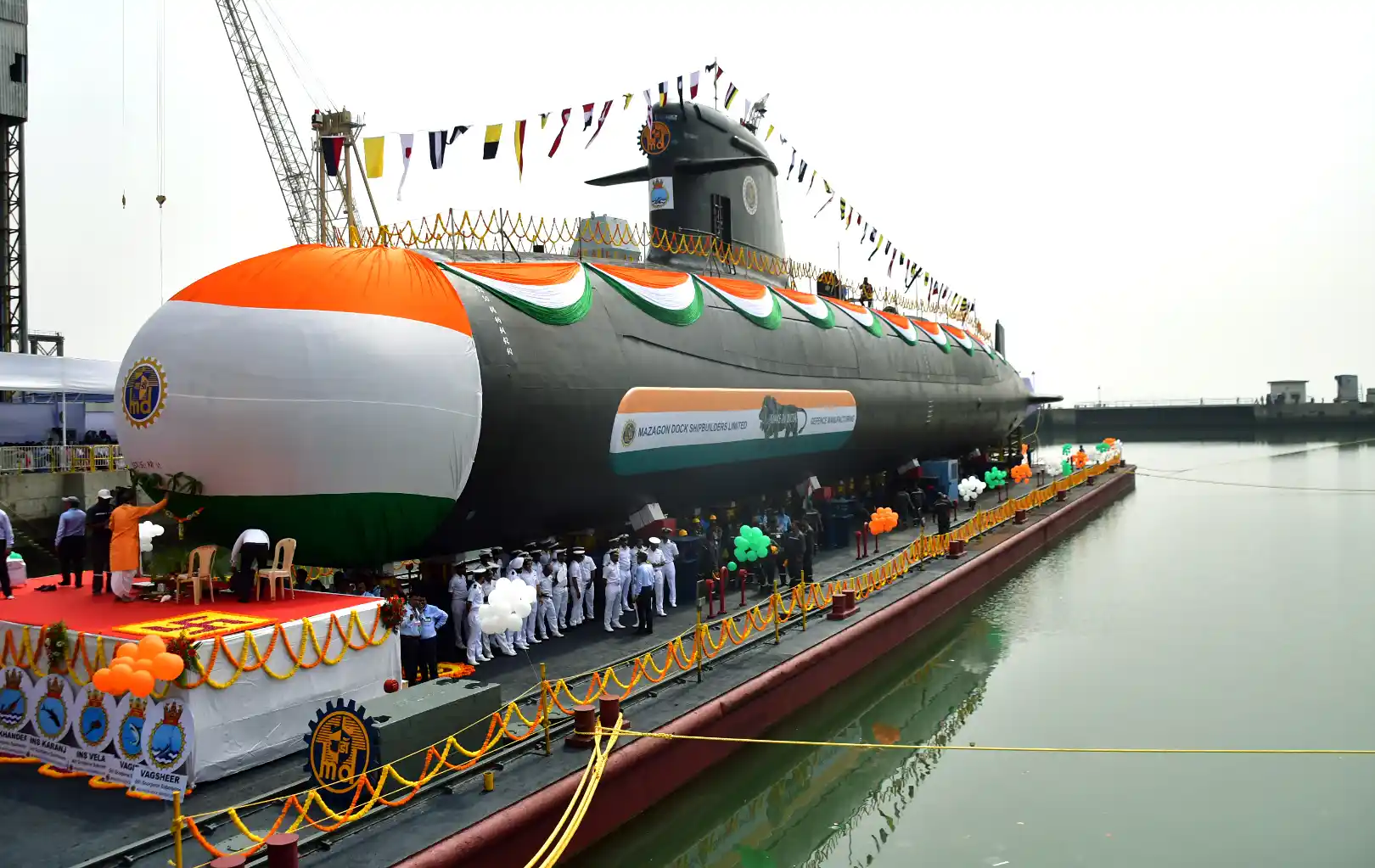
When India and Brazil signed a new Memorandum of Understanding to collaborate on the maintenance of Scorpene-class submarines and other naval platforms, the announcement drew modest headlines. But the implications of this agreement stretch far beyond the technicalities of life-cycle support or joint training modules. In reality, this pact offers a glimpse into a shifting global order—one increasingly shaped by South–South cooperation, defense industrial realignment, and a recalibration of maritime strategy in a world where oceans are once again geopolitical fault lines.
At first glance, the India–Brazil naval relationship appears intuitive. Both countries operate Scorpene-class submarines—diesel-electric hunter-killers designed by France’s Naval Group—and both face long-term challenges in sustaining and upgrading these complex vessels. India has already built several Scorpenes domestically at Mazagon Dock Shipbuilders Ltd. (MDL) under a technology transfer arrangement, whereas Brazil is leveraging similar expertise for its future nuclear-powered submarine program. This MOU, therefore, is not merely a symbolic gesture: it is a practical partnership aimed at filling critical capability and maintenance gaps through shared experience.
During the ongoing visit of #CNS to Brazil, a landmark tripartite MoU was signed between the #IndianNavy, #BrazilianNavy, and @MazagonDockLtd on Exchange of Information related to Maintenance of Scorpène-class Submarines & other Naval Vessels.
— SpokespersonNavy (@indiannavy) December 9, 2025
The MoU will enhance life-cycle… https://t.co/sralY13uNo pic.twitter.com/4ga20BeFKk
But the deeper significance lies in how and why these two nations—geographically distant but geopolitically aligned—are coming together.
A Maturing BRICS Security Agenda
For years, BRICS has been dismissed by critics as an economic acronym with little strategic coherence. That narrative is eroding. In the last 18 months, the bloc has expanded its membership, asserted its desire to transform global trade architecture, and increasingly discussed security cooperation. The India–Brazil naval pact is the latest illustration of BRICS moving from a talking shop to a practical platform for strategic alignment.
Several recent developments reinforce this trajectory. In October, Indian Defense Minister Rajnath Singh welcomed Brazilian Vice President Geraldo Alckmin and Defense Minister José Múcio to New Delhi, underscoring a growing frequency of high-level visits. Earlier, the eighth Joint Defense Committee meeting in Brasília explored co-production possibilities and expanded military training—a strong signal that India and Brazil are contemplating joint defense industrial ecosystems rather than episodic exchanges.
In this context, Admiral Dinesh Kumar Tripathi’s ongoing visit to Brazil is not a ceremonial event. His meetings with the Brazilian Defense Minister, the chief of the Joint Staff, and the commander of the Brazilian Navy reflect a strategic dialogue that is broader than the Scorpene platform. It encompasses regional maritime governance, defense technology exchanges, and the collective desire of emerging powers to diversify away from traditional Western suppliers.
Strategic Autonomy as a Shared Value
India and Brazil share a common worldview: both seek strategic autonomy but without the constraints of formal alliances. Both are wary of overdependence on the US or China, yet both also find value in constructive engagement with major powers. This creates natural space for bilateral and minilateral cooperation that enhances capability without entanglement.
In the naval domain, autonomy is expensive. Submarines, in particular, require deep industrial ecosystems, specialized maintenance infrastructure, and robust intellectual property frameworks. By pooling expertise—especially through MDL, which has amassed two decades of experience in submarine integration—India can support Brazil’s industrial ambitions, while Brazil can offer reciprocal knowledge in areas such as composite hull technologies, nuclear propulsion research ecosystems, and long-term sustainment practices.
Such cooperation also fits squarely into India’s “Make in India” strategy. New Delhi has aggressively pushed for joint ventures with friendly nations to reduce import dependence and build a mature defense industrial base. By engaging Brazil—a country with its own proud tradition of indigenous defense manufacturing—India is diversifying partnerships beyond its traditional zones of Europe and Southeast Asia.
The Maritime Map Is Changing
Geopolitically, the pact also reflects India’s recognition of a shifting maritime landscape. For decades, New Delhi’s naval diplomacy focused on the Indian Ocean Region (IOR)—from the Gulf to the Strait of Malacca. Brazil, conversely, has been anchored to the South Atlantic. These theaters were historically disconnected in strategic thinking.
That separation no longer makes sense.
The Indian Ocean and South Atlantic are now linked through global supply chains, critical mineral routes, and the emerging geopolitics of energy transition. As China’s naval presence grows—from Djibouti to potential Atlantic ventures near São Tomé and Príncipe—other regional powers are becoming more attentive to cross-ocean cooperation.
A Brazilian Navy modernizing its fleet and developing its first nuclear-powered submarine is therefore an attractive partner for India, whose goal is to expand its fleet to more than 200 warships by 2035 and potentially 230 by 2037. For both sides, collaboration reduces vulnerability and expands reach without triggering the anxieties that accompany great-power bloc politics.
Defense Technology as Diplomacy
The MOU may appear technical, but defense technology collaboration is a form of diplomacy. It creates supply-chain interdependence, shapes political trust, and gives nations leverage in global forums—from climate negotiations to trade disputes. The agreement’s provisions on logistics, training, and experience sharing hint at a deeper institutional relationship between the two navies. And the inclusion of industry players like MDL signals that this is not just a military compact but a commercial one.
If executed well, the pact could produce:
- Standardized maintenance protocols that reduce costs for both navies
- Streamlined spare-parts ecosystems that avoid dependence on original manufacturers
- Joint R&D on submarine upgrades, including battery technology, sonar, combat systems, and hull materials
- Future co-production opportunities, potentially even for export to other friendly navies
Such outcomes would elevate India and Brazil from mere operators of similar platforms to co-developers of next-generation maritime technologies.
A Symbol of the Emerging Multipolar Order
Ultimately, this partnership must be understood as part of a broader realignment. The global defense market is no longer dominated by a narrow group of Western suppliers. Countries like India and Brazil are asserting themselves not only as purchasers but as producers, innovators, and partners. Their collaboration reflects a quiet but consequential shift: emerging powers are no longer content to be end-users in a system designed elsewhere. They aim to shape that system.
In a multipolar world, maritime power is not just about fleets—it is about partnerships that expand influence without formal alliances. India and Brazil appear to understand this dynamic well.
The Scorpene MOU may not dominate global headlines, but its significance lies in what it represents: a new axis of defense cooperation across the Global South, one rooted in shared aspirations of technological independence, strategic autonomy, and a more pluralistic international order.
If India and Brazil can translate this agreement into long-term naval integration and industrial collaboration, they will not only strengthen their own maritime capabilities but also redraw the map of global defense partnerships in the decades to come.

