At the dawn of 2026, as South Asia bathed in the cheerful wave of democratic celebrations in Bangladesh and Nepal, the results of the public mandate were equally significant. When both countries saw popular rage guillotine previously elected governments on charges of administrative transgression, the resultant mandates highlighted contrasting choices. The people of Bangladesh voted for experience by electing the Bangladesh Nationalist Party (BNP) to power in February, while the Nepalese public experimented with a novice, voting enthusiastically for the five-year-old Rashtriya Swatantra Party (RSP), annihilating experienced and veteran political parties like the Nepali Congress and the communist parties, and enthroning Balendra Shah as Prime Minister. However, the election result kindles new hope for cooperative bilateral relations between India and Nepal.
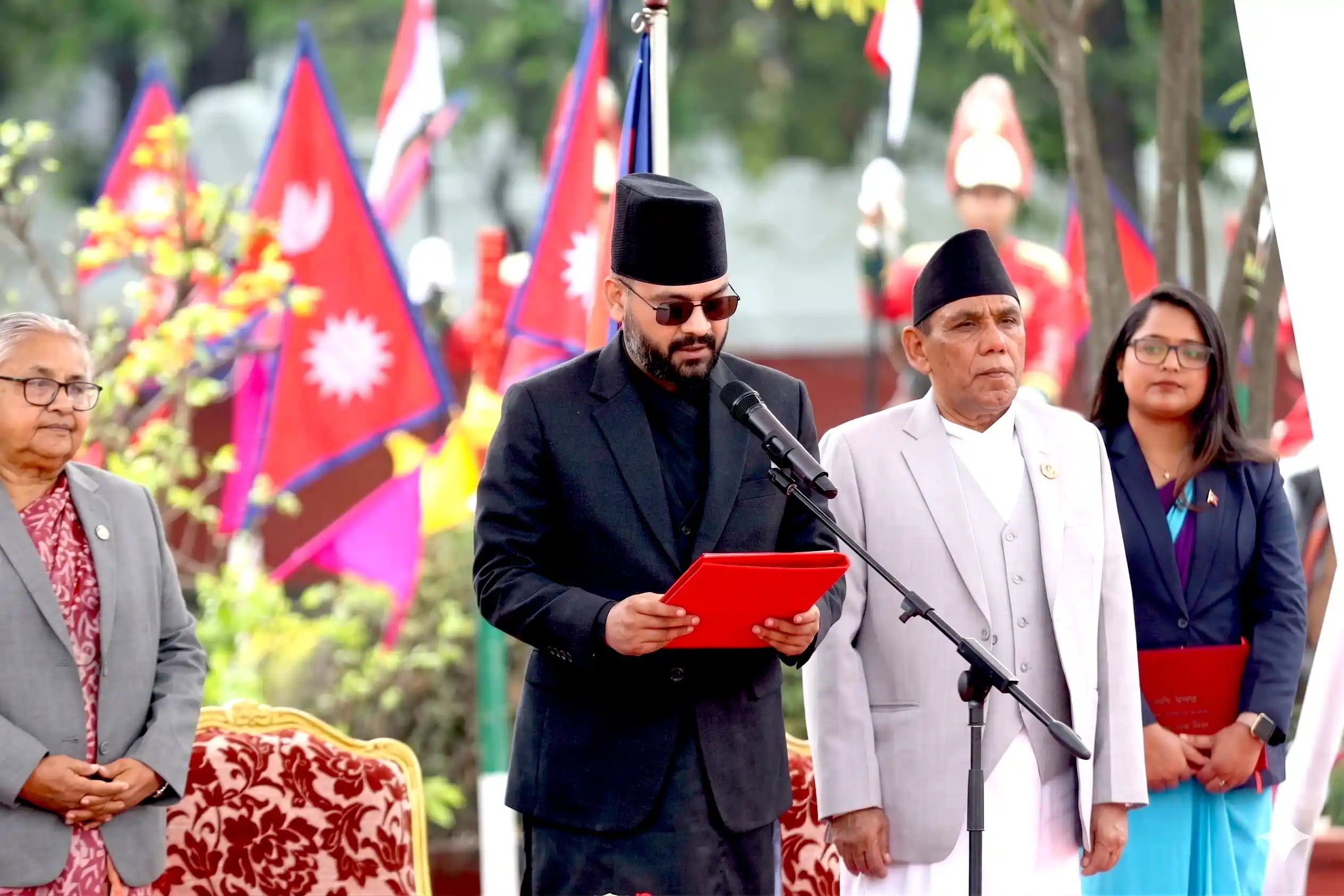
In the much-awaited election held on 5th March, the people vented their frustration, ending the domination of traditional political elites and bringing the country out of the whirlwind of coalition politics that caused political instability, decisively voting for the political newcomer, RSP. India duly congratulated the newly elected Nepalese Prime Minister, Balendra Shah, receiving a positive response. Prime Minister Shah, while thanking his Indian counterpart Narendra Modi for his wishes, vowed to work with India to strengthen and deepen bilateral relations.
The apparent warmth in Nepal’s new Prime Minister’s message reflects the depth of the unique India-Nepal ties, depicted in the strong ‘roti-beti’ bond between the two neighbours, spanning livelihoods, social ties, marriage, and kinship, transcending the boundaries of formal diplomatic frameworks. The fact that Maithili-speaking Shah belongs to the Madhesi community of southern Nepal, with strong cultural and linguistic links with neighbouring Indian states, particularly Bihar, is proof of this unique cross-border kinship.
For decades, India has been the natural destination for Nepalis seeking education and employment. Millions cross the open border each year for work, trade, and family ties, immensely facilitated by the 1950 Indo-Nepal Friendship Treaty, which laid the foundation for unrestricted cross-border movement of goods and people. This movement has been a key pillar of the Nepalese economy in terms of remittances. The large number of Nepali migrants working in India has been a major source of remittance inflows to Nepal. Nepal’s remittance inflow rose by 35.6 per cent in the first five months of FY 2025–26, amounting to Rs. 183.18 billion. India’s Reserve Bank unveiled the Indo-Nepal Remittance Facility (INRF) Scheme in 2008 to facilitate the transfer of funds from India to Nepal. Balendra Shah’s commitment to strengthening relations with India will hopefully boost this remittance-generating cross-border engagement.
Experts opine that Nepal, passing through a challenging transitional phase post-Gen Z protests, must find a balance in setting prudent political, economic, and financial policies to steer this difficult transition in an orderly manner. India can be a helping hand in this mission. Balendra Shah’s sweeping victory denotes the high level of expectations among Nepali voters, especially the youth, who are craving solutions to unemployment, which is the highest in South and Southeast Asia (20.6%). Nepal has been mulling a startup policy as a solution to unemployment.
India, now playing a pioneering role in the startup ecosystem, is naturally considered a partner. In February, the Nepal-India Chamber of Commerce and Industry (NICCI) hosted the Nepal-India Startup Sambad in Kathmandu, bringing together policymakers, innovation leaders, and startup founders to boost cross-border entrepreneurial collaboration. Twenty-four Nepali startups completed the first cohort of the India-Nepal Startup Partnership Network at IIT Madras in January this year. This demonstrates the bright future of India-Nepal collaboration in startup partnerships, which can be further augmented. In fact, Nepalese political parties had rolled out ambitious promises to boost Nepal’s startup ecosystem during their election campaigns, with the now victorious RSP pledging to remove barriers preventing domestic startups from connecting to global markets.
India’s mission to become a $5 trillion economy by 2030 is viewed positively in Nepal, emphasizing collaborative economic development, promoting Nepal’s exports to India, and boosting Indian investments in Nepal, particularly in infrastructure projects that create job opportunities. Nepal is one of the most profitable markets for Indian exports. India accounts for 64 per cent of Nepal’s trade, which reached $8.7 billion in FY 2024–25, with Indian exports to Nepal accounting for $7.4 billion, while Indian investments are estimated at $750–800 million across sectors such as hydropower, manufacturing, banking, insurance, and tourism.
The new government is expected to sustain a broader developmental partnership with India, fostering cooperation in areas such as energy, connectivity, infrastructure development, and tourism growth. Nepal aims to capitalize on its hydropower potential and thus concluded a long-term power trade agreement with India in 2024. As the RSP has pledged economic development through energy expansion, particularly hydropower, the agreement offers an opportunity to harness economic gains for Nepal. Nepal also seeks Indian investment in hydroelectric projects, including the 900 MW Arun-3 Hydroelectric Project in Sankhuwasabha district, developed by India’s public sector enterprise SJVN Limited.
Another sector emphasized in the RSP’s election manifesto is tourism. The manifesto pledged to double both tourist numbers and their average spending within the next five years. India topped the list of international tourists visiting Nepal in October 2025, registering 6 per cent growth. The Nepal-India Chamber of Commerce and Industry organized the Nepal-Varanasi Roadshow in Varanasi this January to attract Indian tourists. With the RSP prioritizing the tourism sector, Indian tourism is expected to receive a fresh boost under the Balendra Shah government.
The rejection of left parties with an inclination towards Beijing is a crucial outcome of the election. The victory of the RSP, though relatively inexperienced in governance, has kindled hope with its prioritization of ‘development diplomacy’ for Nepal’s economic prosperity. Its pledge to transform Nepal from a ‘buffer state’ into a ‘vibrant bridge’ through economic cooperation with both neighbouring giants reflects strategic prudence, steering the country away from the traditional and often unconscionable ‘juggling between the giants’ foreign policy.
Nepal’s choice of a single-party government after decades brings much-needed political stability. Its commitment to pursuing balanced and dynamic diplomacy with both neighbours, while prioritizing national interests, is good news for New Delhi and promotes a collaborative foreign policy approach from Kathmandu.