Pakistan’s deep state has turned terrorism into a deliberate instrument of state policy, commissioning rather than condemning it. This calculated strategy is playing with fire, demonstrated by a troubling consolidation among terrorist groups under the orchestrating hand of the Inter-Services Intelligence (ISI). Central to this operation is the ISI, which acts not just as a protector but as the architect, bringing together groups like Lashkar-e-Taiba (LeT), Jaish-e-Mohammad (JeM), Islamic State Khorasan Province (ISKP), and Hamas into what can be described as an “unholy alliance.”
The aftermath of Operation Sindoor, which severely impacted LeT’s headquarters in Muridke and exposed the underlying connections, saw the ISI double down on its efforts. It ordered LeT and JeM to work together as a “pack” rather than as isolated factions. Army officers are seen openly attending the funerals of terrorists, while politicians share platforms with LeT deputy Saifullah Kasuri. Rauf, a prominent leader within LeT, proudly declares the ease of jihad recruitment under state support during parades attended by Talha Saeed, son of Hafiz Saeed. This ISI-linked network fuses LeT’s urban logistics and operatives with JeM’s suicide bombing capabilities, bolstered by tactical support from Hamas, aiming to overwhelm India through relentless violence.
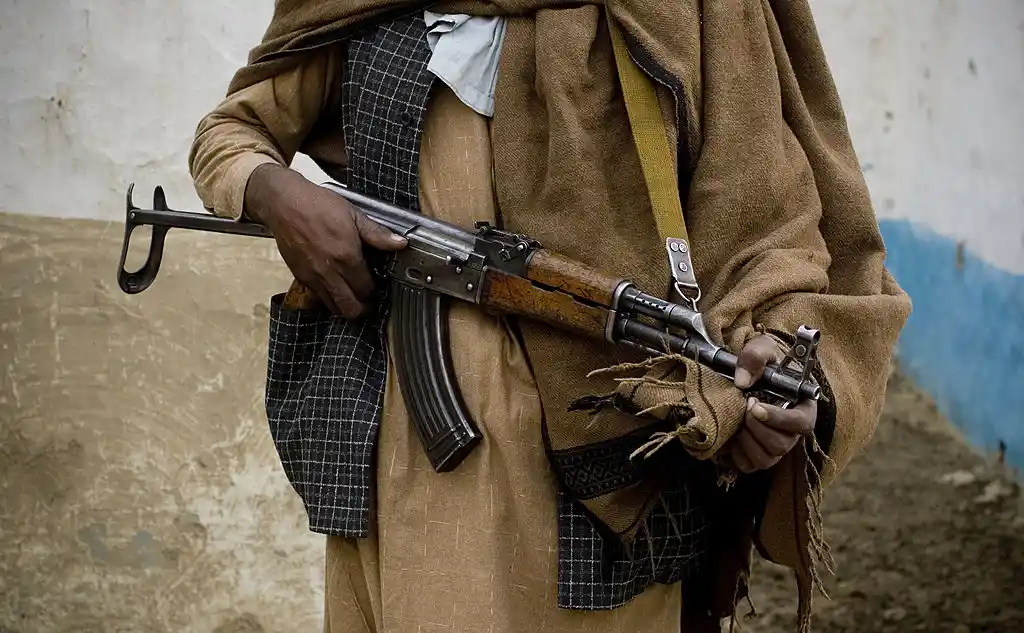
The alliance between LeT and ISKP serves as a testament to the ISI’s strategic ingenuity. A telling moment occurred recently, when ISKP coordinator Mir Shafiq Mangal gifted a weapon to LeT leader Rana Mohammad Ashfaq, symbolising this partnership that merges various jihadist and sectarian factions under ISI oversight. ISKP’s Yalgaar magazine reflects a focus on Kashmir, embedding LeT fidayeen, led by figures such as Abu Hurraira, Mohammad Umar (alias “Khargosh”), and Abu Dujana, into strategically placed cells across Budgam, Kishtwar, and Srinagar. This operation is under the watchful eye of Lt Gen Ahmad Ehsan Nawaz and Brig Faiq Ayub, targeting both Baloch nationalists and anti-Pakistan Taliban factions, while inciting chaos in Jammu and Kashmir.
Moreover, the convergence of LeT and JeM cleverly utilises LeT’s infiltration skills alongside JeM’s fidayeen raids, including a new women’s wing called Jamat Al-Mominaat, which recruits vulnerable women for suicide missions, bolstered by Masood Azhar’s fiery threats of vengeance and promises of countless bombers.
Hamas plays a role as a tactical ally, more for spectacle than ideology, reflecting yet another ISI gambit. Trainers operate from Rawalkot and Bahawalpur, and delegations have been sent to JeM’s headquarters shortly before the Pahalgam attack, mirroring Hamas’s operational style. Leaders are convening in Pakistan-occupied Kashmir under ISI protection, facilitated by Kasuri, exchanging advancements in drone technology, urban strike tactics, and media narratives for the local operational advantage of LeT and JeM. Financing for these efforts flows through channels linked to Turkey and Qatar via narco-hawala, supporting aims such as a significant increase in infiltration along the Line of Control, activating sleeper cells of the Resistance Front (TRF) across the country, and coordinating attacks that echo past assaults, all while attempting to internationalise the Kashmir issue under the guise of plausible deniability.
Yet, these alliances are fraught with internal strife, particularly in Balochistan, where the LeT-ISKP connection is fraying due to ideological clashes between jihadists and sectarians, as well as competition for diminishing resources in the wake of Operation Sindoor. The factions are competing fiercely: LeT is vying for territory against JeM, while Hamas tacticians clash with ISKP operators amid increasing resistance from Baloch fighters and the Tehrik-i-Taliban Pakistan (TTP). JeM’s desperation and Azhar’s alarming rhetoric indicate a state of panic rather than strength; the “pack” is disintegrating into betrayal, a pattern reminiscent of the overreach seen before the Pulwama attacks. The situation in Balochistan is exacerbating this collapse, as local fighters exploit emerging rifts.
In Kashmir, the operational blueprint is intensifying: the ISI is embedding fidayeen to conduct continuous raids, deploy improvised explosive devices (IEDs), and use TRF proxies to maintain unrest, pushing India into a defensive position while obscuring Pakistan’s involvement through the use of ISIS branding. This recklessness, rooted in the repercussions of Operation Sindoor, mirrors previous escalations, including the 2001 Parliament attack, the 2008 Mumbai attack, the 2019 Pulwama attack, and the anticipated 2026 Pahalgam attack, as cornered proxies lash out in a bid to regain control of the narrative.
India is responding with considerable vigilance. The Research and Analysis Wing (RAW) and the Intelligence Bureau (IB) have neutralised over 50 infiltrators nationwide since November, despite ongoing attempts. The Siliguri Corridor is heavily fortified against potential incursions from multiple fronts, especially in Bangladesh, which has opened new transit routes for infiltrators post-Hasina chaos. Indian intelligence is thoroughly analysing the various facets of the ISI’s strategy: the integration of LeT, JeM, ISKP, and Hamas, the reorganisations following Operation Sindoor, signals from Yalgaar, the embedding of fidayeen, and the operational playbooks of Hamas. Fusion centres are combining human intelligence, satellite imagery, and advanced analytics to pre-empt coordinated threats in real time.
Indian forces are well-prepared for this new front fusion, equipped with cutting-edge technology. Drone jammers, anti-drone swarms, and laser countermeasures are in place to prevent IED drops. Precision artillery, human performance-enhancing exosuits, and rapid-response units from the Para Special Forces stand ready to handle hybrid fidayeen and urban sieges. Sensor grids along the Line of Control and strategic helicopter pads enable swift interventions; cyber units focus on disrupting hawala networks and propaganda efforts. The Indian Armed Forces are patrolling the skies to ensure a denial of air support over Jammu and Kashmir, all while safeguarding against potential leaks of foreign intelligence.
India is also enhancing its soft power. By promoting a dominant narrative through QUAD initiatives, UN exposés, and diplomatic engagement, it aims to label Pakistan as a “jihad factory.” Global coalitions are advocating for Financial Action Task Force (FATF) grey-listing to choke off funding sources, while digital campaigns counter disinformation spread by Yalgaar and other fronts.