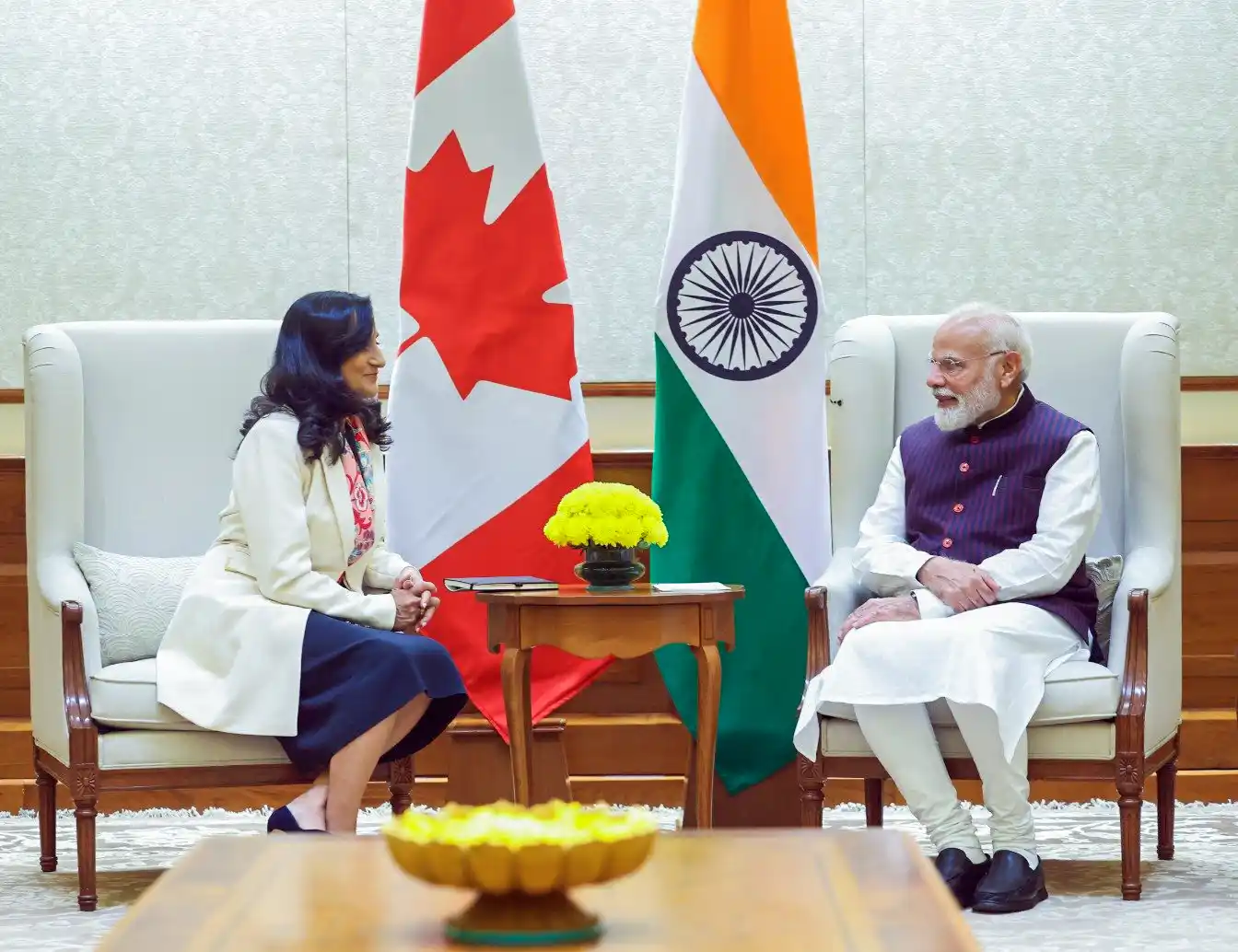
Canadian Foreign Minister Anita Anand’s first carefully engineered official visit to New Delhi, after an unusually fraught period in bilateral ties, translates political intent into practical mechanisms grounded in sovereignty, rule of law, territorial integrity, and respect for sensitivities. The choreography, beginning with the leaders’ meeting at the G7 Summit in Kananaskis, signals a deliberate recalibration. This was aptly followed by foreign ministerial meetings, a purposeful security dialogue, and a trade-level signal, suggesting both governments have chosen steadiness over spectacle to rebuild a functional partnership.
From freeze to managed thaw
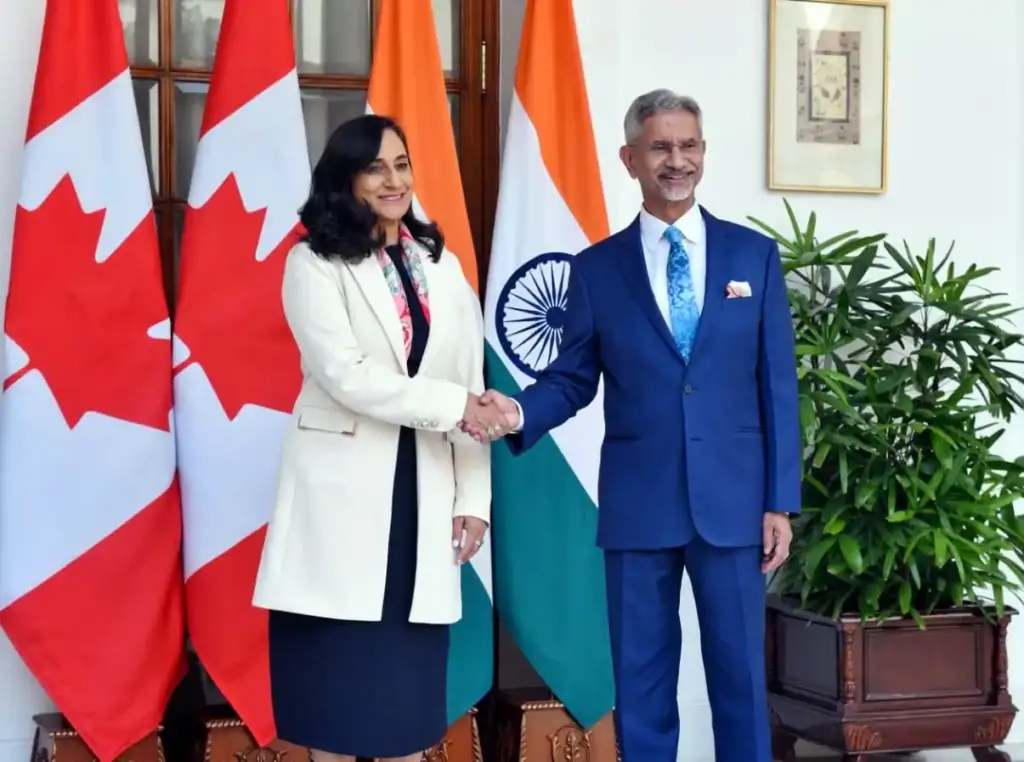
Over the past couple of years, the relationship had drifted into a deep chill with incidents such as Canada declaring the Indian High Commissioner as persona non grata, pausing trade talks, and pervasive mistrust fuelled by anti-India-linked security irritants. The Mark Carney government’s emergence, replacing that of Justin Trudeau, created political room for recalibration, enabling constructive exchanges between leaders and setting a tone that EAM Jaishankar and FM Anand have now operationalised. Anand’s maiden visit demonstrates intention —neither euphoric nor cosmetic—premised on predictability, guard rails, and mutual respect. The message is clear: differences will be managed, not magnified; engagement will be structured, not sporadic.
Symbolism with substance
Anand’s Indian-origin heritage and her adherence to the guiding principles of the Bhagavad Gita helped shift the atmosphere in New Delhi without trivialising challenging issues. In conversations, both sides foregrounded “guard rails” and an early warning mechanism to pre-empt misperceptions, reduce surprise, and ensure quick, senior-level problem-solving. This is diplomacy by design—building institutional habits of contact that ensure channels outlast turbulence. The emphasis on quiet, process-driven management signposts a departure from public megaphone diplomacy practiced by Ottawa earlier, towards a disciplined, routinised approach to crisis prevention.
A principles-first compact
The language now anchoring readouts—sovereignty, territorial integrity, and rule of law—is neither casual nor abstract. It addresses India’s core concerns about violent anti-India extremism and the protection of its diplomatic presence, while acknowledging Canada’s emphasis on legal process and democratic rights. The value of this shared vocabulary lies in what it can enable – filtered handling of domestic flashpoints so that sectoral cooperation in education, mobility, climate, and technology can proceed without being collateral to episodic crises.
Security ballast: the Doval–Drouin track
The quiet but pivotal meeting between India’s National Security Advisor Ajit Doval and Canada’s National Security and Intelligence Advisor Nathalie Drouin provided the backbone for restoring confidence where it had frayed most, namely, security and public safety. The key outcome was agreement to operationalise a structured contact architecture that couples periodic senior-level reviews with working-level liaison across law enforcement and intelligence.
Trade touchpoint amid an Early Progress Trade Agreement (EPTA) pause
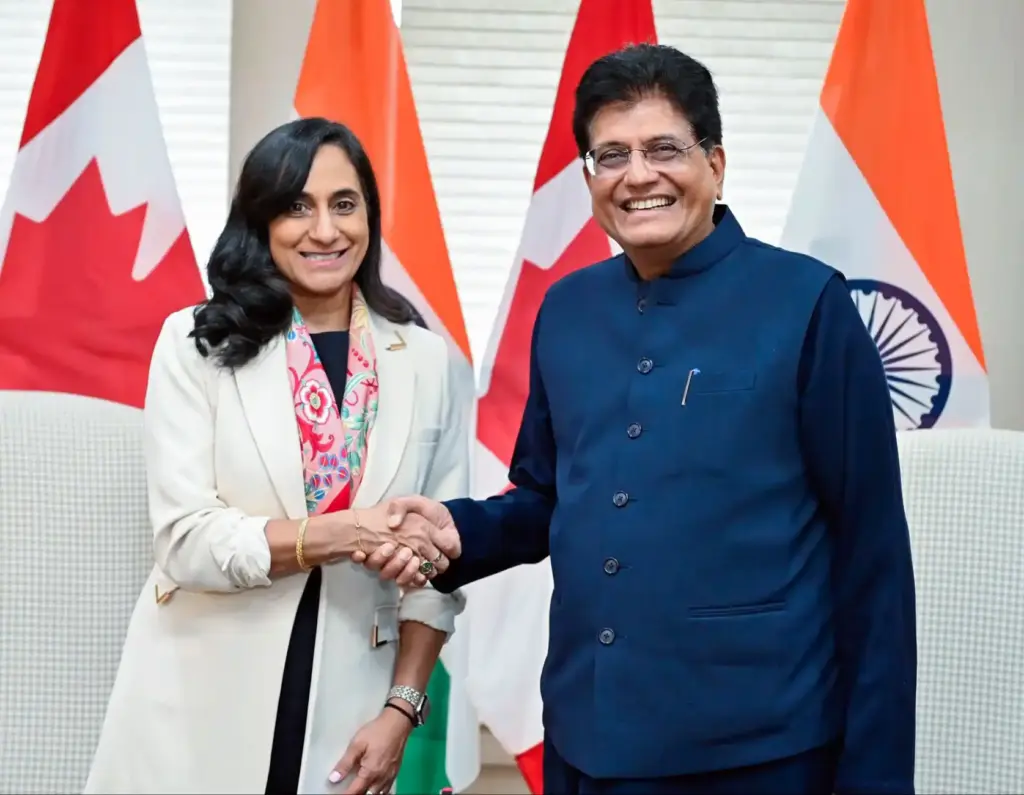
On the economic front, Canadian International Trade Minister Maninder Singh Sidhu’s call with India’s Commerce and Industry Minister Piyush Goyal created a timely signal of intent to improve trade and investment linkages, even as the EPTA track remains paused. While the pause is a reality check, it also creates space for preparatory, technical spadework. If confidence continues to rebuild, the groundwork laid now can compress timelines when formal negotiations resume. The signal matters. It tells businesses that governments aim to separate long-cycle economic planning from short-cycle political turbulence.
The joint roadmap: scope and ambition
A joint statement issued during the visit set out a “New Roadmap for India–Canada relations,” aligning the convergence with leaders’ guidance to pursue a balanced partnership anchored in shared values and sensitivities. The document combines strategic framing with near-term deliverables and recognises the importance of resilient supply chains and strategic stability in a turbulent world. It identifies practical channels across trade, energy, technology, agriculture, and people-to-people ties, and crucially tasks missions and consulates to ramp up domain expertise in economic, political, defence, and technology spheres so that implementation capacity matches ambition.
Energy transition and critical minerals
Energy cooperation is framed as a twin engine of climate ambition and economic security. India and Canada intend to re-establish the ministerial energy dialogue with an action plan; promote two-way trade and investment, including LNG/LPG and cleaner upstream technologies; collaborate on low-carbon fuels and systems such as green hydrogen, biofuels, CCUS, EV mobility, and grid integration; and exchange best practices on power sector digitalisation and disaster resilience. A Critical Minerals Annual Dialogue, envisioned on the margins of PDAC in Toronto, signals refocusing on Canada’s mining expertise to support India’s critical mineral security. Civil nuclear cooperation remains in discussion, including between India’s Department of Atomic Energy and Canadian uranium suppliers.
Technology, AI, and digital public infrastructure
The agreement to relaunch the Joint Science and Technology Cooperation Committee and to deepen collaboration in AI and digital infrastructure reflects a shared interest in responsible innovation and access. Canadian participation at India’s forthcoming AI Impact Summit and exploratory work on digital public infrastructure position the two systems to pursue interoperability, safety, and inclusion. If paired with research partnerships and standards dialogue, this can help both sides shape global conversations around AI safety, data governance, and cross-border digital rails, moving beyond rhetoric to joint proofs of concept.
Agriculture and food systems
With global food security under strain, the focus on stable and sustainable supply chains, improved agri-value chains, and climate-resilient agriculture is pragmatic and politically resonant. The agenda—nutritional security, recycling agri-waste into energy and organic fertiliser, diffusion of best practices—can draw on complementary strengths. Canada’s agri-tech, logistics, and cold chain expertise with India’s scale, digital rails, and frugal innovation can create synergies never seen before.
People-to-people: from friction to connective tissue
The joint emphasis on education, tourism, culture, and professional mobility attempts to re-centre the relationship around its most durable asset- the people. Plans to refresh higher education collaboration, expand Canadian academic presence in India (including overseas campuses), and emphasise research in AI, cybersecurity, and fintech, alongside a revitalised Joint Working Group on Higher Education, all point to a deliberate effort to convert diaspora density into institutional depth. Success will depend on steady consular facilitation and predictable visa ecosystems—the most immediate beneficiaries of the early warning and liaison architecture. Converting the diaspora from battleground to bridge will require proactive engagement frameworks, not just crisis mitigation.
Guard rails as the operating system
The most consequential change may be conceptual, by treating “guard rails” not as constraints but as the operating system for a complex, values-aware partnership. When paired with an early warning mechanism and security liaison, these structures can protect practical cooperation—trade, education, science—from political shocks. They also discipline both sides to move from rhetoric to routines: scheduled reviews, named points of contact, measurable timelines, and problem-solving that is quiet, lawful, and fast. Over time, this operating system can make the relationship less vulnerable to performative politics and more anchored in deliverables.
Implementation: What success will look like
In the next phase, credibility will hinge on execution. Five progress markers would indicate the reset is sticking.
– A formalised early warning protocol, with named nodal officers and clear activation thresholds for rapid response.
– Operational law enforcement and intelligence liaison that delivers measurable actions against violent anti-India extremism, threats to diplomatic personnel, and transnational criminality.
– A standing working group on trade irritants that functions even while EPTA remains paused, with timelines for resolving non-tariff barriers and customs issues.
– Tangible wins in student mobility, skills recognition, and higher education partnerships, alongside predictable processing and consular facilitation.
– Bankable projects in energy transition and critical minerals, including milestones for the ministerial energy dialogue, grid integration pilots, and a schedule for the Critical Minerals Annual Dialogue.
Ultimately, success will depend less on statements than on systems – and both sides appear ready to build them.
Risks and mitigants
However, two risks loom. First, domestic political dynamics—diaspora mobilisation, provincial pressures, or headline-driven controversies—could tempt actors into zero-sum posturing. The mitigant is a strict adherence to the early warning and liaison architecture, ensuring quiet de-escalation precedes public commentary. Second, overextension of the agenda could dilute focus. The mitigant is the phased implementation of security liaison, education mobility, energy, and minerals, before expanding into adjacent areas like digital standards or advanced manufacturing.