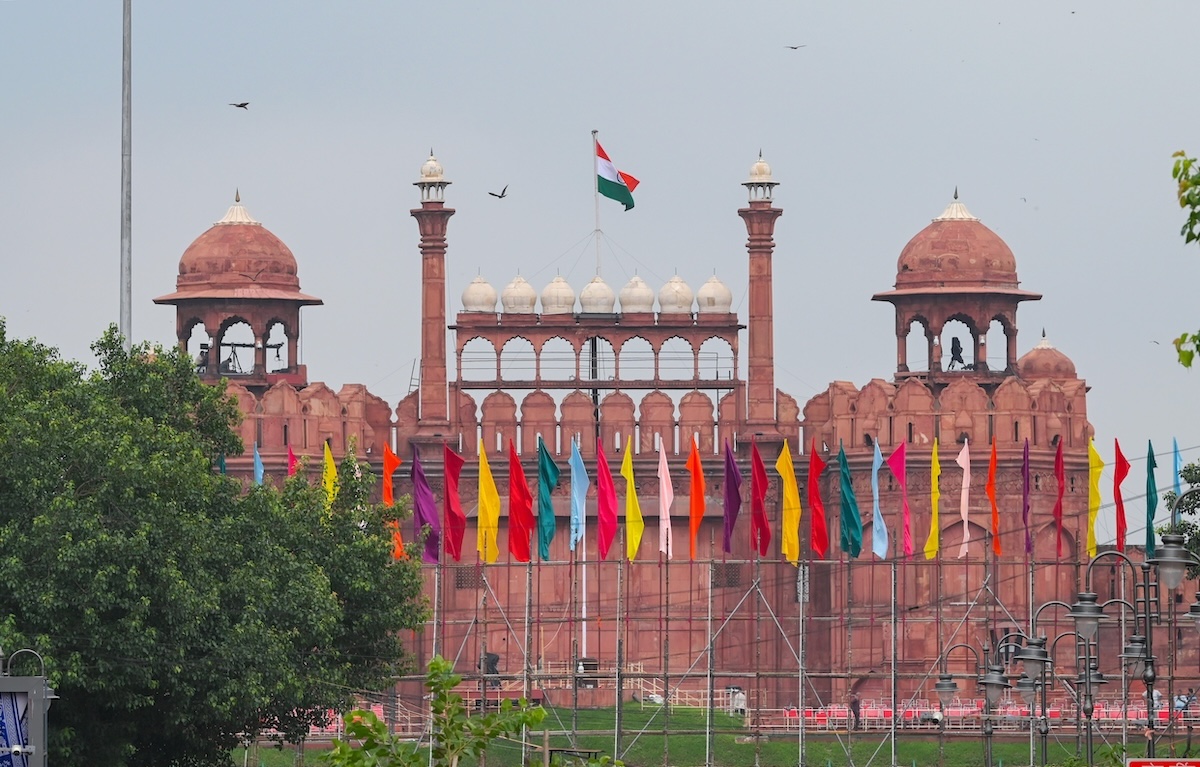
On August 15, 2025, as India completes 78 years since gaining independence, the country stands at a crossroads between the echoes of its past and the promise of its future. This day is not merely a commemoration of political liberation achieved in 1947; it is a celebration of an astonishing transformation – one that has seen a fractured, postcolonial society emerge as the world’s largest democracy, a thriving multicultural nation, and one of the most dynamic economies on the globe.
The Starting Line: 1947
India inherited a legacy of economic desolation, social fragmentation, and collective trauma. With a population of approximately 340 million people (now over 1.4 billion), the country’s literacy rate hovered below 20%, its GDP was around $25 billion, and average life expectancy hovered at a grim 32 years. Yet within this adversity lay a vision articulated by national leaders such as Jawaharlal Nehru and Sardar Vallabhbhai Patel, a commitment to democracy, inclusivity, and planned self-reliance that would shape the republic’s early growth.
From Poverty Alleviation to Economic Powerhouse
Perhaps the most profound transformation is economic. At independence, over 70% of Indians lived below the poverty line. Today, multi-dimensional poverty rates have fallen below 15% as per the most recent estimates. India’s GDP stands at approximately $3.9 trillion, recently placing it as the fourth-largest global economy—an ascent fueled by broad-based reforms, rapid industrialization, and the entrepreneurial spirit of its people.
- Liberalization and Growth: The economic reforms of 1991, spearheaded by then Finance Minister Dr. Manmohan Singh, marked a pivot from protectionism to globalization, catalyzing decades of sustained growth. India is now home to over 100 unicorn startups, ranking among the world’s top three innovation ecosystems.
- Agriculture to Industry to Services: The Green Revolution of the 1960s–1970s made the nation self-sufficient in food grains; the Information Technology boom of the late 1990s–2000s made “Bangalore” synonymous with global tech. Today, India is a world leader in IT services, pharmaceuticals, and digital transformation.
Socioeconomic Uplift and Human Capital
Democracy, though imperfect, remains India’s proudest achievement. Since the first general election in 1952, hundreds of millions have regularly participated in the electoral process—making India not just the biggest, but arguably the most vibrant democracy.
- Education: From 20 universities in 1947 to over 1,100 today—including globally ranked IITs and IIMs—India’s higher education system is now one of the largest in the world. The literacy rate has climbed to nearly 78%, with notable progress in bridging gender and caste disparities.
- Healthcare and Life Expectancy: Life expectancy has soared beyond 70 years. National campaigns for polio eradication, rural health, and insurance (e.g., Ayushman Bharat) have extended lifespans and access to medical care even in remote villages.
- Social Change: The last eight decades have seen a relentless drive toward greater inclusion: women have held the nation’s highest offices, led groundbreaking space missions, and excelled in Olympic sports; more than 200 million Dalits and marginalized groups have benefitted from affirmative action and legal protections, even as challenges of inequality persist.
Scientific, Technological, and Space Leaps
The rise of India’s science and technology sector is a study in aspiration meeting achievement:
- Space Exploration: From a humble beginning in 1963, launching sounding rockets from coastal Kerala, India’s ISRO has become a world leader in cost-effective space missions. The Chandrayaan-3 mission’s successful landing at the Moon’s South Pole, the Mars Orbiter Mission, and the Aditya-L1 solar observatory are global milestones.
- Digital Revolution: The Digital India initiative leapfrogged millions into the cashless economy. UPI (Unified Payments Interface) now processes over 12 billion transactions monthly, and Aadhaar, the world’s largest biometric ID system, has democratized service delivery.
Infrastructure and Industrial Growth
- Connectivity: From 400,000km of roads after independence to the second-largest road and highway network in the world, and from just 20 airports in 1947 to more than 150 today, India’s physical connectivity has exploded.
- Urbanization and Modernization: Metropolitan cities boast world-class metro systems; Indian Railways, now fully electrified in large parts, runs semi-high-speed Vande Bharat trains across the nation.
Military, Diplomacy, and Global Role
India’s strategic position is stronger than ever. It possesses the world’s fourth-largest military, is a recognized nuclear-armed nation since 1998, and has become a key player in multilateral forums like G20, BRICS, QUAD, and SCO.
- Global Soft Power: Indian culture—from Bollywood to classical music, yoga to cuisine—commands global resonance. International Yoga Day, celebrated in 190+ countries, is symbolic of a new cultural diplomacy.
Environmental Stewardship and Innovation
India’s stewardship of the environment has grown more urgent. Solar capacity now exceeds 80GW, with a national plan for Net Zero emissions by 2070. Initiatives like the International Solar Alliance aim to lead the global energy transition from the Global South.
The Road Ahead: Vision 2047
As India approaches its centenary of freedom in just 21 years, there is a growing consensus on the next horizon:
- Deepening inclusive economic growth with a focus on manufacturing, digital innovation, and rural uplift.
- Expanding high-quality healthcare and education to every citizen.
- Reaffirming democratic pluralism and the constitutional values that underpin the republic.
- Leading global climate action, technological innovation, and cultural diplomacy.
Seventy-nine years ago, India’s founders saw freedom not only as an end but as the beginning of a “tryst with destiny.” Their hopes were echoed in the millions who together wrote the greatest democratic story of the modern age. Today, India is neither a finished project nor a nation without wounds. But it is, by any measure, a story worth celebrating: a chronicle of resilience, transformation, and a restless search for global excellence. As we raise the tricolor at the Red Fort—and in hearts across the world—we remember: India’s journey is far from over. Its greatest chapters may yet be unwritten.
Let us cherish the India of 2025, imperfect but indomitable, ancient yet ever-new, and always reaching for the next summit. Happy 79th Independence Day.