
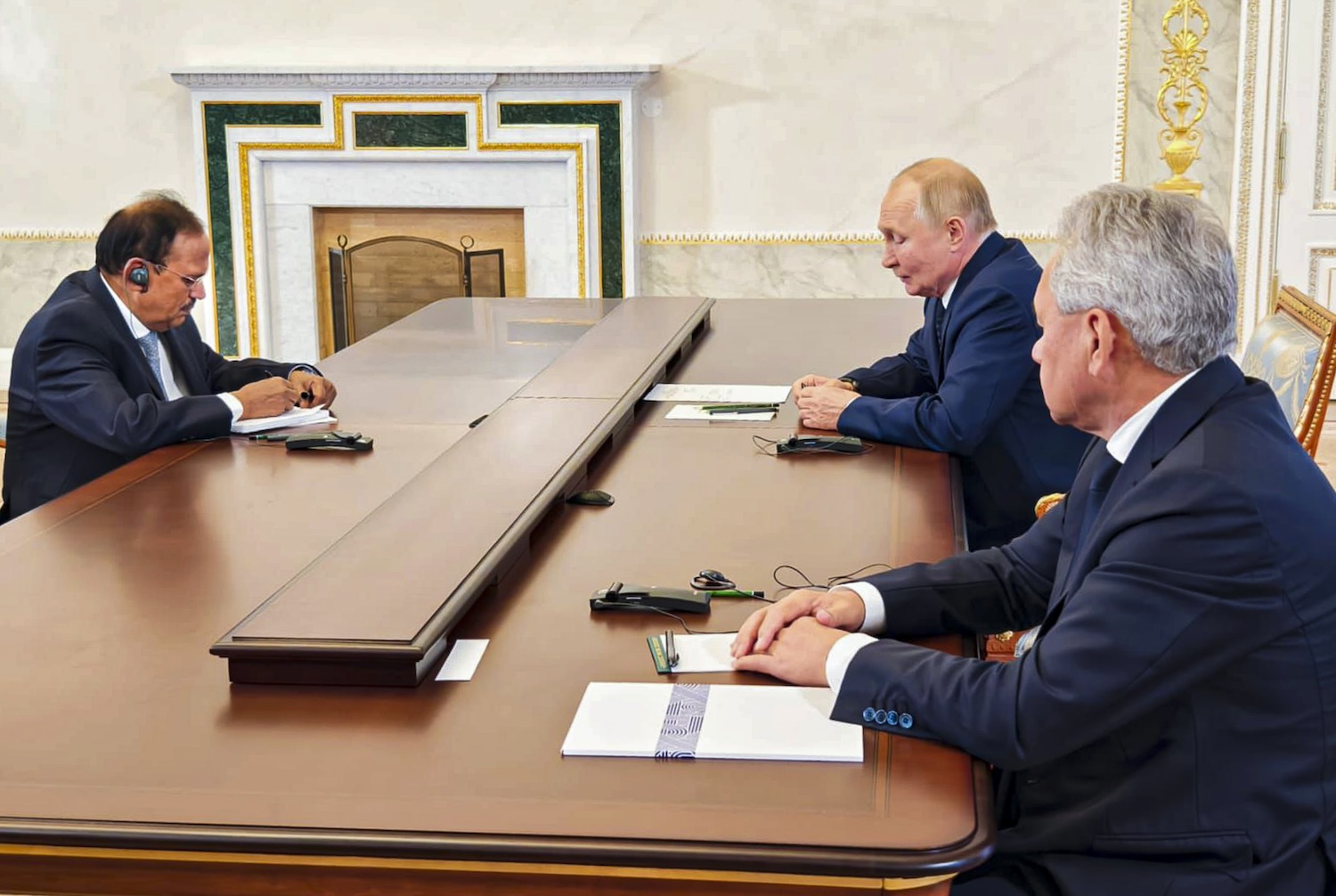
Ajit Doval’s ongoing visit to Russia marks a pivotal moment in India’s foreign policy and strategic positioning. As India’s National Security Adviser, Doval’s Moscow trip is highly significant against a backdrop of escalating geopolitical tensions: the United States, led by President Donald Trump, has recently threatened to impose heavy tariffs on Indian exports, citing India’s sustained purchases of discounted Russian oil and military hardware amidst Western sanctions on Moscow.
What Does Doval’s Russia Visit Entail
1. Defence and Security Cooperation
- One of the primary focuses of Doval’s trip is to strengthen defence ties with Russia. This includes discussions on the expedited delivery and potential additional procurement of the S-400 missile defence systems, which are critical to India’s military modernization.
- The visit will likely explore deeper defence-industrial cooperation, such as setting up maintenance and repair (MRO) infrastructure for Russian equipment in India and even the possible acquisition of Russia’s Su-57 fighter jets.
- Joint work on weapons like the BrahMos missile is also a mainstay of the partnership.
2. Energy Security: Russian Oil
- India has emerged as a major buyer of Russian oil, now trailing only China, and the continuation of this trade is central to Doval’s agenda. The visit is an assertion that India will prioritize its own energy and economic security, irrespective of U.S. objections.
- There may also be talks about securing greater discounts on Russian oil, given India’s willingness to maintain business with Moscow.
- This energy relationship has allowed India to keep domestic fuel prices stable and provided an alternative supply amid volatility in global oil markets.
3. Strategic Autonomy and Balancing US Pressure
- Doval’s mission signals that India will not bow to external pressure, instead choosing to deepen its “time-tested” partnership with Russia—a key plank of its strategic autonomy.
- India’s stance is to reinforce that its foreign policy decisions—especially concerning critical imports like oil and defense equipment—will be dictated by national interests and not by foreign threats or sanctions.
- The visit is also a diplomatic message ahead of Russian President Vladimir Putin’s scheduled visit to India later this year, reflecting ongoing high-level engagement.
4. Broader Diplomatic and Economic Agenda
- Discussions extend beyond defence and oil. Doval is expected to address civil nuclear collaboration, cooperation in the Arctic, and agreements on workforce deployment in Russian industries.
- India and Russia are also preparing for their annual summit, where energy security, food supplies, technology, and trade will be on the agenda.
5. Regional and Global Geopolitics
- With the ongoing war in Ukraine and the shifting balance between Western and non-Western powers, Doval’s talks are expected to include regional security, counter-terrorism, and maintaining a stable Eurasian order.
- India is keen to ensure Russian support in international forums and to keep Moscow as a counterweight in global affairs.
What Could Be the Outcomes?
- Enhanced military cooperation: Possibly new arms deals, technological transfers, and deeper integration of defence systems.
- Secured energy supplies: Commitments to stable or increased imports of Russian oil at preferential terms.
- Reaffirmed strategic partnership: Stronger messaging to the world—particularly the United States—about India’s independent foreign policy.
- Set the stage for future summits: Advance groundwork for President Putin’s expected visit to India and more comprehensive bilateral ties.
Doval’s Moscow visit is both a response to Western pressure and a proactive reinforcement of India’s pragmatic, multi-aligned international strategy. The outcomes will likely shape India’s defence posture and energy landscape while balancing its relationships with both Russia and the West.

